Tuesday, September 13, 2011

Illinois wines usher in fall colors with a dazzling array of flavors


Dwight The Wine Doctor

Illinois wines usher in fall colors with dazzling flavors

Story and photos by Dwight Casimere

1. The beautiful Galena Valley in historic Galena Territory, Illinois

2. Ulysses S. Grant’s Home, a National Historic site in Galena, Illinois

3. The rolling vineyards of Galena Cellars

4. Galena Cellars Tasting Room and patio overlooking the vineyards and Galena Valley

5-7 Historic Old Galena

8. The view from the forest floor in the Galena Territory

Galena, Illinois—In just a few weeks, the lush green rolling hills of Western Illinois will take on a crimson and gold hue as summer melds into fall. The smell of freshly rolled hay and the aroma of goldenrod and other wildflowers wafts through the air as a lone bald eagle lolls over the sun-drenched valley below. Its nearing harvest time in the Galena Territory; a great time to taste the new vintages of wines that of late, have been putting Illinois wine on the aficionado’s tasting map.

On a recent edition of the Today Show’s fourth hour, Kathie Lee Gifford and Hoda Kotb conducted a tasting of wines made in America with Master Sommelier Alpana Singh of Lettuce Entertain You restaurants and host of Chicago Public Television’s Check Please! Alpana has been championing Illinois wines over the past year. Kotb and Gifford picked Blue Sky Winery’s Vignole and Prairie State’s Cabernet Franc as their favorite white and red wines, respectively. Their selections gave a big boost to the reputation of Illinois wines and confirmed the premise that Singh has been touting, that there are some really outstanding finds among wines produced in Illinois.

A visit to Galena Cellars’ tasting room in historic downtown Galena, known as the post Civil War home of President Ulysses S. Grant and to the winery nestled in the nearby Galena Valley, attested to the superior quality of wines produced in Illinois.

Galena Cellars has been making wine since 1983, after Robert and Joyce Lawlor founded two smaller ventures in McGregor, near their home in Cedar Rapids, Iowa. The established a second winery in an old Milwaukee freight depot in LaCrosse, Wisconsin, before establishing the current winery in 1983 in Galena.

Their daughter, Christine Lawlor-White, took up her parent’s passion and accepted the challenge to become winemaker. In 1975, she became the first woman to receive a degree in enology and viticulture from Fresno State University. Currently, she and her family have a production of more than 40 wine varieties with 60,000 gallons of wine produced annually. Pretty impressive for what started as a small family operation, fostered by a wine making class, taken in the early ‘70s, and an initial output of only 500 gallons of wine!

Christine was tied up, supervising a wedding being held at the winery on the day of my visit, but her able tasting room manager, Rob, guided me through a tasting of about a dozen wines that ranged from semi-sweet & fruit wines, through dessert and specialty wines, on up to semi-dry and dry red and white wines, worthy of gracing any dinner table.

Among the specialty wines the Late Harvest Riesling ($20.50) stood out as a delectable example of his prized wine, which was similar in style to the Icewines I’d recently had in Toronto, near Niagara Falls. Reminiscent of a German Auslese, it had an intense flavor of melons and peaches with a honey finish that makes it perfect with marinated fruit and cheese. For a real taste twist, try it with some Blue Cheese. You’ll be surprised at the flavor rush!

Another favorite was the General’s Reserve Red ($12.99), a big, classic Burgundy-styled wine made from French hybrid grapes. The Illinois Chambourcin ($19.99) was another full-bodied beauty with lots of black cherry and plum on the nose and a touch of American oak on the finish. This is a great barbeque wine and one that I happily paired with a grilled, local grass-fed Black Angus strip steak. You see plenty of prime Black Angus cattle as you roll through the lush farmland near the winery.

Among the whites, the Sauvignon Blanc ($13.50), which I’m drinking as I write this article, is exceptional! It’s loaded with lush honeydew, pineapple and citrus flavor with a light French oak finish for added complexity. This is a light, crisp wine that’s perfect with late summer salads or an all-vegetable dish made with the bounty of colorful squash, corn and heirloom tomatoes available at your local farmer’s market. I ordered a case of this one.

The only way to get Galena Cellars wines is by purchasing it at the winery or on the Internet. A lot of wineries are going the direct-to-consumer route and are having a great deal of success. The prices are lower for some really quality wines because they cut out the ‘middle man.’ Wines can be shipped throughout Illinois and to California, Colorado, Washington, D.C., Florida, Iowa, Michigan, Minnesota, Missouri and Wisconsin. For more information, visit www.galenacellars.com.

Wednesday, September 7, 2011

Napa Wine Train:Sunset in California's "Bordeaux"


NAPA WINE TRAIN: A SUNSET JOURNEY THROUGH THE “BORDEAUX OF CALIFORNIA”

Story and photos by Dwight Casimere

The Napa Valley train prepares for its sunset journey

The well-appointed interior of the Vista Dome, Gourmet Express Dining Car and Lounge

Chef Kelly Macdonald in makes a Béarnaise sauce

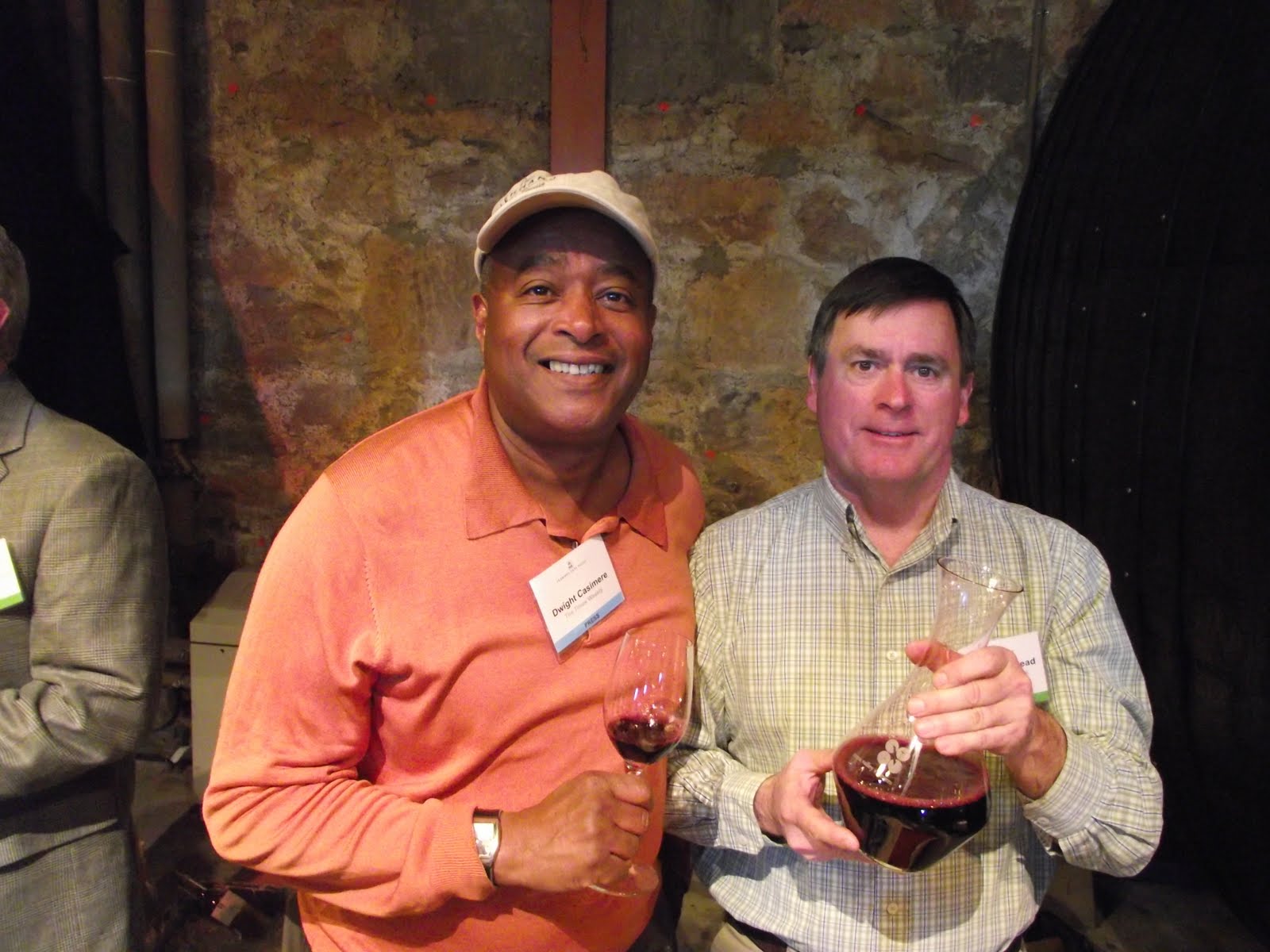
Dwight The Wine Doctor with Jim Meadlock-sole proprietor Cain Vineyards

The Grand Barrel Tasting at Premiere Napa Weekend

Patricia Harbison-Vintner, Harbison Winery

Action at the Premiere Weekend Auction is hot and heavy with millions raised for charity

Ichizo Nakagawa, the high-bidder paid $125,000 for five cases of 2009 Scarecrow Cabernet Sauvignon at Premiere Napa Weekend, setting a record for a single auction lot. Record proceeds help fund the local trade association’s efforts to promote and protect the Napa Valley appellation

Dwight The Wine Doctor with Dennis Cakebread, Sales Director, Cakebread Cellars

Napa, CA—Sunset is a major event in the languid sundial that governs the Napa Valley. Goldenrod and crimson shards of light fleck their way across the rolling hills as the Napa Wine Train reels past the elaborate signs and stone walls that proclaim the names of some of the most coveted wines among connoisseurs. Cakebread, Mondavi, Louis Martini all reel past and into the middle distance like the credits rolling in a movie. This is just the beginning of the dinner hour and a leisurely journey through the beautiful Napa Valley wine country in the meticulously restored vintage rail cars of the Napa Valley Wine Train.

Dinner on the Napa Valley Wine Train is a trip back into the glorious past of rail travel, when the scions of industry and the gold barons of the California Gold Rush dined in private rail cars. Like those railcars of old, each of the dining cars on the Wine Train, either the Vista Dome or the Gourmet Express, is equipped with its own kitchen and a unique menu that spotlights the local cuisine and fresh ingredients of the Napa Valley. Departing at sunset, one experiences the romance and adventure of an antique train traveling through the mysterious Napa Valley night.

My journey on the Napa Valley Wine Train was the capstone to a spectacular weekend of wine tasting with the owners and vintners of the valley’s premiere boutique wineries. Napa Premiere Weekend was center pieced by a grand Barrel Tasting and Auction of rare lots of wine, especially created for that single event. The funds generated from the auction were donated to programs sponsored by the local vintners association to further education and public awareness of the winemaking industry.

After rubbing shoulders and tasting the exclusive, one-of-a-kind wines of the valley’s most storied winemakers, this was a chance to ease into a plush leather booth in the expertly refurbished 1915 Pullman Car lounge and savor the sight of the rolling hills and vineyards at sunset and sip some great wine along with Chef Kelly Macdonald’s superb cuisine.

The menu features environmentally responsible ingredients, including humanely raised, hormone-free meats and fresh, line-caught fish.

Schramsberg Champagne is the beverage of choice in the lounge cars as you gaze out of the picture window at the unobstructed view of the valley. Honduran mahogany paneling, etched glass partitions, brass accents and original artwork by Nepo bathe the eye in serene delight. A visit to the kitchen car shows the chefs in action, preparing sauces from scratch. It’s a marvel to watch the intricate preparations they are able to accomplish in such a limited space! Relaxing in the wine bar, a sommelier/waiter is ready to assist with the wine choices for the evening meal. Cakebread was mine, since I had just spent part of the afternoon with Dennis Cakebread, Sales Director for the pioneering Napa Valley vintner, who gave up a lucrative trucking business to take a gamble on an abandoned farm to build one of the most celebrated wineries in the Napa Valley. Cakebread Cabernet is one of the treasures of the winemaker’s art. It was just the thing to have with the local grass fed Grilled and Roasted Beef Tenderloin with Potato SautĂ© topped with Roasted Mozzarella Artichoke Heart. The Baby Lettuce Salad with Candied Walnuts and Smoked Goat Cheese in Honey Cider Vinaigrette and the Intermezzo of Harlequin Sorbet, a delicate trio of the train’s own Sorbets left little room for dessert, but I forged ahead anyway, with a ‘death-by-chocolate’ creation infused with zinfandel and fresh local berries and more ‘train-made’ sorbet. I downed a final sip of Cappuccino as the train pulled into the downtown Napa train station under a full moon that bathed the valley in its luminous glow.

Tuesday, September 6, 2011

Tanglewood Wine & Food Classic


Tanglewood Wine & Food Classic pairs best wines of the world with top local chefs, gourmet foods

Story and photos by Dwight Casimere

Tanglewood, Lenox, Mass—Tanglewood Wine & Food Classic, now in its seventh year, filled the Grand Tasting tent to overflowing with wines from 80 vintners from around the world who brought their best vintages to pair with the Boston and New York region’s top celebrity chefs and locally sourced gourmet foods that would rival anything found in France or Italy.

The Hudson Valley Foie Gras served up by the chefs at Bistro Zinc’s table was the litmus test. Served simply with a sprinkle of Grey Sea Salt or a dollop of locally made fresh pinot grape preserves, the pristine nuggets of goose liver glistened with a diamond-like luster. I had tasted Hudson Valley Foie Gras before, but never like this. The creamy, mouth-watering delicacy literally melted in my mouth, leaving behind just a whisper of its fresh game flavor. I walked quickly to a nearby table to grab a glass of Cabernet to wash it down with, when I made another delightful discovery, the wines of Kathryn and Craig Hall of Napa Valley. The wines are literally a work of art. I’d not had their wines in years and, each time I had visited Napa Valley, failed to squeeze a visit into my tight tasting schedule. What a coincidence to run into their wines at Tanglewood and have an opportunity to taste them with such exquisite fare!

Hall Wines is a 21st Century winery that employs organic, small vine viticulture. Its six Estate vineyards stretch from the ancient river beds on the Napa Valley floor to the sun-drenched foothills, producing classic Bordeaux varietals; Cabernet Sauvignon, Merlot, and Sauvignon Blanc.

Kathryn Hall 2006 Cabernet Sauvignon ($74) was rated #20 of the Wine Spectator’s top 100 wines of 2009. The 2006 vintage ($95) was equally praised and the newest release ($34.99) is already showing promise. The wine has a silky finish that makes it compatible with most food choices. You don’t have to reserve it for Foie Gras. It goes perfectly with a well-marbled steak or a nicely marinated slab of Berkshire Heritage Pig baby back ribs.

Hall 2009 Sauvignon Blanc ($21.99) is one of the most focused reflections of the varietal that I’ve encountered. Its lovely grapefruit and citrus flavors are well balanced with just the right amount of acidity to give it finesse and a polished minerality that makes it a foodies’ choice. Soft, ripe fruit gives it a pleasing and refreshing taste that cleans the palate between bites of fresh salmon or lightly curried shrimp. The smell of tree blossoms and hints of mineral notes on the finish makes this a wine to linger with on the patio long after the brunch plates are cleared away.

Wandering back over to the Bistro Zinc table, and then to the Kerrygold Cheese stand for a taste of their latest spreadable lite Blue Cheese from Ireland, I was convinced that I’d found culinary nirvana. The array of locally produced cheeses and salumi was also dazzling, particularly the selection from Fortuna’s Sausage Co. and the fresh semi-soft cheeses from Vermont Butter & Cheese Creamery. The summer diet quickly went out the window. It’s time to start fattening up for the onslaught of winter’s cold anyway!

Friday, August 26, 2011

Castello di Amorosa: Napa Valley wine from a Tuscan castle


Castello di Amorosa of Napa Valley: California wine in a Tuscan castle

Story and photo essay by Dwight Casimere

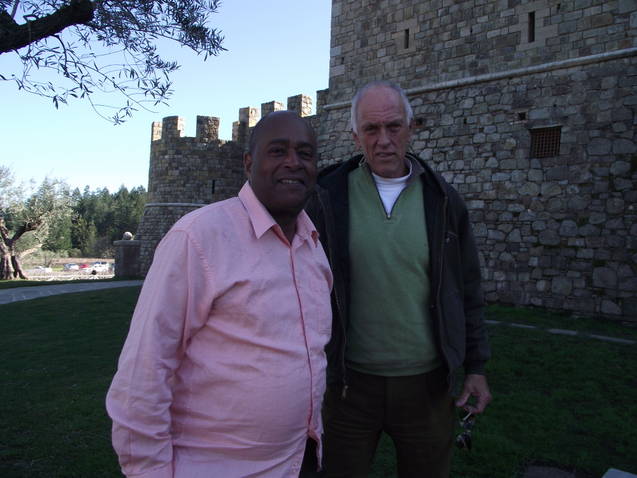
Dwight The Wine Doctor with Castello di Amorosa owner Dario Sattui

The torture chamber at Castello di Amorosa

Scenes at Castello di Amorosa by Dwight Casimere

St. Helena, Napa Valley---Driving north of St. Helena on Highway 29, an imposing structure looms on a hill high above the Napa Valley. For a moment, the mind steps back in time to Medieval Italy, when Italian kings and sovereigns ruled over city-states.

Italy did not become a sovereign nation until the unification or Risorgimento of 1861. Castello di Amorosa winery rises above the valley floor as a reminder of those illustrious times. The Castello produces Italian style wines in a unique retrospective setting. While the wines are Italian in concept, they reflect the climate, soil and growing conditions that are unique to California’s Napa Valley.

Castello di Amorosa is a unique experience with one-of-a-kind wines that can only be had at the castle or purchased directly to the consumer from the winery or online at www.castellodiamorosa.com or by calling 707-967-6274. The winery does not distribute to stores or restaurants anywhere, but believe that the wines are best consumed here at the castle. It’s a one-in-a-lifetime experience worthy of a trip to Napa Valley.

Dario Sattui is the visionary behind the creation of Castello di Amorosa. The great grandson of San Francisco pioneer vintner Vittorio Sattui, Sattui cut his teeth early on as a savvy businessman. Partnering with Georg Salzner, President of the Castello since 2008, and Brooks Painter, Winemaker, formerly of Robert Mondavi and Stag’s Leap wineries, he set out to make the Napa Valley a destination for premium Italian-influenced wine, served in a one-of-a-kind setting. With the success of V. Sattui wines already to his credit, Sattui’s success here was all but certain.

The winery’s efforts are ably assisted by Associate Winemaker, Peter Velleno, a fifth generation San Franciscan, and product of UC Davis’s pioneering school of Fermentation Science.

Sattui, always in the company of his dog and Winery Mascot and official Tour Escort, Lupo, is a tall, imposing figure that bears a striking resemblance to the American actor James Cromwell (Babe-Academy Award nominated 1995 and L.A. Confidential, Screen Actors Guild Nominated 1997).

To say that the wines are exemplary is an understatement. What’s surprising is that they are very reasonably priced for the high level of quality. The 2010 Pinot Blanco from the Carneros District, is only $27.00 a bottle. The 2010 Pinot Grigio from Mendocino County is a mere $20. Both have a dry, crisp profile, with the Pinot Bianco possessing a captivating straw-yellow color and distinct aromas of almonds, banana and apricot and the Pinot Grigio possessing a romantic, distinctly Italian aroma of fresh herbs and a hint of Napa Valley soil on the nose.

The 2009 Pinot Nero from Santa Lucia Highlands ($36) is appropriately regally named. The wine is sumptuous with a soft, dry slightly sweet flavor, redolent of ripe red berries and the aroma of freshly roasted herbs and a light wood smoke on the finish. This is a perfect wine for steak, foie gras or a succulent roast duck. The tasting room staff offered an array of fresh cheese, salumi, olives and pates either produced at the winery or sourced from local producers in the area. It was hard to leave the tasting room to go on tour of the massive grounds and castle interiors. The cellars and Great Rooms all seem to have a story of their own to tell. There’s even an authentic torture room in the catacombs. I guess that’s where they toss the folks who ask for Reunite!

Saturday, August 13, 2011

Donnafugata wines: Sicilian summer in a glass


Donnafugata wines: Sicilian summer in a glass

Donnafugata wines: Sicilian summer in a glass

Story and photos by Dwight Casimere

1. Old Verona, Italy at Dawn

2. Jose Rallo, owner, Donnafugata wines

3-5 Donnafugata wines at Vinitaly 2011

Marsala, Western Sicily—Summer crush is in full swing at Contessa Entellina, home to Donnafugata wines of Sicily, 75 miles southwest of Palermo. Luscious Chardonnay grapes are being rushed to the crusher in preparation for the new vintage. First pick is the traditional Night Harvest. Known as the Goblet of Stars, it is a festival that celebrates quality wines and the environment.

Jose Rallo, owner of Donnafugata, is an avid jazz enthusiast and singer as well as a winemaker. She routinely sings to the grapes in the field and holds concerts in the aging cellars. She is a one-woman celebration of the intertwined worlds of music and the vine. A cork manufacturer, Amorim Cork, and a tour operator, CTS Viaggi, have been Donnafugata’s partners in promoting sustainable environment.

Along with her husband, Vincenzo Favara, Jose cultivates her great love for music, singing and wine. Over the years, Donnafugata has also hosted concerts by jazz greats Pat Metheny, John Scofield. Her explorations in the synergy between wine and music inspired the CD, Journey to Donnafugata, a jazz arrangement of the music from the film, The Leopard. Donnafugata Music & Wine Live was created in collaboration with friends who were passionate about wine and Brazilian jazz. As producer and solo vocalist, Jose Rallo guides the audience through a multi-sensory experience involving wine tasting to accompanying jazz beats that embody the flavor components of the wine. This formula led to memorable concerts at the Blue Note night clubs in Milan, New York and Beijing and Shanghai, China culminating in the recording this year of the Tasting in Jazz videos in the Donnafugata cellars at Marsala, with Jose singing to the accompaniment of a clarinet and cello. The combined expression of music and winemaking expertise has created some amazing wines!

Premiering her newest wines at Vinitaly 2011 in Verona, the world had the opportunity to taste the latest of Jose’s creations for Donnafugata wines. They are exciting, refreshing wines that are fueled by her passion for music and art.

Each of the new releases features a specially commissioned work of art on the label. Anthilia 2010, Polena 2010, Tancredi 2007 and Sedara 2009 are the ultimate expressions of the winery’s all-encompassing vision.

Anthilia 2010 ($14.29) is a delightful example of the true Mediterranean expression in wine. Made primarily from native Catarratto (51%), Ansonica and other Sicilian grapes, the wine is crisp and complex with strong mineral notes and scents of white peaches and a hint of grapefruit. If Ernest Hemingway had drunk this wine, he might never have asked Harry of the eponymous bar that bears the owner’s name in Rome, to create the Bellini!

Polena 2010 ($16.52) is another white blend, this time of native Catarratto and Viognier from Sicily. This is a great summertime party wine, great for the barbecue or the beach. It refreshing with the smell of flowers and tropical fruits. The crisp taste makes it a great match with seafood appetizers, oysters, shrimp and vegetarian dishes such as pasta primavera or linguine with fresh basil, homemade mozzarella (recipe to follow) and heirloom tomatoes.

The wine bears a painting of ship’s figurehead-‘Polena’ in Italian. The name harkens back to the days of the Rallo family’s origins in wine production in Marsala for more than 150 years.

Tancredi 2007 ($36) is a classic Italian red, with 70% Nero d’Avola and 30% Cabernet. This is a classy, sophisticated wine that speaks to tradition, but with a bold, new interpretation. Rossini’s opera, of the same name, is the composer’s greatest masterpiece. So it is with Donnafugata. Based on a novel by Voltaire, it tells the story of a betrayed revolutionary who wins the battle, but is mortally wounded, dying in his wife’s arms just as they are being married.

Tancredi, the wine, is a hero’s feast in a glass. With its deep, rich, Ruby-red color, its notes of dark chocolate, black cherries and a dramatic hint of bracing mint, it is the very elixir that heroes in the throes of battle, drank on the Elysian Fields. This is an altogether absorbing wine with a commanding structure and regal presence.

Sedara 2009 ($14.99) is as another blend of primarily Nero d’Avola grapes with Cabernet, Merlot and a touch of Syrah for added depth. It’s well balanced with silky tannins. It’s a pleasant wine to drink throughout one of those long, leisurely meals that the Italians are so famous for. The film director, Federico Fellini (8 ½, La Dolce Vita), was said to have served lengthy, multi-course lunches to the cast and crew of his films, complete with a selection of wines. I’m sure a Nero d’Avola antecedent to Sedara, must have been amongst the retinue.

Recipes:

-Homemade Mozzarella

-Dwight The Wine Doctor’s Heirloom tomato pasta with homemade Mozzarella and fresh Basil

Homemade fresh mozzarella cheese has fabulous flavor. The instructions here for making your own at home are detailed but not difficult. Rennet and citric acid can be found in health food stores and specialty markets.

Prep Time: 10 minutes

Cook Time: 20 minutes

Total Time: 30 minutes

Ingredients:

1/2 rennet tablet

1/4 cup cool, chlorine-free water (most bottled waters are chlorine-free)

1 gallon milk (2%, 1%, or skim)

2 teaspoons citric acid

Salt, optional

Preparation:

Crush the rennet into the water and stir to dissolve. Pour milk into a non-reactive pot (no aluminum or cast iron). Place over medium heat. Sprinkle the citric acid over the milk and stir a few times. Heat milk to 88 degrees F. Milk will begin to curdle.

At 88 degrees F, add the rennet solution and continue stirring slowly every few minutes until the milk reaches 105 degrees F. Turn off the heat. Large curds will appear and begin to separate from the whey (the clear, greenish liquid).

With a slotted spoon or mesh strainer, scoop the curd into a large glass bowl. (If it's still too liquid, let it set for a few more minutes). Press the curds gently with your hand and pour off as much whey as possible. Microwave curds on high for 1 minute, then drain off all the excess whey. With a spoon, press curds into a ball until cool. Microwave two more times for 35 seconds each, and continue to drain the whey and work cheese into a ball. In the meantime, place the whey over medium heat and let it heat to about 175 degrees F.

When cheese is cool enough to touch, knead it like bread dough until smooth. When you can stretch it like taffy, it is done. You can sprinkle 1 to 2 teaspoons salt into the cheese while kneading and stretching it. The cheese will become stretchy, smooth and shiny. If it is difficult to stretch and breaks easily, dip it into the hot whey for a few seconds to make it warm and pliable. Then pick it up again and stretch it into a long rope. Fold over and stretch again. Dip in hot whey as needed to make the cheese pliable.

When the cheese is smooth and shiny (this takes just a few minutes), it is ready to eat. Shape it into a log or golf-size balls, then store in a solution of 2 teaspoons salt to 1-cup water.

Note: Citric acid and rennet are available through mail order, some pharmacies or health food stores.

Yield: about 3/4 pound mozzarella cheese (12 ounces)

Dwight The Wine Doctor’s Heirloom tomato pasta with homemade mozzarella and fresh Basil

What you’ll need:

1 lb angel hair or thin spaghetti whole-wheat pasta

1 lb. homemade mozzarella (see above recipe, or shop your local Italian market or specialty grocer

6 Tbs extra virgin olive oil

1 large bundle of fresh Basil (about 5 ozs)

4 Tbs freshly grated Romano cheese per serving

2 cloves fresh garlic

1 small white onion, cut in slivers

Juice from ½ fresh lemon

Freshly ground white pepper

Several pinches of sea salt, one for boiling pasta, the rest to sprinkle on each completely assembled dish

Serves 4

Boil pasta in salted water, about four minutes, while simultaneously sautĂ©ing sliced heirlooms or whole grape tomatoes, diced garlic and sliced onions in the olive oil on low flame. (about 4 ½ mins for each)

On each serving plate, place two heaping scoops from a pasta server of the steaming pasta. Cover each with copious amounts of hand shredded Basil. Top with roughly shredded pieces of the homemade mozzarella and the Romano cheese. Sprinkle on hand grated white pepper, sea salt to taste. Douse with dashes of fresh lemon juice and serve with Donnafugata wine of your choice. Play your favorite jazz CD on your iPod, home stereo system, cable provider or mobile device. Abondanza!

Friday, August 5, 2011

Perfect Barbeque wines from Dry Creek of Sonoma


Story and photos by Dwight Casimere

Scenes from the Taste of Sonoma 2010

Perfect Barbeque wines from Dry Creek of Sonoma

SONOMA—Deep in the heart of Sonoma County, California’s fertile wine growing region, is Dry Creek Vineyard, a family-owned winery with 38 years of grape growing and winemaking experience. A sampling of their latest summer releases reveals wines that are perfect for the barbeque.

Founded by David Stare in 1972, his original plan was to move to France to build his own chateaux, after several trips to the Loire Valley. After hearing about the burgeoning wine industry in California, he began taking classes at FUC Davis, the nation’s most prestigious oenology school, and spent his weekends surveying vineyard land. It was during one of those weekend forays that he was drawn to Dry Creek Valley. He stumbled upon his dream location, an old prune orchard across from the Dry Creek General Store. Ripping out the old fruit trees, he began planting grapes, Sauvignon Blanc, to be exact. Against the advice of more experienced vineyards managers, Dave stuck to his guns and continued planting Sauvignon Blanc. “It tuned out to be one of my best decisions,” he later recalled. Now the winery, run by his son in law, Dave Wallace, President and his daughter, Kim Stare Wallace, Vice President, the winery has become celebrated for a whole palette of exquisite wines that reflect the unique soil and climate of Dry Creek Valley.

Their 2007 The Mariner ($40), a red blend of 55% Cabernet Sauvignon, 30% Merlot, 7% Malbec, 4% Cabernet France and 4% Petit Verdot is a classic example of the rich, structured wines typical of the Dry Creek Valley. The wine is well put together, with a core flavor of rich, dark fruit with an overlay of chocolate and black plums. I had a couple of glasses with a bone-in the Gumbo Shop in New Orleans’ French Quarter. Adding a hunk of hickory wood to the ashen-white coals gave the steak a layer of smoke flavor that blended perfectly with the wine. Both the steak and the wine had an underlying mineral character that added to the flavor adventure. I’d put Dry Creek The Mariner high on my list for an outdoor cookout featuring marinated steak or ribs!

One of the first wines I tasted when I moved to California in the early ‘70s was a dry Chenin Blanc. I had it with a bowl of Cioppino, a hearty Italian-inspired seafood stew, unique to San Francisco’s North Beach and Fisherman’s Wharf, which features jumbo Shrimp (called Prawns, by the locals) and copious chunks of Dungeness Crab meat and claws. My first experience with this wine and seafood combination was a heady one. I found myself reliving those moments, ducking in from the evening fog on Green Street into the North Beach restaurant, when I opening a bottle of 2010 Dry Creek Chenin Blanc ($12).

Dry Creek is considered the North American expert in creating great Chenin Blanc, and this vintage is no exception. It’s the perfect summertime wine. I made my own version of New Orleans-style Barbecue Shrimp. I do mine on the grill, Australian ‘shrimp-on-the-barbie” style, whereas the traditional New Orleans version involves searing the shrimp, marinated in Creole spices, in a cast iron skillet on the stove. There’s no ‘barbecuing’, per se, involved. Go figger! Anyway, since Chefs Prudhomme and Emeril weren’t staring over my shoulder, I proceeded to cook the shrimp (which I had trucked in from the Gulf, near New Orleans, just a few days before) over the open flame. Marinating them first in the aforementioned Gumbo Shop spices, I cooked them quickly, turning them after just a minute or so, being careful not to overcook.

I could barely wait long enough for the shrimp to cool off before I began biting into them and taking a healthy swig of the Chenin Blanc. It was like Mardi Gras in my mouth!

Dry Creek’s wine is 100% Chenin Blanc from the fertile Clarksburg, Sacramento Delta region, California’s version of the Nile. Fermented in stainless steel tanks for just over a month, the wine is bursting with zesty lemon, apple and pineapple flavors mingled with cantaloupe, white peaches with an undertone of chalky mineral. It’s simply delicious. I’m thinking about ordering a case of this one, because it’s quickly become my summertime favorite.

Zinfandel is always a sure bet for summertime drinking, especially casual food such as pizza, burgers, ribs and other types of barbeque. Dry Creek 2009 Heritage Zinfandel (a surprising $19) is one of the best Zinfandels I’ve ever had. It’s really lively and just brimming with jammy flavors that are characteristic of great Sonoma Zin. Just swirl it around in the glass and you get a face full of raspberries and blackberries. The smell practically jumps out of the glass! When you take the first sip, you get a mouthful of dense blackberry and anise flavors with a healthy dose of pepper. Ah-choo!!

This is truly an Old World Zinfandel (87% Zinfandel, 13% Petit Sirah, 198 months stainless steel, 10 months American and French oak) with the kind of snappy flavor that makes it an easy companion to the types of flavorful, ‘comfort’ foods that are staples of the summertime family cookout. I’ll be sure to have plenty of this wine on hand when I plan my Labor Day cookout.

Dry Creek wines are easily recognized by their distinctive label with the picture of a sailboat dominating. David Stare combines a passion for winemaking with his love of sailing. “Since the mid 1980s, when we first put a sailboat on our wine labels, Dry Creek Vineyard wines have become known as the wine for sailors,” said Stare. “The origins of our nautical themed labels are purely personal. We have enjoyed a long love affair with the sport of sailing and have a profound appreciation of America’s nautical heritage. “