Sunday, June 17, 2012

Puglia Italian Wines: A Rose by any other name is still Rose'!

Italian Wines from Puglia: A Rose’ by any other name is still Rose’


Story and photos by Dwight Casimere


Salento, Italy—Puglia wine region in Italy’s idyllic southeastern corner is one of the country’s most fertile wine growing regions. Flying into the modest airport at Bari, one is struck by the landscape, which is virtually covered with vineyards. On the ground, the visual impression is even more striking; mile after mile of vineyards dotted with olive trees, fruit tre


es and other forms of produce and vegetation. Puglia, or Apulia as it is known in Italian, is not just a place where winemaking is an industry, it is a passion and a way of life.

Puglia Best Wine Consortium is the official body established for the promotion and exportation of quality wines from the region and Apulia Wine Identity 2012 is its official calling card to the world. Assembling the world’s top wine writers, industry experts and educators in the town of Lecce near the Adriatic Sea for a series of focused tastings, vineyard explorations and one-on-one consultations with winemakers, in which this reporter represented the U.S., brought forth awareness of the high quality and standards of excellence established through decades of dedication and hard work. Winemaking is an alchemy of science and art. The winemakers of Apulia are both its artisans and its ambassadors.

Apulia’s most famous  and appealing wines are its Rose’s. The wines, made from indigenous Negroamaro, Primitivo and Nero di Troia grapes are the most typical of the region, displaying an intense variety of flavors and palate textures while displaying a distinctively light and appealing color and delicate floral aromas. The wines are among the most versatile of all Italian wines. Because they are made from red grapes with intense soil characteristics. They can be served throughout the meal; from aperitif through the first and second courses of salads, seafoods and pastas, through fish, poultry and meat dishes. A few, sweeter renditions, are also delightful with dessert or as a dessert within themselves.

A wine tasting session of some 30 Apulian Rose’ wines at the Apulia Wine Identity revealed a dazzling array of terrific wines that marked a series of starling discoveries!

All of the wines tasted represent a fantastic value in relation to flavor and quality. All of the wines are in the $10-$20 range with variations in retail price based on local taxation.

“Rose wines are becoming fashionable, not just in Italy, but around the world,” declared Liogi Rubino, a winemaker and President of the Puglia Best Wine Consortium. “The wines are versatile, flexible, and are particularly applicable to ethnic and international foods. The wines are ideal for any occasion. I would call them “immediate” wines that are easy to drink and easy to enjoy.”

The secret to creating great Rose’ wines is having the right grapes and having the right climate to grow them. “Luckily, Puglia has both!” Rubino declared. From the start of the Apuglia Wine Identity tasting, the wines proved themselves over and over again. Some of the outstanding tastes and values I experienced are as follows:

  1. Accademia Dei Racemi – Vigna Rosa 2011, Salento Rosato, 100% Negramaro ($20) . This wine represents the most historical reason for Rose’. It has great personality without being too light. It is closer to a Red wine with a great deal of strength that makes it an ideal partner with food. Puglia is a region with a great deal of pasta, vegetable and seafood dishes, sometimes blending all three elements together, such as a spectacular dish I had at the closing luncheon at the MUST art museum, which combined Benedetto Lasagna pasta sheets (available at Whole Foods in Chicago and nationally and at EATALY in New York-about $7) that are wrapped around cooked white beans and squared in a sushi roll type of mat and then grilled to give them a firm outer texture. The pasta rolls or REPOSATA (resting pasta) tubes are then sliced and served in a soup made with local mussels, octopus, tomato paste, basil aioli and mashed beans and a bit of sun-dried tomato. Served with a glass of Rose’, this is one of the supreme delights of Salento cuisine. Abondanza!
  2. Conte Spagnoletti Zeuli- Mezzana 2011, DOC Castel Del Monte Rosato, a blend of nero di Troia and montepulciano grapes. ($18). This is an elegant wine with a complex flavor profile and an unusually  firm structure for a Rose’ wine. This is a perfect wine to serve with lamb or ham. It also stands up to strong cheeses. I had it with a dish that included monkfish in a rich tomato sauce. It worked perfectly. I tasted this wine with the owner and learned that he also makes outstanding olive oils. I can imagine pouring a bit of his virgin olive oil over a plate of pasta a flavored with bits of local sardine or monkfish in tomato sauce with fresh basil or arugula. This combination would be heaven!
  3. Schola Sarmenti-Masserei 2011, Nardo Rosato DOC, 100% Negromano ($20). This is a complex wine that bends more to the sweeter side, but don’t let that fool you. It is intense, with a great deal of structure. This wine lends itself to the true definition of “identity.”

“The Market  is betting on Rose’,” Consortium President Rubino declared. “The wine gives great value compared to its price and has a wide acceptability among people who may not even be wine drinkers! I think this wine has the best of both worlds; it has the lightness and nimble character of a white, with the strength and structure of a red. It can be drunk cold, or drunk warm. It goes with fish and it also goes with meat. It is the perfect wine for all cuisines and all palates. This, to me, is the meaning of “Identity” and makes the case for Puglia/Salento as a key component on the world’s dining tables.”

Photos

Reposata made with Benedetto pasta (available at Whole Foods nationally and at EATALY in New York and Rome

The Rose wines of Puglia/Salento

The bell tower at the Church of St. Croix


Saturday, June 16, 2012

Puglia: Italian wine of soil, sand and sea


PUGLIA: ITALIAN WINE OF SOIL, SAND AND SEA

Story and photo gallery by Dwight Casimere


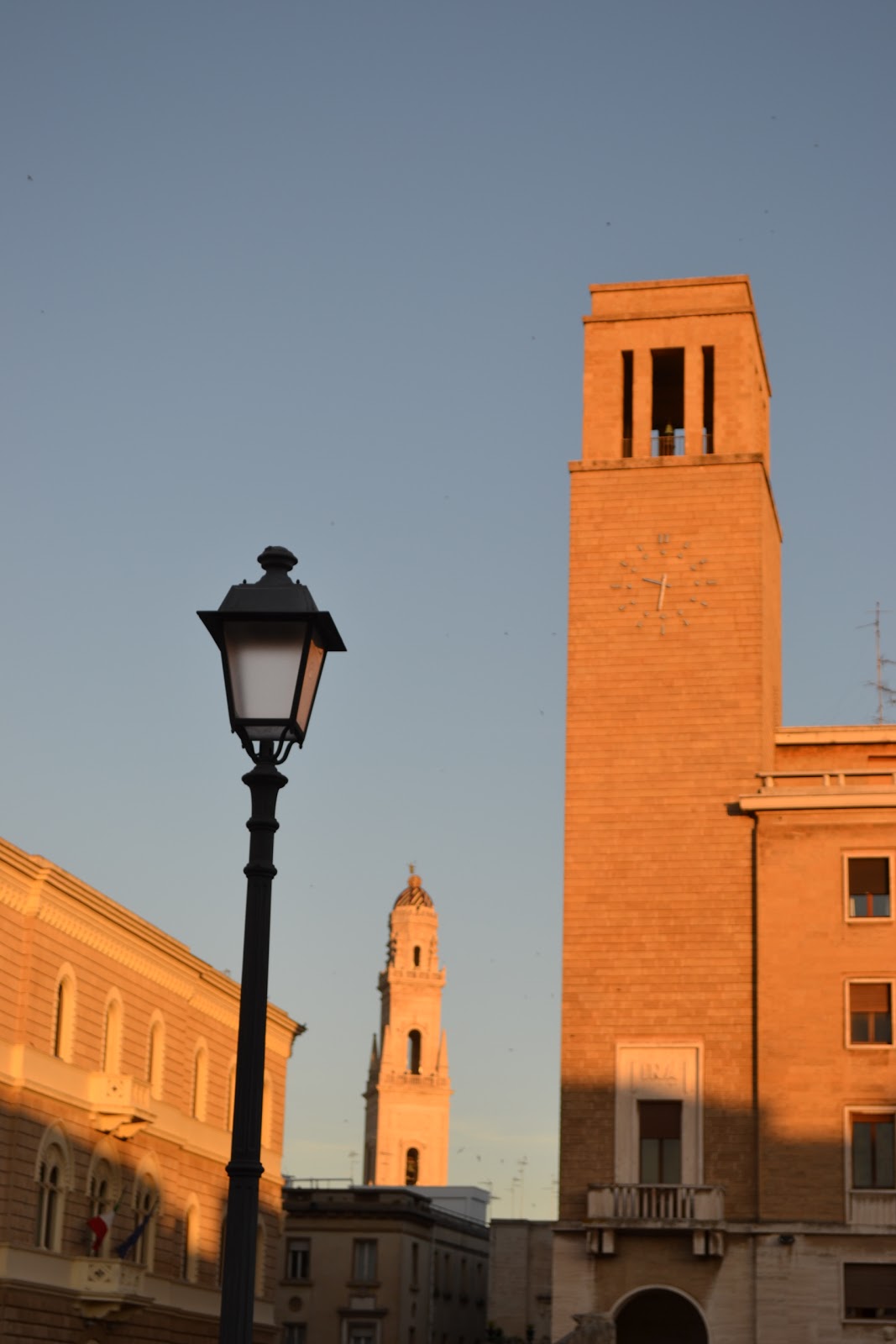
LECCE, SALENTO ITALY—Streaking starlings fly in perfect formation, darting around the monuments and ruins that dominate this ancient city near the Adriatic Sea. Baroque castles and gothic cathedrals stand in bas relief against the copper light of dawn and a brilliant azure sky. This is the cobble stoned heart of Puglia, the rich  wine growing region of Southeastern Italy. Surrounded on two sides by water; the Ionic and Adriatic Seas, it is in the “heel of the boot” and one of the most fertile growing regions in all of Europe. Olive trees, sweet herbs, cherry and apricot trees are liberally intermingled amongst the vineyards in happy cohabitation, their herbaceous and floral characteristics happily lending complexity to grape varieties with origins that harken back to the dawn of civilization.

“The soil is the soul of the wine,” proclaimed Vincenzo Verrastro,  an agronomist and wine expert who is my guide through this rustic and  achingly romantic region. “You see immediately the “black dust” underneath the red clay. Under that is a layer of limestone that gives the wine its minerality and complexity.”

Almost as a punctuation to his statement, winemaker Mariangela Plantamura rushed toward me with a handful of mint leaves and coriander blossoms so that I could smell the rich aromas that dominate the sensory landscape of the vineyards. “The presence of the flowers is a firm indication that everything we plant here is organic. The wines get their flavor and aroma from the soil and the plants that grow naturally here,” she said.

Neighboring winemaker Cassano Fiuppo of Polvanera winery agreed. “My wines, labeled 16 and 17, respectively, reflect the old vines and the land. You can taste and smell the “Black Dust” of the vineyard.”

The wines of Puglia are characterized by single vineyard designation and small production. “Quantity is the enemy of quality,” Verrastro declared. “Winemakers here in Puglia are scrupulous in keeping production down and training the vineyards so that the vines are stressed and the fruit is picked at its optimal level. For many years, there was a philosophy that quantity was the ambition. That attitude prevails no longer.”

A tasting of the wines of Puglia bore testimony to his assertions. “So many people are familiar with the wines of Tuscany, Piemonte, Venoto and Umbria to the north. We intend to make the world aware of the amazing quality that exists here in Puglia and the great value our wines represent,” he asserted.

The majority of wines from Puglia are excellently priced in relation to their quality Only a few of the best of the regions flagship wines approach the $80-$100 range. Most are priced at $12-$25 and offer comparatively high flavor and complexity for the money. The tour, aponsored under the banner of Puglia Best Wine and named Apulia Wine Identity, featured an accompanying food event called Apuia Opera Food, featuring a live, televised cooking demonstration featuring local chefs preparing recipes utilizing local specialties such as the region’s extraordinarily delicate cheeses, pungent herbs and abundant produce and outstanding locally cured hams and sausages. The live Cooking Show served as a showcase for the wines of Puglia.

PHOTO GALLERY:
-Lecce, Italy at dawn
-winemakers Mariangela Plantamura and Cassano Fiuppo
-the red clay and "Black Dust" of Puglia
-artichokes and other vegetables, herbs and fruit coexist with the vines
-agronomist and wine expert Vincenzo Verrastro
-Apulia Opera Food in action


A series of vineyard visits and formal tastings in the ensuring days featured one-on-one contact with the winemakers and private tasting sessions that allowed me and the other participants in Puglia Wine Identity to experience the wines in a variety of settings. The comprehensive experience confirmed my belief that wine is more than just a beverage. It is a way of life and a portal to culture and history that envelops the senses and enriches and enlivens the spirit.

Friday, June 15, 2012

Barefoot in the court of Mardi Gras Kings and Queens


Barefoot in the court of Mardi Gras Kings and Queens

Story and photos by Dwight Casimere


NEW ORLEANS---Antoine’s restaurant in the historic French Quarter is the country’s oldest restaurant to be operated by a single family. Established by Antoine Alciatore in 1840, the walls its private dining rooms are covered with photographs of the heads of the Krewes, the mysterious secret societies that organize and officiate the city’s annual succession of Mardi Gras parades. The elaborate gowns and costumes worn by Mardi Gras Kings and Queens over the past century are enshrined in glass cases throughout the restaurant. It was in this august setting that Jennifer Wall, sole winemaker at Barefoot Wine & Bubbly of California since 1995 unveiled her latest vintages of still wines and expanded line of Barefoot Bubbly to an intimate gathering of wine aficionados and media.

Wall is one of the most decorated winemakers in the industry. With 2,500 medals and awards to her credit over the course of her more than 16 years at the helm, she is poised to earn her 10th consecutive recognition by the parent company, E & J Gallo, for maintaining consistently high standards while doubling the winery’s production.

Barefoot wines were originally introduced in 1965 by self-taught California winemaker Davis Bynum. The wine, with its whimsical logo or a single barefoot imprint on the label was an instant hit.  Started as a single vintage made in his garage and available only in his tasting room, sales of the inexpensive wine quickly began to outpace those of his premium quality wines.  When Bynum decided to devote his attention to his premium quality wines, the Barefoot brand lay idle for more than a decade. Enter Michael Houlihan and partner Bonnie Harvey, who purchased the brand and resuscitated it, attracting the attention of wine powerhouse E & J Gallo who partnered with them to create a national brand which quickly became the most celebrated wine under $15 in the industry’s history. Named as the company’s sole winemaker in 1996, Jennifer Wall has continued the brand’s growth, introducing new varietals in addition to increasing the company’s dedication to charitable causes. Barefoot has also captured the imagination of the wine drinking public by introducing a club for Barefoot devotees called the “Barefoot Republic.” The club supports local charity events with a team of high energy “Barefooters” and has also become the official wine of the Association of Volleyball Professionals (AVP).

The key to Barefoot’s success, Wall said while serving up its signature Barefoot Chardonnay along with Oysters baked on the half shell, featuring the restaurant’s Original Rockefeller sauce created by Antoine’s in 1889, is that “we give our customers great value at a great price while giving them wine that tastes like the variety they see named on the label. When we make Pinot Grigio, we give them a wine that tastes like Pinot Grigio. When you taste our Chardonnay, it tastes exactly as you’d expect a glass of Chardonnay to taste and we do it all for less than $10 a bottle!”

Barefoot Bubbly Brut Cuvee and newcomer Barefoot Bubbly Pink Moscato are the runaway hits of the industry. Selling at under $15, they have dazzled both wine experts and novice drinkers alike. In a luncheon menu that spanned Antoine’s signature dishes such as Escargots a la Bordelaise paired with Barefoot Pinot Noir, Chateaubriand Filet with the restaurant’s legendary Marchand de Vin Sauce and Creamed Spinach coupled with Barefoot Cabernet Sauvignon, the meal was rounded out with the Grand Finale of Antoine’s celebrated Peach Melba served with Barefoot Bubbly Pink Moscato.


Glasses were lifted in a toast to Jennifer Wall and her outstanding wines that are a fitting tribute to the Mardi Gras royalty represented by Antoine’s glorious history from a winemaker who is fast on her way to becoming the undisputed “Queen” of California winemaking.

Photos Gallery:

-Barefoot winemaker Jennifer Wall holds court at Antoine's Restaurant in  the French Quarter
-Antoine's Original Oysters Rockefeller
-the private dining rooms at Antoine's
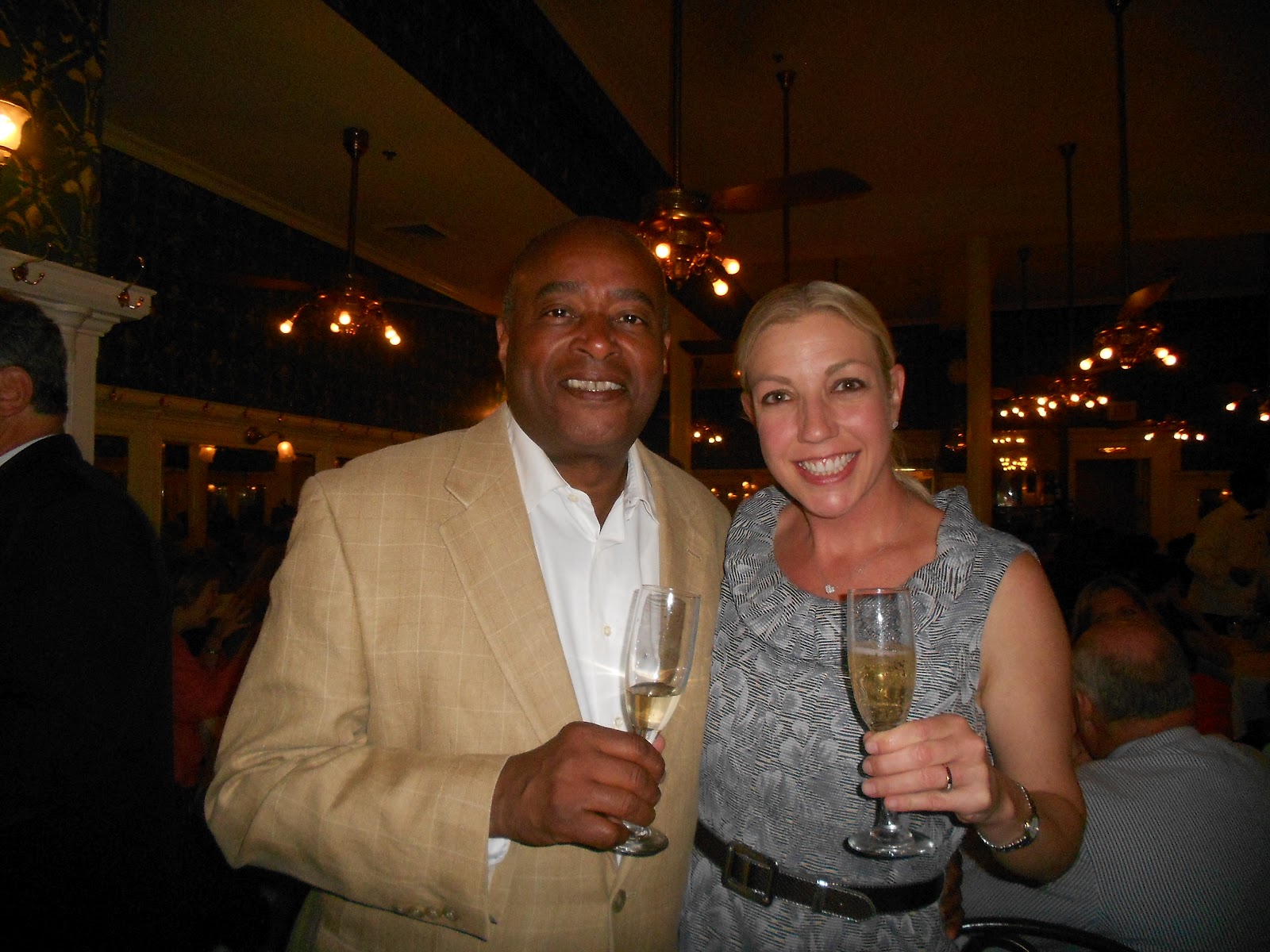
-Dwight The Wine Doctor with Barefoot Wine & Bubbly winemaker Jennifer Wall

Tuesday, June 5, 2012

Spanish wines: a bargain with taste to spare


Spanish wines: a real bargain with history and taste to rival world’s best

Story and photo gallery by Dwight Casimere

1. Bodegas Farina Founder Manuel Farina Sr. (r) with Dwight The Wine Doctor (c) and his son, Manuel Farina Jr. (l)
2. Bodegas Farina Wines on display at GastroArte, NYC
3. The first wine is poured at GastroArte
4. Chef Jesus Nunez's creative cuisine
5. Consul General of Spain Juan Martinez Salazar (r) and guests
6. Publicist Melanie Young (l) and guest
7. & 8. Chef Nunez's creations matched perfectly with Bodegas Farina wines
9. Inigo Ramirez de Haro Valdes, Cultural Attache, Manuel Farina Jr., Bodegas Farina owner, Chef Jesus Nunez, Manuel Farina Sr.,  Bodegas Farina Founder, Juan Martinez Salazar, Consul General of Spain
10. Bodegas Farina Vintage Estate Wines
11. The scene at GastroArte, NYC


New York--Spanish wines are an absolute bargain and many of them are top-rated in terms of flavor profile and that all-important price to quality ratio. One of the most popular and readily available is Bodegas Farina, which is celebrating its 70th anniversary.

To celebrate, the winery’s owners embarked upon a U.S. tour, beginning in New York City with a fabulous luncheon at
GastroArte, NYC, a restaurant that specializes in the pairing of wine and food. Executive Chef Jesus Nunez prepared a special menu, using mostly vegetarian ingredients, to pair with the wines created by winemaker Manuel Farina Perez, along with Farina president Robert J. Castellani, who were both in attendance. Distinguished guests included Juan Ramon Martinez Salazar, Consul General of Spain and  Inigo Ramirez de Haro Valdes, Cultural Attaché to the Consul General of Spain.

Farina wines are from the Toro region of Spain. The winery was founded in 1942. What sets the wines apart is their elegance. The wines have restrained tannins and maintain a flavor profile true to the land in which the grapes are grown and true to the flavor of the varietals. All of the wines tasted at the luncheon are in the $10 to $20 price range, a real bargain by anyone’s standards considering the abundance of flavor and the ability of the wines to pair amicably with food. With summer entertaining on the horizon, these are definitely wines that you might want to consider for garden barbecues and brunches.

The dishes that Chef Nunez prepared are very easy to replicate and if you have a home garden, you may have the ingredients already at hand. The first course was a masterpiece, a Study of the Tomato in all its myriad textures and flavors. The dish included all of the seasonal varieties from the plum and vine-ripened varieties to artsy Heirlooms. “You’d be amazed how different the tomato tastes if you just separate the skin and freeze it and cook it in a vinegar reduction or grill it. You can get so many different flavors and textures out of a single tomato,” Chef Nunez confided to me over a glass of Bodegas Farina Malvasia 2011 ($11), a clean, crisp, fresh fruit 100% Malvasia wine that went perfectly with the tomato dish. Bodegas Farina Primero, 2011 ($12), with its rich cherry fruit flavors brought on by a hearty mix of Tinta de Toro and Garnacha, gave the dish a yummy almost jammy flavor.

The next course, Eggplant with goat cheese, honey and mustard paired with three wines: Dama de Toro Tempranillo, an indigenous Spanish red grape similar to Cabernet, 2011 ($11), which lent very strong blackberry notes, Dama de Toro Tempranillo Roble Barrel Aged 2010 ($1`3), which had more oak character and Dama de Toro Crianza 2006 ($17), which added some pepper notes to the existing berry and bramble flavors of the other wines. The dish showed two things, the versatility to eggplant, which easily has the hefty and flavor abundance to be a main course and the ease at which it pairs with a delicious hearty red wine. If you’re looking for a light, inexpensive alternative to heavy barbecued meats for summer entertaining, eggplant is the bomb!

The Spanish aren’t big on desserts. In fact, when I was last there, a local Dunkin’ Donuts was the favored destination after the dinner hour, which is normally about 9 or 10 o’clock in Spain. A platter of Spanish cheeses rounded out the afternoon, paired with a Bodegas Farina 1973, (a real treat since its not available outside of the winery) and a sweet wine, Farina Val de Reyes “Tinto Dulce, ” also rarely available on the open market. There may be a few bottles on some restaurant wine lists or in specialty shops. If you see it, buy it, no matter what the price. It’s a real golden treasure!


Sunday, April 29, 2012

Catine Ferrari's Matteo Lunelli: a young lion continues a fabled family legacy-Part One of Two


Cantine Ferrari’s Matteo Lunelli: a young lion continues a fabled family legacy-Part One

Story and photo gallery by Dwight Casimere

VERONA, ITALY—Matteo Bruno Lunelli’s enthusiasm is uncontainable. He has recently been named Chairman of Cantine Ferrari, one of the most storied names in Italian sparkling wine. In his upper floor, temporary private office and tasting room in the Ferrari Pavilion in the massive Veronafiere convention complex at Vinitaly 2012, he shared his vision for the company, while also sharing tastes of his superior Trentodoc Metodo Classico Wines in celebration of the 110th anniversary of the Winery while presiding over a special luncheon of specialties prepared by their Michelin-starred chef, Alfio Ghezzi of Locanda Margon.

Prior to the luncheon, Matteo Lunelli made a major address to the media at the OperaWine news conference, a gathering of Italy’s top 100 winemakers held in conjunction with Wine Spectator Magazine. OperaWine was the premiere event of  Vinitaly,  the world’s largest gathering of wine producers, distributors and industry professionals with its more than 4,000 exhibitors and 150,000 participants from 94 countries. In his statements at OperaWine and during this personal luncheon and interview at his pavilion, Lunelli showed that he is fully aware of his newly gained stature at the helm of one of the most revered names among European sparkling wines. 

The words Champagne and Italian and not words that you would normally associate. In fact, by law, it is not possible, but that is precisely where the roots of Ferrari sparkling wines are germinated. At the dawn of the last century, it was Giulio Ferrari’s vision to create an Italian wine that could compete with the best French Champagne.

“He went to France, to the famous School of Viticulture in Montpellier to learn how to make Champagne,” Lunelli tells the story, while an assistant pours 2001 Giulio Ferrari Riserva del Fondatore , Trentino, Italy ($100).
“In 1902, there were only 400 bottles produced after he smuggled  Chardonnay grapes back to his native Trentino.”

Ferrari’s sparkling wines gained a small, but loyal following. It was in 1952, that the destiny of Ferrari changed when he sold the winery to Bruno Lunelli, who owned the most famous bar in the city of Trentino. “ He and my great grandfather were great friends. Giulio Ferrari continued to work at the winery until his death and in the present day, his sons Gino, Franco and Mauro continued to work at the winery.”

Matteo is the third generation of the Lunelli family to run the winery. With his appointment as Chairman at 38 years of age, this marks the affirmation of  the winery’s continued primacy in the industry.


Many years ago, a wine critic described Ferrari spumante as the “Rolls Royce of Italian sparkling wines. “  Crafted only from Pinot Noir and Chardonnay grapes that are grown on restricted soils, the wines are “champagne” in all but its name and place of origin.

“This comes from the founder, Giulio Ferrari, who started a small production with an obsession for quality,” Matteo explained. “In that day, he was a pioneer. Nowadays, everyone speaks about quality of wine, but Giulio Ferrari did it in 1942. In fact, he started at the beginning of the 20th century, when wine was sold as bulk wine. Then, it was considered more of a food than a pleasure.

“Giulio Ferrari was a pioneer in many ways. For example, he was the first one to bring Chardonnay to Italy.  There was no Chardonnay at that time in Italy, and he was the first one to bring it to Trentino.

“ He also had a strong knowledge of viticulture. He maintained a vineyard just for nursing vines. There’s a nice anecdote about the fact that Giulio Ferrari sold some Cabernet Sauvignon vines to the founder of Marchesi Antinori to use for their Tignanello (2008 Antinori Tignanello-$79.99).

“So, at the heart of our company is a culture for the quality of our products. We control the production of our wine from the soil to the table. We don’t buy our wine grapes from just anyone. We cultivate our grapes at our own estate and when we do buy grapes, we buy them from providers that we know and whom we constantly monitor.”

Lunelli maintains that because of this link to the small growers in the region, “there’s a strong bond between Ferarri and  the people of Trentino.”

Ferrari remains, essentially, a family operation. With the baton of chairmanship officially passed from patriarch Gino Lunelli, to his nephew Matteo, a legacy continues. Cousins Marcello, the oenologist, is head of production and vice-chairman. Camilla Lunelli is in charge of communications and external relations, while Alesandro heads the technical area and planning and has become a member of the board of directors of Ferrari and of the other companies in the group. While Gruppo Lunelli has been opened to external contributions at the highest level, the company maintains the features of a family-run firm, with regard to ownership and governance.


The stories of Ferrari sparkling wines and the Ferrari and Lunelli family legacies are only the beginning. There is a vision for the future that is evident in the dazzling array of Ferrari wines, both sparkling and still, that were unveiled in a private media tasting at the Ferrari Pavilion within the Trentino Hall at Vinitaly 2012.  More in Part Two.

Photos:
1. Ferrari Chairman Matteo Bruno Lunelli
2. Ferrari sparkling wines
3. Chef Alfio Ghezzi
4. His cuisine
5. Chairman Lunelli shares a toast with Dwight The Wine Doctor

Sunday, April 1, 2012

Vinitaly 2012 and OperaWine: where Italian Icons converge


Photo gallery
-Dwight The Wine Doctor with the Frescobaldi Dynasty; Lamberto, Tiziana and President Leonardo
-a delightful reunion with wine photojournalist and worldwide wine consultant Anna Pakula of Chicago and the world
-with Francesco Zonin, Executive Vice President Casa Vinicola Zonin
-A frieze of one of the Kings of Verona buried beneath the Pallazo
-with Marco Caprai, President of Arnaldo-Caprai Viticoltore in Montefalco
-Piaza Erbe at dawn
-Pio Boffa, President of Pio Cesare wines with his nephew, the next generation
-Dwight The Wine Doctor with Jalopo Bondi Santi, and panel members Thomas Matthews, Executive Editor Wine Spectator and Matteo Lunelli, Executive Board Member Altagamma
-Verona at dawn
-with Cristina Mariani-May, Co-CEO Banfi
-Veronafiere CEO Giovanni Mantovani holds court with VIP guests on the steps of the Pallazo della Ragione in central Verona
-Dwight The Wine Doctor with Santo Versace, Chariman of Altagamma Foundation

Vinitaly and OperaWine, where Italian Icons meet

By Dwight Casimere

Verona at dawn photo gallery by Dwight Casimere

VERONA, ITALY---Walking thru the cobblestoned streets of the walled city of ancient Verona at dawn, one can feel the presence of the Kings, Queens and Popes who are buried beneath its stately monuments. It was in such an historic setting, the Pallazo della Ragione, in the city’s central square, Plaza Erbe, in the shadow of a statue of the great author, Dante, that a first-ever event was held, OperaWine.

The new premiere event of Vinitaly 2012, OperaWine was the presentation of Italy’s finest wines poured by more than 100 of its Great Producers, as selected in cooperation the world's preeminent wine publication, Wine Spectator magazine. Frescobaldi, Antinori, Gaja, Pio Cesare, Sassicaia are legendary among Italian wines and their owners and winemakers were all there to personally pour their wines.

Dwight The Wine Doctor was privileged to participate as one of the OperaWine Guides, along with fellow wine blogger and charismatic Sommelier Charlie Arturaola and first Master of Wine in Asia and celebrated wine journalist and TV personality Debra Meiburg. We learned first hand the iconic winemaker’s great insights and shared in their expertise while conducting interviews with the aid of our video camera teams. Live feed updates were carried on Twitter and interview segments will be webcast on the Vinitaly and OperaWine websites at www.vinitaly.it and www.operawine.it.

As the winery owners, winemakers, and their VIP guests walked up the Red Carpet along the marble stairway leading to the upper galleries of the Palazzo, the star-studded evening took on the air of Oscar Night. In a sense, this was its equivalent with its collection of Italy’s Best Performers on wine’s world stage.

Among the first winemakers I encountered was a familiar face from my first experience at Vinitaly four years ago, Lamberto Frescobaldi, Vice President of Marchesi de’ Frescobaldi. For Lamberto, OperaWine was a family affair. In the company of his uncle, company President Leonardo Frescobaldi and his niece, Communications and Public Relations Director Tiziana Frescobaldi, he presented his ultra-premium Toscana Momoreto 2006 ($60). "This is a special blend, because it is the most prestigious wine of our Castello, produced from vineyards of the same name. It’s a blend of Cabernet Sauvignon, Merlot, Cabernet Franc and Petit Verdot, which is produced from vines that were planted 150 years ago on our estate. It really shows the bond between the wine and its terroir, which accounts for its unique qualities.“ Lamberto represents the 30th generation of the Frescobaldi family, one of the longest traditions in Italian winemaking history.

In a separate event, Lamberto hosted a special presentation in one of the Palazzo’s upper galleries of his Luce ($26) and Lucente ($30) 2009 wines, produced in collaboration with another name which is legendary in the world of American wine, Robert Mondavi of Napa Valley, California.

Luce was the first wine ever produced in Montalcino by blending Sangiovese and Merlot grapes. It is Lamberto’s pride and joy as a winemaker. It’s a supple wine with pungent notes of wild herbs and blackberries. Aged cheese is its best companion, but roast pork, wild boar (or “white pork”), stewed rabbit or other game meats would make for an excellent combination. Lucente reveals its typical Tuscan character with its robust flavor and elegant structure. This is a versatile wine also designed to go with modern, fusion cuisine.

Just across the aisle, Jose Rallo and her brother, Antonio, of Donnafugata wines of Sicily, were overseeing a tasting of their Passito di Pantelleria Ben Rye’ 2009 ($45). “I call this “meditation wine,” the effervescent Jose Rallo told me while pouring a glass of the crimson colored, naturally sweet wine. Intense notes of ripe peaches and apricots greeted my nose. The taste invited sensations of Mediterranean figs and honey. “This is a great wine to have with foie gras,” she said, slyly referring to my culinary passion. “It’s also great with blue cheese. I like to have it while reading a book or listening to music. That’s why I call it my “meditation wine!” Jose has one of the sweetest jazz singing voices you want to hear. She’s even sung at the Blue Note in The Village in New York, where she accompanied her music with a tasting of her wines. I bet I can get a CD of her’s online and enjoy listening to that while drinking a bottle of her wine. Neat!

Cristina Mariani-May is one of the bright stars of the Italian wine world and she presents the “new face” of Italian wine with her emphasis on hospitality and cuisine at Villa Banfi. Family proprietor and co-CEO of Banfi Vintner’s, America’s leading wine importer, her Castello Banfi Vineyard Estate in Montalcino, Tuscany is one of the crowning jewels of the region. Her Castello Banfi Brunello di Montalcino Poggio Alle Mura 2007 ($56) was one of the highlights of the evening.

“This is a really special wine and unique to our estate because it comes from dedicated vineyards that flow down from our historic Poggio alle Mura Castle, which is the crowning focus of our estate. The grapes are 100% Brunello Sangiovese and the vines were planted after over a decade of research in 1992 with the idea of isolating the ideal selection of clones to make consistently great Brunello di Montalcino.” Mission Accomplished!

In the afternoon previous to OperaWine, Vinitaly 2012 opened with a ground breaking symposium highlighting the preeminence of Italian fashion, wine and design "Opera Wine meets Altagamma-Italian Icons: Fashion to Wine." Santo Versace. Chairman of Altagamma Foundation, the organization dedicated to the promotion of all things good and lively among Italian luxury brands such as Versace, Ferrari and now, Italian wines, gave the keynote address. Versace’s speech was preceded by a distinguished panel hosted and moderated by Stevie Kim, Senior Advisor to Veronafiere CEO Giovanni Mantovani and General Coordinator of Vinitaly International and OperaWine, consisting of Ettore Riello, President Veronafiere, Thomas Matthews, Executive Editor Wine Spectator and Matteo Lunelli, Executive Board Member Altagamma.

Besides the cooperation of Wine Spectator, OperaWine was sponsored by Air Dolomiti, Asiago (which hosted a spectacular presentation with a live cheese monger, dramatically slicing wheels of Asiago cheese for tasting. It was one of the most popular stations of the evening), as well as Bormioli, Ferrarelle and Levoni.

Only 500 guests were allowed at each of the two tasting sessions of Opera Wine. Aficionados from across Europe, Asia and the United States came to this premiere tasting of the finest wines that Italy has to offer. I even ran into a long-lost friend of mine from Chicago, fellow wine photojournalist and author Anna Pakula, who is also a distinguished wine panel judge and passionate worldwide wine consultant.

There were two very fortunate people who got to attend as winners of a video essay contest, sponsored by OperaWine and the Wine Spectator, in which they told why they love Italian wine. For a wine enthusiast, the evening was like being in the Green Room at the Oscars, rubbing shoulders with the winners, but not even they would have had the experience of tasting these one of a kind, exquisite, handcrafted wines.