Wednesday, May 19, 2010

Gems of Italy sparkle in culinary palace


by Dwight Casimere

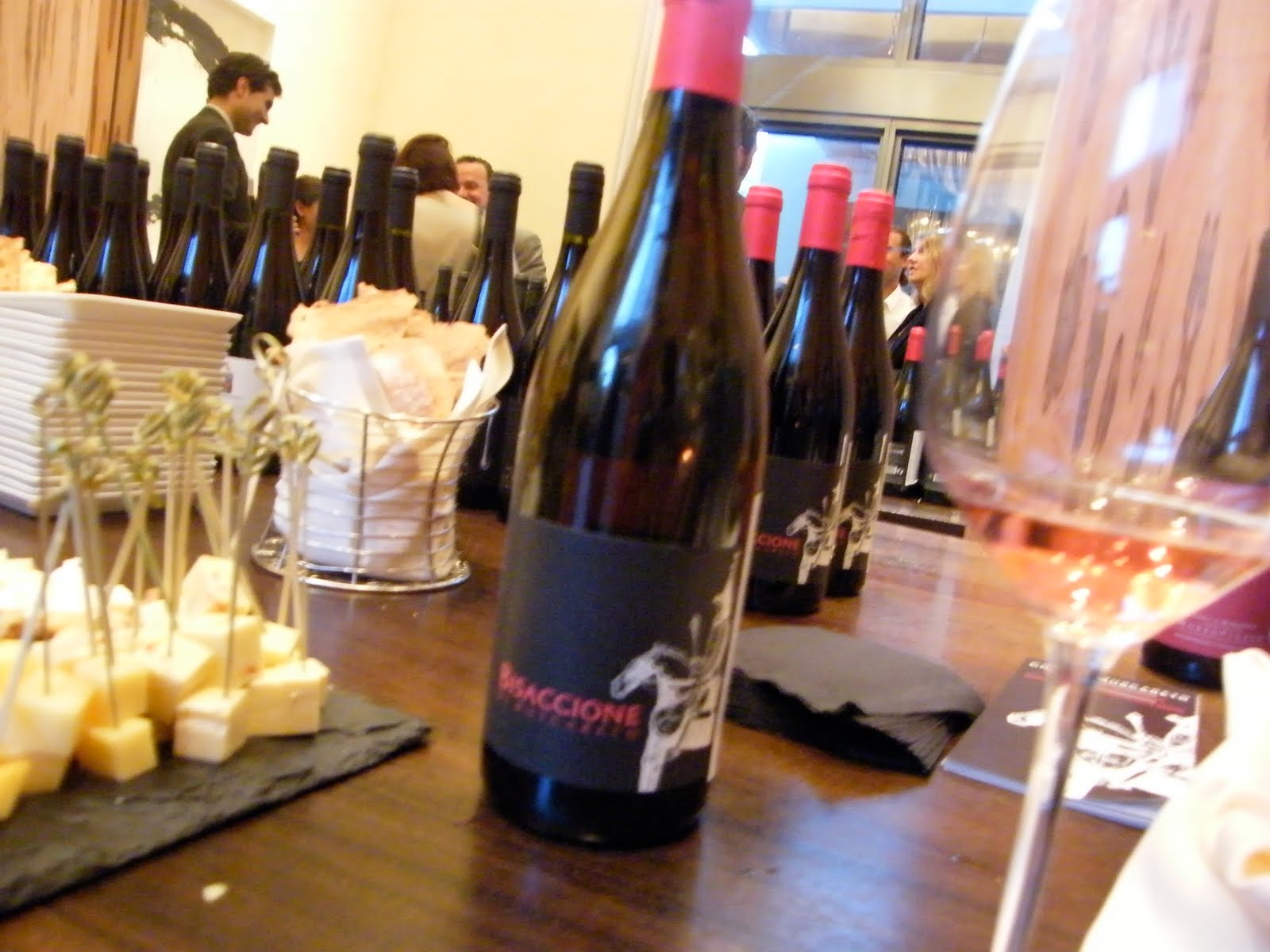
Enrico Giacomelli and Claudio Gabellini, co-owners of Conti Di Buscareto winery of Italy, were ebullient as they greeted a select group of wine media in their premiere Press Dinner, Hidden Treasures from the Hills of the Marche Region held at South Beach, Miami’s Quattro Gastronomia Italiana restaurant.

“These wines achieve their best expression when in the presence of food,” Giacomelli enthused while sipping a glass of sparkling Rose Brut made from the Lacrima Nera grape, which is unique to Le Marche.

Accompanied by an Antipasto of tuna tartar with capers, diced tomatoes, mustard and mache green salad, the fortunate diners dove into the most famous wine of the Marche region, Verdicchio, which was presented in two vintages; Verdicchio dei Castellii de Jesi DOC 2009 and Ammazzaconte, Verdicchio dei Castelli di Jesi Sellection DOC 2007. The two wines provided contrasting perspectives. The Castelli Di Jesi was floral, fruity and full of fresh, green apple flavor. The Ammazzaconte was more refined and complex with a slight bitter-almond aftertaste and hints of the French Oak barrels in which it was aged for 6 months.

The first course, Risotto with shrimp and asparagus provided the perfect accompaniment to the Ammazzaconte. The gentle brine flavor of the shrimp and the green minerality of the asparagus acting as counterpoints to the acidity present in the wine. The creaminess of the risotto made for a nice, cozy “umami” feel in the mouth. This is the kind of ‘comfort food’ they typically enjoy in the Marche and Quattro’s Chefs de Cuisine approximated the experience perfectly!

The House made tagliatelle with lamb ragu was an outstanding dish. I tasted the silky noodles prior to their being bathed in a shaving of fresh Parmesan. They were revelatory. There is nothing quite like the taste of fresh, handmade pasta. The taste is without comparison. The accompanying wines, Lacrima di Moro d’Alba DOC 2008 and Compagnia Della Rosa, Lacrima di Moro d’Alba DOC 2005 made for a Technicolor dining experience.

The Lacrima variety, “it means teardrop in Italian,” sales manager Claudio Luconi explained as servers brought out the First Course. “It is called that because of the appearance of a drop of the juice that breaks through the skin as it is harvested.” This early flowering, aromatic grape is brought to the essence of refinement in large oak vats for 8 months of refining. In the Morro d’Alba 2008 wine, the result is an intense, aromatic experience that brings out both the fruitiness and the fresh aftertaste. A light tomato sauce and the nutty flavor of the cheese made the wine literally dance on the palate.

I lingered over the Compagnia Della Rosa long after the pasta was cleared away in order to enjoy its lingering complexity. Aged in small oak barrels, it displayed delicate tannins and a pronounced fruity aftertaste mingled with spice and sensations of withered rose petals. The equipoise of delicate floral notes on the nose and deep red berries and oak at the back of the mouth made tasting the wine an intriguing experience.

All the culinary gloves were off in the next stellar course; thin, almost Carpaccio-like slices of the rarest Prime Beef Tenderloin, presented in their most pristine state with shavings of Parmesan cheese, slices of green pepper, a few capers and a sprig of fresh rosemary, which I broke by hand into tiny pieces to be chewed in concert with each bite. Combined with the Rosso Piceno DOC 2007 and the elegant Bisaccione, Marche Rosso IGT 2007 wines, it made for an absorbing dining experience that could easily have encompassed an entire evening. With each bite, I experienced a different quality from each of the wines. I found myself making a flurry of tasting notes on my Blackberry as I ate.

The best was saved for last. Verdicchio Dei Castelli Di Jesi Passito is made from Verdicchio grapes that have been affected by the Botrytis Cinerea, the ‘noble rot’, which occurs when the grapes are affected by cool temperatures after a hot day. This phenomenon usually occurs toward the end of the harvest. In Le Marche, it occurs in the first week of November. The wine then undergoes a soft pressing and is fermented in both small French oak barrels and stainless steel tanks for a total of 24 months. The wine is then aged in the bottle for 6 months. The resulting wine is unique and stunning. It possesses a bright, golden color with an intense bouquet and flavors of citrus, candied and dried fruits, honey and chamomile. It is a carnival in the mouth.

The kitchen wisely prepared a dessert that was not too sweet. It was a savory tart composed of almonds, figs and ricotta cheese. This more laid back approach to dessert allowed the wine to shine through. In hindsight, the wine could have stood alone as a dessert course. It can speak for itself.

Those who attended the dinner at Quattro experienced a singular event that will not soon be duplicated. Some of the wines introduced at the dinner will make their way into fine wine shops around the country. Others, because of their limited production, will only have been enjoyed by the lucky few assembled this night. The opportunity to attend this U.S. Premiere event will live long in memory. Arrive Derce Marche!

Monday, May 17, 2010

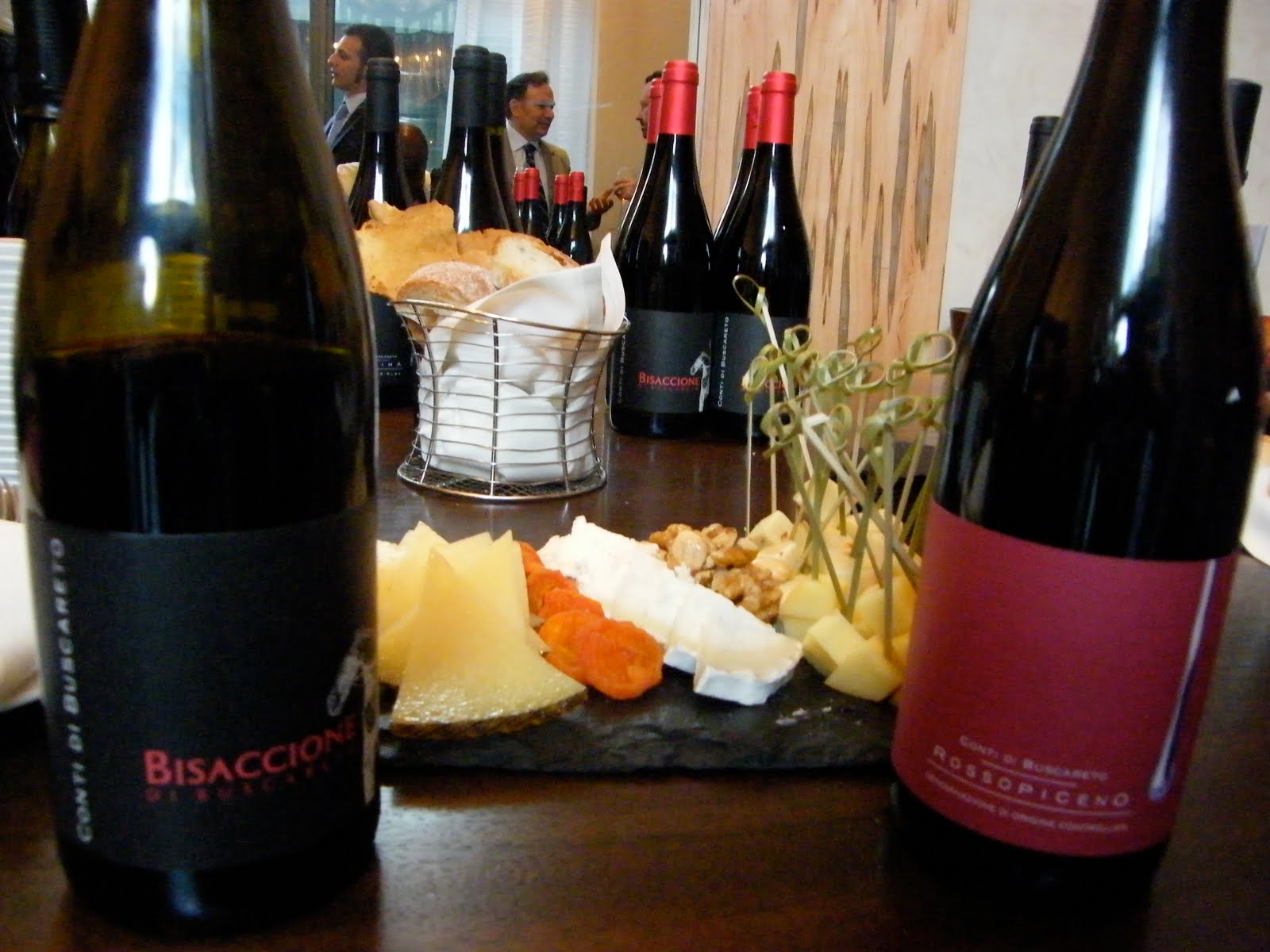
Italy's Marche Region shines with Conti Di Buscareto wines


by Dwight Casimere

“Most people associate “Cremant” wines with France, but their origin, like all great things, are Italian,” that bold assertion was made by Enrico Giacomelli, co-owner, with Claudio Gabellini, of Conti Di Buscareto wines of the Marche region of Italy. “We are on the same parallel as Tuscany,” Gabellini described, “That means we have the same micro-climate.”

Gabellini and Giacomelli built their state-of-the-art winery in 2002 and immediately began to create wines that reflected the unique varietals of the Marche region and to put their own stamp on the wines, which are quickly gaining a foothold in every American city in which they have been introduced. The wines have already gained popularity in New York and, in this outing at the prestigious W Hotel in South Beach, Miami, they are set to make their mark in Florida, before moving on the Los Angeles, Detroit, Chicago and Houston. The wines made a big splash at the recent VinItaly conference in Verona and are quickly garnering rave reviews from wine writers and critics in the United States. The fact that they are value priced and offer a big flavor bang for the buck is an added plus in a crowded international wine market.

Rose Brut, a sparkling wine made with “Lacrima” grapes, is a soft, floral sparkling wine created in the above-named Charmat method. Its distinctive pink color and floral aroma gives it an elegant and delicate finish with hints of rose petals and cherry on the palette. “This is really a fresh, slightly dry and aromatic wine that really makes it attractive in today’s market, especially among women.” Said Claudio Luconi, Sales Manager for Conti Di Buscareto. “We only leave the grapes on the skins for about an hour to achieve the ideal pink color, then they are soft pressed and treated in the autoclave with the Charmat method. It creates a delicate, sparkling rose that is both slightly dry and supremely aromatic. This is a terrific summertime sparkling wine with a lot of versatility and appeal.”

The wines ran the gamut from fruity whites to complex, dry reds. There was even a ‘botrytis’ late harvest white that lent its thick, honey-syrup harmonies to the symphony of flavors presented at the intimate tasting.

“Lacrima means tears,”Luconi explained, in referring to the indigenous grapes used in the creation of several of the wines that were tasted. “The grapes are very thin-skinned and pregnant with juice. When they are placed on the lees, the skins break and a tiny drop of juice presents itself, hence, they have been called the grape of tears since their first use in the 15th Century.”

The first white wine tasted was Verdicchio Dei Castelli Di Jesi. The Verdicchio Cultivar is produced almost exclusively in Le Marche. The history of the grape can be traced back to antiquity. Gentle pressing and fermentation in stainless steel barrels at a controlled temperature results in a wine that it slightly acidic with floral sensations and hints of hay and apples. “This is the perfect wine to go with shellfish and even some ‘white’ meats such as poultry or veal. Its extremely versatile because it has such a complete mouth feel and a sour aftertaste like green apples.”

The real standout of the evening’s tasting was Rosso Piceno, a blend of Sangiovese and Montepulciano grapes that was the real ‘Rocky’ of the bunch. Fermented and macerated over a 12 day period after malolactic fermentation, the wine if refined in stainless steel tanks and in the bottle for a total of 12 months. It is composed of 70% Montepulciano and 30% Sangiovese. It possesses a deep ruby red color and a strong aroma of cherries and Madagascar spices. Silky, warm and full-bodied, this is the essence of Le Marche!

The wines have yet to reach many markets such as Chicago, but they will be on the way soon. They are value priced and will sell in the $15 to $24 range. If you see them, grab them and have them with your favorite foods. You will not be disappointed.

Argentina-a rising star


by Dwight Casimere

A perfect spring evening, bathed in moonlight with warm tropical breezes and the soothing sounds of vintage Spanish Zarzuela provided the perfect setting to enjoy an array of newly arrived wines from Argentina. “Rising Argentina” was he event that took place at W wine boutique in Miami’s trend-setting South Beach area. It featured a South American singer circulating through the crowd to the romantic strains of a Flamenco guitar as guests sipped on Mendoza Chardonnays and Pinot Noirs from the Maipu Valley. Both the singing and a selection of ‘tapas’, light finger food that accompanied the rich flavors of the wine, provided the framework for an enjoyable evening. “She’s like an 80 year old Eartha Kitt serenading you,” the proprietor said of the talented singer.

The selections progressed in flavor profile from light and fruity to hearty reserves with a complete price range from value priced (2007 Bodega Lamadrid Cabernet Sauvignon Mendoza $11.99) to a serious 96 point-Robert Parker rated reserve (2006 Vina Cobos, “Nico” $169.99). All of the wines had one thing in common, an abundance of flavor and richness.

2006 Kalken Malbec Ultra ($16.99) attracted a great deal of attention. It is a full-bodied, rich red wine deep blackberry flavors and roasted coffee on the nose. This is the wine to have with summertime barbeque and grilled meats. If you happen to visit one of those Argentine steak houses or a Brazilian Churascurria, this is a great wine to order with the parade of grilled, marinated meats that will ensue.

2007 Bodega Catena Zapata Chardonnay of Mendoza, Argentina’s primary growing region, was one of the best examples of that varietal as interpreted in South America. No, this wine is not named for the famous Mexican revolutionary of the last century. Nicolas Catena Zapata has consistently earned rave reviews and high ratings for his interpretations of Chardonnay over the past two decades. His 2007 represented here earned an 89-point rating from Stephen Tanzer’s International Wine Review. The grapes are sourced from one lot in the Adrianna Vineyards of the Mendoza. Zapata is a major owner of choice vineyards around Mendoza, so his winemaking team has the pick of the best grapes from which to build superior wines. For the price ($19.99), this wine could go toe-to-toe with any Napa Valley Chard boasting twice the price tag.

Its no surprise that the lush Mendoza region has attracted one of the great names in winemaking in the world, that of Barons de Rothschild. Bodegas Caro is the source of this Red Bordeaux Blend that was the standout of the entire tasting. With its deep, red color, firm tannins and nose of roasted meat with notes of berries, plums and currants, it is as complete a flavor experience as you could hope for. It possesses a soft palate with hints of black cherry and earthy mushrooms at the end. It tastes great now, but a bit of aging will bring out the dominant plum flavors even more. This is a wine that pairs perfectly with a prime, aged steak with black peppercorn crust or forest mushrooms, such as morels or truffles. It can also stand alone, accompanied by a Maduro cigar and a roaring fire.

The wines of Argentina are readily available at your local wine retailer. W Wine Boutique has established an outstanding reputation as an online wine merchant and has many regular clients throughout the United States and globally. Their pricing is generally below market for many upscale international wines. The online retail shop can be reached at www.Wwineboutique.com.

Tuesday, May 11, 2010

Miami Rum Renaissance: Beach Blanket Babylon!


By Dwight Casimere

Sandy, sun-drenched beaches, bongo rhythms and a cortege of beauties serving premium rum cocktails poolside at The Raleigh Resort in South Beach, Miami, provided the ingredients for the Grand Tasting of the Miami Rum Renaissance Festival 2010.

From light, almost floral aromas and flavors to deep, rich mahogany cognac-like esters, more than a hundred of the world’s premium rums showed their versatility in a dizzying array of cocktail creations served in the tropical atmosphere that is their birthright.

“The way we make rum, it’s like an art form,” said Javier Figueroa, Director of the Rums of Puerto Rico program, based in Puerto Rico. “It takes a lot of craftsmanship to do our rum.

Rums, their texture, colors and flavors are as varied as the colors of the rainbow. “We have the light rums, which compete head-to-head with vodka. We have the Gold Rums, which are aged at least two to three years and then we have the super premium rums, which are aged anywhere from six to twelve years and those you can drink on the rocks or straight up or neat in a snifter like cognac. People should know that whatever your taste preference is, there’s an alternative with rum.”

Dennis Rodman, the former Chicago Bulls superstar, Celebrity Apprentice contestant and all-around eccentric was holding court in the Ron Zacapa cabana. Raising a glass of 23-year-old Centenario ($39.99), he declared. “Dwight you know me from ‘the Day.’ I’m a Jagermeister man and a cognac and cigar man all the way. But this stuff here—this is excellent. You here what I said, ‘cause I don’t use that word often. This is EXCELLENT!”

Dennis was not exaggerating. The rum was excellent. Dark and rich, it had all of the properties of a fine cognac with hints of the French oak barrels that it spent six months aging in. There were flavors of apricot and dried fruit on the tongue and a whisper of smoke as it slid smoothly down the back of the throat. This was perfect rum to have with one of the excellent Cuban-seed cigars that were being prepared by master rollers just across the way.

Ron Abuelo rum of Panama presented a delectable array of cocktails with its Anejo ($15.99), 7-year ($22.99) and 12 year old ($35, in its Premiere U.S. tasting) rums. Abuelo (‘grandfather’ in Spanish) is authentic, dark rum made from sugar can grown on their estate. The rum is best drunk neat or with a few cubes of ice so you can appreciate the rich, complex flavors that are not unlike those of a reserve cognac or brandy. Despite its dark amber color, the rum is somewhat light in texture, giving it an almost ephemeral quality. It glides over the tongue, releasing a rush of tobacco and dark roast flavors before vanishing in a whisper of oak and smoke at the back of the tongue. The word “outstanding” comes to mind when thinking of this rum in hindsight.

Ron Barceló Imperial ($24.95) is lush, buttery toffee rum with a rush of delicate floral aromas on the nose and delicious dried fruit dancing on your tongue. Its distinctive brilliant copper color almost jumps out at you in its distinctive ‘soft shoulders’ shaped bottle. Bikini clad beauties were on hand to entice VIP party-goers with a selection of cocktail creations from traditional mojitos to exotic Daiquiri creations, but I see no need to have Ron Barceló any way other than in its natural state, straight up in a glass or cut-crystal snifter.

Vizcaya VXOP Cask No. 21 Cuban Formula Rum ($35.99) was a real scene-stealer. It has the pedigree to back up its reputation as well. A Gold Medal winner in both the 2007 and 2009 Ministry of Rum Tasting Competition, this brown rum is distilled from fermented fresh sugar cane juice and then aged in used whisky and bourbon barrels. The results are nothing short of dazzling! This is a favorite among serious spirits aficionados and, priced under $40, is a real go-to for drinkers who would normally spend a hundred bucks or more to get the same experience in a different type of high-end spirit. I’d have Vizcaya in my garden any day of the week!

Just for fun, I took a tour of St. Aubin’s Rhum Agricole selection of flavored rums, among them White ($32.54), Vanilla ($32.87) and the newest incarnation, Coffee ($35.54). There wasn’t a Captain in the house. First of all, the vanilla pods used in this infusion are from St. Aubin’s own vanilla plantations and are among the most pungent in the world. I was given a few strands to take home for my own cooking experiments and the aroma quickly filled the room. On the palate, the vanilla is upfront with agricole notes still coming through. The sweetness balances the rum out completely and makes for a wonderful sipping experience. St. Aubin’s Vanilla is great over ice or in making the perfect daiquiri.

It was great catching up with an old favorite from my sailing days at the Sausalito Yacht Club near San Francisco, Seven Tiki Spiced Rum ($17.95). This is probably the first ‘step-up’ rum most drinkers will have when they graduate from the mass-produced commercial stuff. For the price, it can’t be beat. Deep brown amber in color, it mimics the volcanic earth the nurtures the sugar cane used in its production. This rum captures the scent of Fiji’s forests where it is nurtured. Hints of sugarcane and vanilla are accented by flavors of peach, banana and dark wood.

I would be remiss if I didn’t mention the array of flavored rums presented by the House of Bacardi. VIP events included a visit to the new Bacardi Americas Headquarters in Coral Gables, Florida. The visit included an excursion through the World of Bacardi and a walk down the Sugarcane Corridor to learn of the legacy created by Don Facundo Bacardi Masso that has become one of the most recognized brands in the world. The Emilio Bacardi Company Museum is like a life-sized family album containing rare family photos and historic memorabilia dating back to the 1860s. Back on the beach, Rum Festival revelers got a reminder that the famous brand isn’t living on its historic laurels. They got an elaborate introduction to Dragon Berry Rum ($17.95) and Razz Raspberry ($17.95) served by some of the most beautiful Beach Blanket Babes this side of Santiago de Cuba, the hometown of the original distillery.

Brazilian producer Leblon showcased its Cachaca and Caipirinha ($26.95). Leblon is an ultra-premium cachaca produced in Minas Gerais, Brazil. The rum-like spirit, made from fresh-pressed Brazilian sugar cane, is the main ingredient of Brazil’s national cocktail, the Caipirinha. It was served as a sorbet by an attention-grabbing trio of seductive servers at the Caribbean Beach party cum Grand Tasting. This put the punctuation point on a splendid afternoon of sippin’ and swingin’!

Post

Miami Rum Renaissance: Beach Blanket Babylon!


Saturday, May 8, 2010

Miami Rum Renaissance Festival 2010-Rum's time has come


Miami Rum Renaissance 2010-Rum's time has come


Story and Photos by Dwight Casimere

South Beach, Miami, Florida-“”Rum’s time has come!” Robert Burr, producer of the second annual Miami Rum Renaissance Festival, made that proud declaration. Seated in the elegant seaside floral gardens of the Ritz Carlton, Key Biscayne, Burr pointed to his surroundings to illustrate his point.

“Rum is having a Renaissance. Rum is old, but its being rediscovered,” Burr said. That’s the key. There’s so much range in rum that you’re never finished discovering new things. “Tequila is a great example of how that happened. You never heard the words Tequila and ‘fine sipping’ in the same sentence twenty years. It was something that you didn’t taste; you just banged it down in a single shot. Now, that’s all changed.

“The history of rum is the history of the western hemisphere. It truly is the beverage of the New World. It goes hand in hand with the colonization of North America. Every island makes the rum the way they want it. Most bourbon comes from Kentucky. All Irish Whisky comes from Ireland. Tequila comes from a very small part of Mexico, but rum comes from wherever there’s sugar cane growing and they make it the way they like it, with their own sensibility.”

Hundreds of rums were tasted over the five-day festival in some of Miami’s most prestigious venues, from the rooftop lounge of South Beach’s Gansevoort Hotel and the Epic's River Cafe and Area 31 along Miami’s burgeoning riverfront to the lobby bar and lounge of the Ritz Carlton along the beach.

“There’s something about rum where it just fits. It’s the antidote for the hectic lives that we lead. Rum is a sailboat, an island, a palm tree, and a swimming pool. Your toes in the sand. A coconut. A beautiful girl in a bikini. We need to have a balance in our lives. We need to work hard, but we also need to have some fun. At the same time, we need to travel and what better way to travel to beautiful tropical places than by simply opening a bottle of rum!”

Some of the rare rums that were tasted at the Renaissance will never be tasted again. “They just aren’t available in this country or there’s simply no more to be had,” Burr explained. “Many others are readily available at your local liquor store or fine wine and spirits purveyor. Some of the familiar names, such as Bacardi, which has its national headquarters and museum in nearby Coral Gables, Florida and Abuelo and Appleton rums, were represented. Lesser know rums with exotic names like Pusser’s Rum, Palo Viejo of Puerto Rico, Vizcaya Cuban rum and St. Aubin Rhum Agricole and Velvet Falernum provided a kaleidoscope of flavors and colors that ran the gamut. From white, almost wine-like acidity to deep, dark rich mahogany flavors of cognac, coffee and tobacco, the rums all had distinctive characteristics. They are delicious served ‘neat’ in a hefty glass or snifter, on the rocks, or as the base for an exotic, tropical drink like the Mojito.

More on the Celebration of Cane Spirits in the New World at the Miami Rum Renaissance Festival and my tasting notes in the next installment.