Monday, May 9, 2011

James Beard Awards bestows "Oscars" of the culinary industry on celebrity chefs


Dwight The Wine Doctor: James Beard Awards bestow industries “Oscars” on the nation’s best chefs and restaurants

Story and photos by Dwight Casimere

1. Chef Emeril Lagasse with Dwight The Wine Doctor

2. Dwight Casimere with Food Network’s Bobby Flay

3. A chef and his porcine friends “ham it up” on the Red Carpe

4. James Beard Award celebrant at Lincoln Center Plaza

5. Celebrity Chef Marcus Samuelsson of Harlem’s Red Rooster restaurant, a past James Beard Award winner

6. Outstanding Chef of the Year winner Jose Andres’ minibar restaurant offering of Petrossian Caviar and prosciutto “tacos” at the VIP reception

New York—Petrossian Caviar and Perrier-Jouet Grand Brut champagne greeted celebrity chefs and winners and nominees of the annual James Bear Foundation Awards ceremony at Lincoln Center, the “Oscars” of the culinary industry. Celebrity chefs Bobby Flay, Jacques Pepin and Emeril Lagasse rubbed shoulders with this year’s nominees and winners, including Chef Stephen Stryjewski of Cochon New Orleans, who took home the James Beard award for best chef in the south from Emeril, his fellow New Orleans star chef.

Other winners included Chef Jose Andres of minibar in Washington, D.C., who was named the Outstanding Chef of the Year at the Lincoln Center gala. San Francisco’s Michael Tusk of Quince and Cotogna was named the best chef in the Pacific region. Popular Chicago restaurateur Rich Melman of Lettuce Entertain You was named Outstanding Restaurateur.

In the wine and distilled spirits category, Per Se in New York won for Outstanding Service. The Modern in New York took Outstanding Wine Service honors and Old Rip Van Winkle Distillery in Louisville, Kentucky won the Outstanding Professional Award.

Among top awards, revered Chef Jean-Georges Vongerichten's ABC Kitchen in New York was named Best New Restaurant.

Saturday, April 16, 2011

Vinitaly 2011 Day Two: Italian sparklers lead global surge


Photos
1. Carpene Malvoti Prosecco in honor of President Obama's Inauguration Day
2, 3 & 4. Sparkling Italy tasting area at Vinitaly 2011
5. Sparkling Italian Pavilion at VeronaFiere

Part Two-Vinitaly 2011: Italian Sparklers bubble to front row on world stage

Story and photos by Dwight Casimere

Verona, Italy—Italian sparkling wines are captivating the palates of wine lovers everywhere and are fast becoming the number one choice of wine drinkers around the world. That fact became evident in a series of tastings on Day Two of Vinitaly 2011 in the massive VeronaFiere convention center, where a cavernous space between two of the center’s ten exhibition buildings were devoted to nothing but “Sparkling Italy.”

Prosecco sparkling wine has become the most widely known and has risen sharply in popularity in markets outside of Italy, particularly in the United States. Mistakenly, the word Prosecco has become the generic term for all Italian sparkling wines among American drinkers. They are unaware that Prosecco is actually a protected designation under Italian law and is made exclusively from the native Glrea grape, formerly known as Prosecco. The first Prosecco to reach U.S. shores was sweet and barely distinguishable from the better-known Asti Spumante sparkling wine produced in the Piedmont region of Italy. Improved production techniques have resulted in a number of very high-quality drier sparkling wines that are barely distinguishable from their counterparts in France.

Currently, Mionetto is the largest importer of Prosecco in the U.S. market. It ‘s flagship varietals, Mionetto Prosecco Brut, is a very reasonable $9.99 and is quite good for the price. That may account for the fact that since its introduction in 2000, it has reported double-digit increases in consumption almost annually. Mionetto’s other sparklers, Brut Vadobbiadene Spumante ($12.99) and Sergio Prosecco (the brands’ top of the line at only $18.99), still remain stunning values when compared to their competitors. Mionetto is a family-owned company, based in Brooklyn, New York. The Mionetto family has become the nation’s leader in terms of educating the public about Prosecco and is thus, the brand leader in the U.S. market. Now, other Italian sparklers are set to step out on the world stage, and what better place to strut their effervescent stuff than on the global platform that is Vinitaly!

I arrived at VeronaFiere straight from a nearly ten-hour Alitalia flight to the Sparkling Italy pavilion between buildings 8 and 10, where a premiere tasting and celebration was underway at Carpene Malvoti, where it unveiled its special “1868” Prosecco in honor of the 150th anniversary of the Unity of Italy, which became an underlying theme and cause for many celebrations at this year’s edition of Vinitaly. The entire line of Carpene Prosecco’s fall within the $11-$18 range and represent some of the finest from Italy’s Veneto region. Their Prosecco’s are noted for their mellow citrus flavors and a light orchard fruit nose that recalls white peaches and pears. That’s perfect because the juice of white peaches is the primary blending ingredient with Prosecco, of the popular Bellini, similar in purpose and popularity to the Mimosa in the U.S., which is flavored with orange juice. Carpene Malvoti is among the leaders of the Prosecco movement toward a drier wine, with almost no residual sugar. The “1868” tasting was combined with some velvety Norwegian salmon, but this reporter spotted several imbibers downing forkfuls of a Strudel like affair offering with a semi-sweet Marsala flavored custard filling. Romano Chietti, founder of Siena Imports of San Francisco, which imports Carpene Malvoti to the United States, informed me that their Prosecco was now a part of U.S. history. A special edition of 200 bottles of its Prosecco DOC di Valdobbiadene Cuvee Extra Dry was served to the then new President and First Lady Barack and Michelle Obama at a Celebration Dinner, held on the eve of the official Swearing-In ceremony on Capitol Hill, organized at the National Press Club for the Arkansas Society. Guests included former President and First Lady Bill and Hilary Clinton. The thousand guests dined on a pheasant and duck dinner after a toast of Carpene Malvoti Prosecco Extra Dry, poured from the special edition bottles, which featured a stylized portrait of the President-elect, who also received a bottle of the special Prosecco. There are only three bottles remaining, and this reporter was privileged to drink from one of them!

Italian sparkling wines, in general, are one of the “hot spots” in the wine universe. Exports are growing exponentially in the United States in spite of the financial meltdown. The growth of the Prosecco sector alone, is leading the surge.

Italian sparkling wines are made from a whole host of grape varieties, with Prosecco,the most common and the most popular. Some 600 wineries make Italian sparklers in 18 wine growing regions. That means roughly 400 million bottles were made this past year and about 40 million of those, figuratively, are heading to a bottle shop near you!

Friday, April 15, 2011

Old wine dynasties break new wine ground at Vinitaly Verona 2011


1. VeronaFiere convention center in Verona, site of Vinitaly 2011
2. Sharron A. McCarthy, CSW, Vice President-Wine Education BANFI
3. Lamberto Frescobaldi with Dwight The Wine Doctor
4. The Grand Tasting Hall in the Old City of Verona


Story and photos by Dwight Casimere

Verona, Italy—This picturesque, historic city was the setting for the wine industry’s largest presentation of fine wine on the international stage. The 45th Vinitaly closed with more than 150,000 visitors in attendance, with a third of them traveling internationally from Germany, the United States, Canada, the United Kingdom, Switzerland, France, Austria and Eastern Europe. Major attendance from Russia, China and Hong Kong was also noted.

“Despite the dramatic events affecting Japan,” said Giovanni Mantovani, CEO & Director General of VeronaFiere, organizers and sponsors of Vinitaly, “attendance by Japanese buyers held steady.”

More than 4,000 exhibitors from 23 countries filled more than a million square feet of convention space in the VeronaFiere’s ten-building exhibition center, with an overflow of technical exhibitors and purveyors of olive oils and specialty food products filling tents encircling the massive property. The exhibition area was so vast that trolley cars were utilized to transport visitors. The sheer size of the event confirmed Vinitaly’s status as the largest exhibition for the wine business and culture, exemplified by this year’s motto: “The World We Love.”

“Vinitaly is set to change its dates,” the President of VeronaFiere, Ettore Riello declared during the Inauguration Ceremony. “This is an important decision that extends the days dedicated to business and also seeks to meet the needs of caterers, chefs and wine bar and restaurant owners, since the new schedule (Sunday through Wednesday, rather than Thursday through Sunday), is better suited to their weekly closing days.”

Old and new producers presented their wares side by side in elaborately constructed booths and display areas. Focused tastings and on-site premieres lent a festive atmosphere to the proceedings. The list of names of some of the most legendary wine producers were prominently displayed throughout the exhibition halls, as wine producers put their newest and best foot forward. “This is where we have our best opportunity to create excitement on a world platform,” said Lamberto Frescobaldi, scion of the noble Italian family which produces Marchesi de Frescobaldi wines of Florence. The family legacy dates back to the time of the Medici’s.

The atmosphere at Frescobaldi’s wine tasting area was intense. Set in a display area constructed as a replica of the family estate, Lamberto appeared for a brief moment to share his latest releases. Speaking excitedly about the winery’s latest releases, his spirits were buoyed by the surge of interest among industry professionals for the new, elegant wines he was offering.

The Frescobaldi family and Napa Valley’s Robert Mondavi winery are set to release two more joint venture wines-a Pinot Grigio and a Sangiovese bottled under the Danzante label. The joint venture already makes two other Sangiovese-based blends: the high-profile Luce ($63, and a personal favorite, as it is so food-friendly), which is made from grapes grown at Frescobaldi’s Castel Giocondo estate in the village of Montalcino in Tuscany, and Lucente (a steal at $26), which is sourced from various vineyards throughout Tuscany. Both offer a tour de force of intense fruit flavor, balanced with a mild acidity that creates a lingering sensation on the palate. Danzante ($10-“dancing,” in Italian) is made from grapes sourced outside the Tuscany region. Pinot Grigio comes from Venezia, in the north, and presents a crisp, melon and citrus flavor with a beautiful golden straw color. White wine lovers will find this versatile wine just the right accompaniment to summer salads and seafood. The Sangiovese ($10) is from the Marche region, one of the latest to come out of the shadow of neighboring Tuscany to gain worldwide acclaim. According to marketing spokesperson Nancy Light, the wines are designed to compete with similarly priced, popular wines, such as Santa Margherita and Gallo’s Ecco Domani line of wines. The two Mondavi-Frescobaldi wines are newly available on the shelves of most popular wine shops, with about 40,000 cases available in the U.S. Winemaking is overseen jointly by Tim Mondavi and Lamberto Frescobaldi.

Castello Banfi continued its Pursuit of Excellence at its expansive tasting area, also designed to replicate its massive castle estate. The massive medieval stone castle expresses the timeless poetry and elegance of Montalcino and the stunning Tuscan landscape.

Sharron McCarthy, CSW, is Vice President of Wine Education for the 65-year-old Long Island, NY based company. Best known for its popular Riunite Lambrusco, the company has since achieved landmark status as #3 on Wine Spectators “top 100 list” for its elegant Brunello di Montalcino DOCG ($58), 100% Sangiovese wine from its Tuscany estate. Three generations of the Mariani family have built Banfi into America’s largest importer of Italian wines.

“We’ve been a real trail-blazer in the industry,” McCarthy said as she shared copious tastes of the vineyards latest releases at one of their private tasting tables inside the castle-like structure. You’re probably most familiar with our Vigne Regali ($26) sparkling wine, which is a real popular favorite during the Holidays and around Valentine’s Day.” Vigne Regali comes from estate’s vineyards in Piedmont. Brothers John and Harry Mariani acquired the historical winery known as Bruzzone, known for specializing in sparkling wine production since 1860. The sparkling wine, with its distinctive deep, Ruby-red color, is dedicated to Metodo Classico production, whereby each bottled is hand-riddled while resting inverted on pupitres which allows the yeast to collect in the neck of the bottles while they lie resting inverted. The meticulous process imparts character and intense flavor to the wine. The surrounding barrel room, which was recently renovated and adorned with artistic elements also plays host to the maturation and refinement of Banfi’s other Piedmont wines, Barbera ($43) and La Lus Albarossa (2007-$24). Both have exceptionally rich flavors that proudly represent their region. The price/value quotient is quite high considering the intensity of flavor.

Winemaker Matteo Rocca of Rocca Vini Superiori had perhaps the most poignant story to tell of the afternoon. “I am presenting by 2009 Donna Anita Tarantino Rossa ($32), which is named in honor of my mother.” The Rocca family has been involved in the wine industry since 1880. Their vineyards and estate in the heart of Salento, near the splendid Ionian coast, is a monument to their passion for winemaking.

Friday, April 1, 2011

Cantinetta Piero and Hotel Luca: The road to Tuscany winds through Napa Valley


Photos:
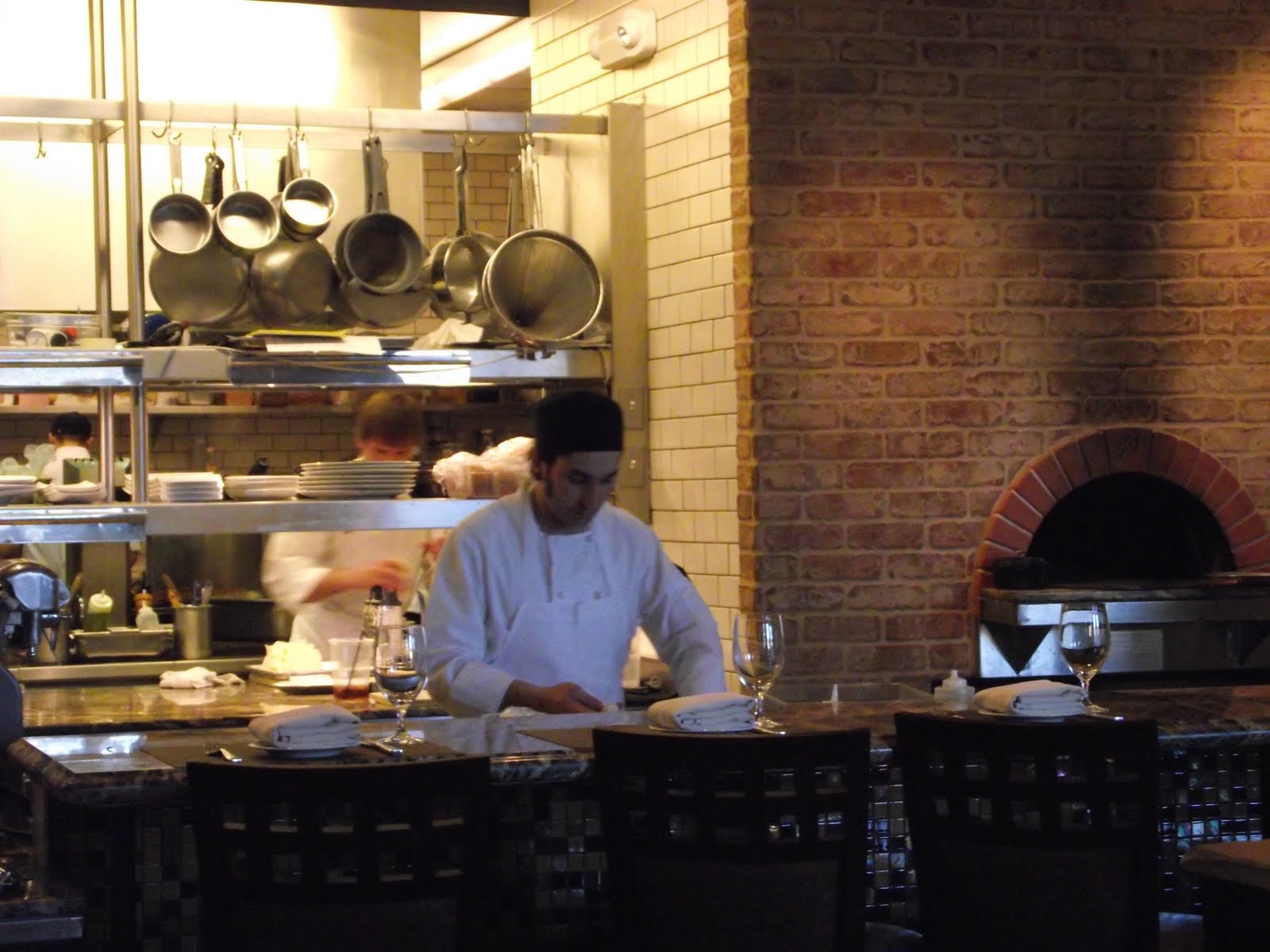
1. Pizza with Egg from the wood burning brick oven at Cantinetta Piero
2. Brick oven
3. Diners enjoy the Salume "bar"
4. Artisan Salume aging locker
5. Open plan kitchen at Cantinetta Piero
6. Chef de Cuisine Craig di Fonzo

Hotel Luca: The road to Tuscany winds through Napa Valley wine country

Story and photos by Dwight Casimere

Napa Valley—Cantinetta Piero restaurant in Hotel Luca is one of those off-the-beaten path finds that will have you scratching your head and wondering if you hadn’t entered some kind of time and space warp and landed in the heart of Tuscany. The hotel and restaurant, although relatively new boasts 200 year old Italian roof tiles and 300 year old Italian courtyard floor tiles as part of its construction, and the kitchen, ably headed by master Chef de Cuisine Craig di Fonzo, is an alchemist’s laboratory where local fresh produce, meats and seafood are transformed into tastes and smells that conjure up daydreams of basking in fields of fresh rosemary under the Tuscan sun.

I knew I was in Roman heaven when I noticed the wood burning brick oven and proceeded to find freshly braised octopus with house made Calabrese sausage and toasted couscous as a starter, a variation of a dish I had not experienced since my last sojourn to the region to attend VinItaly wine expo in nearby Verona. “The octopus are special ones that I import from Italy,” Chef di Fonzo told me in a later interview. “They’re slow braised in Muscadine grape juice and then served with toasted Italian couscous.” Italian Prosecco (I guess that was redundant), Non-Vintage by Villa Sandi ($12.99) had just the right combination of bright fruit and an elegant finish that allowed the rich flavors of the octopus and the slight nutty flavor of the couscous to shine through.

A second Antipasti of Cozze al Forno, pristinely fresh mussels, roasted in the aforementioned brick oven, with white wine, garlic, parsley and a smattering of chili was a perfect melding of texture and flavor. The silky mussels with the whiff of fresh sea air and smoke lingering over the rich broth were just the right consistency for sopping with crusty, house made Italian bread. I was tempted to cry Abbondanza! (Enough), but the promise of scaling further culinary heights proved too tempting.

The remainder of the meal with its accompanying wines from the restaurant’s expansive yet focused list of Napa Valley and Italian vintages, was a tour de force of the art of the chef.


Next came a true marvel, a Chef’s Selection of house made and imported Salume, aged meats, which could be seen hanging in a specially constructed glass enclosed aging locker which dominated the wall on the southern end of the elegant restaurant. I was most intrigued by the Wild Boar, which was locally sourced and the Speck, imported from Sudtirol, Italy and Prosciutto imported from San Daniele, Italy. Black Stallion Napa Valley 2009 Chardonnay ($38), with its layered aromas of citrus blossom, white chocolate and flavor notes of toasted almonds and apricot, was the perfect accompaniment to the rich, full bodied flavor of the meats. The wine, from the nearby Oak Knoll District, is a perfect example of the elegant, well-balanced Chardonnays that make the Napa Valley world famous.

The Gran Vino pan roasted Whole Fish was the specialty of the day and arrived in the pan with Tuscan Kale, roasted beets and baby carrots. Sonoma Duck Breast, roasted in the brick oven, was bathed in sour Amarena cherry reduction with caramelized Jerusalem artichokes and carrots simmered in orange juice, then pureed. Groth Napa Valley Pinot Noir 2009 ($29.99) has the type of subtlety and perfume that lets the wine, and the accompanying food, speak for themselves. The aroma and complexity allows the flavors of pure raspberry, bitter cherry and a touch of red licorice to shine beyond the silky, lush finish. There was a bit of creaminess on the palate that worked well with the slightly gamey Sonoma duck.

I was quite full after the copious main dishes, but couldn’t resist diving into one of Chef di Fonzo’s creations, Chocolate Budino, a Sicilian bread pudding made with fresh shaved and melted chocolate, house made caramel and Sicilian sea salt, topped with whipped crème fraiche. I could have used a room at the intimate Hotel Luca, but they were all booked for the weekend. Next time!

Cantinetta Piero

6774 Washington Street (between Madison and Pedroni), Yountville, California 94599

707-944-8060

www.hotellucanapa.com/cantinetta-piero


Wednesday, March 23, 2011

Napa Valley's Go Fish a celebration of wine and local bounty of land and sea


GO FISH

641 Main Street

St. Helena, CA 94574

(707) 963-0700


Story and photos by Dwight Casimere

Napa Valley, Ca.--With a farm and field to table upbringing in her native Minnesota and a culinary genesis in one of the celebrated temples of Chicago’s Gold Coast and Golden Era dining scene, the famed Pump Room at the Ambassador East Hotel, chef Cindy Pawlcyn has risen to become the brightest and most enduring star in Napa Valley’s culinary firmament.

Her star began its ascent when she moved to California, after receiving formal training at Paris’s legendary La Varenne and her stint in Chicago, to take a job at McArthur Park in San Francisco, one of the first restaurants in that culinary Mecca to celebrate local cuisine. After she became opening chef at Meadowood in St. Helena, she joined acclaimed chef Bruce LeFavour at Rose et LaFavour.

The meteor shower of acclaim really began for Cindy Pawlcyn when she opened Mustards Grill in Yountville, in 1983, just steps from some of the most famous wineries in the Napa Valley. Named for the wild mustard flowers that grow in the wine country every year, Mustards came to reflect Pawlcyn’s love for the region and its culinary resources. It became a celebration of all things Napa Valley and, in turn, all things Cindy Pawlcyn.

Go Fish is Napa Valley’s first sushi restaurant. It is also one of the Bay Area’s finest seafood restaurants, which takes the concept to new and inspired heights. Whimsically named for the kid’s card game, Go Fish breaks high concept cooking down to its approachable elements. A kaleidoscope of fresh fish selections are presented in “Fish Your Way,” with a mix and match selection of cooking methods and sauces to “Fish Our Way”, in which the kitchen determines what goes where and how. Pacific Snapper gets an Asian twist with bok choy, sunchokes and carrot ginger broth. Dover Sole arrives on a puree of fennel with caper brown butter, a nifty twist on the bistro classic. On any given day, fish choices range from sturgeon, striped bass, big eye tuna and Hawaiian ono, to wild salmon and Alaskan halibut. In short, there isn’t any delicacy that swims in the sea that doesn’t find its way into the kitchens of Go Fish.

Besides celebrating the bounty of the sea, Go Fish also is a showplace for locally sourced produce. Brussels sprouts with Red Onion, Grilled Asparagus with Chile Flakes & Extra Virgin Olive Oil and Sean’s irresistible French Fries with Chipotle Aioli are exquisite enough to turn the most avid carnivore into a vegetarian!

The menu at Go Fish attests to Pawlcyn’s passion for locally grown ingredients. While its Pawlyn’s vision that guides Go Fish, it’s the team of Michael Foster, Executive Chef, Jennifer Ingellis, Manager, Sean Knight, Managing Partner and Ken Tominaga, Partner and Sushi Master that makes the entire operation literally sing on a day-to-day basis.

The bright, airy interior of the restaurant is sophisticated, but not austere. The floor to ceiling windows let in plenty of light during the day. The décor incorporates an imaginative nautical design by Bay Area architect Howard Backen, with alternating chalkboards and a giant glass and wood screen that incorporates countless species of fish. Expansive wood-framed windows look out on nearby orchards and vineyards and the main drag, Highway 29. A patio with an outdoor bar portends the languid summer nights that lie ahead.

The long, curved sushi bar at the front of the restaurant holds a brilliant display of fresh seafood offerings of the day. The well-trained chefs, headed by Sushi Master Tominaga, give a daily master-class in sushi preparation for the patrons who are fortunate enough to get an early evening seat at the sushi bar before diving into a seafood dinner that defines the words “fresh” and “innovative.” The restaurant flies in many of its sushi items fresh daily from Japan and Hawaii.

A true connoisseur will be in sushi heaven within minutes. If you’re lucky, as I was on a visit during Premiere Napa Weekend, you can be treated to such rare delicacies as Shirobei shrimp from Japan, which are only available at certain times of year, or ka-kani, Chinese mitten crab. Raw scallop, or Hotate, is another such delicacy. As I watched the sushi chef break down the fresh lobster, and begin preparing the other fish for use that evening, I became so entranced and absorbed in the process, that I nearly forgot my original purpose for coming to Go Fish, the experience of having a great seafood dinner. I’ll have to plan an evening at the sushi bar at Go Fish for my next visit to Napa Valley.

An assortment of Sashimi and Sushi, featuring such delicacies as fresh Sea Urchin (Uni), Hotategai (Sea Scallop) and Kampachi (Amber Jack) was accompanied by a really crisp Semillon-Sauvignon Blanc from St. Supery, Virtu’ 2008 ($18), a winery located practically across the road from the restaurant. The subtle aromas of pear and grapefruit and tastes of peach and nectarine with a slight, smoky toast, got the meal off to a succulent start. That was only eclipsed by the mélange of fresh oysters that followed, which included Beau Soliel, Sweetwater and, a real delicacy, Hama Hama from Washington State. Schramsberg 2007 Blanc de Blanc ($29.99) is the ONLY thing to have with fresh oysters, especially if you’re in the Napa Valley. Don’t let anyone tell you different. It has just the right balance of salty minerality and bright lemon and lime fruit with a touch of green apple to play against the briny sweetness of the oysters. The Hama Hama, in particular, had a silkiness and caviar-like aftertaste when accompanied by a healthy swallow of the Schramsberg. I could have happily ended the meal with another helping of oysters, but greater adventures lie ahead!

The beauty of eating at a fresh seafood restaurant like Go Fish is the opportunity to taste the Fresh Catch of the day. Menu staples such as steamed Prince Edward Island Mussels in a heady Thai Coconut Curry broth, alongside a glass of Frank Family Vineyards Napa Valley Chardonnay 2007 ($32.50) is a surefire palate pleaser. It’s vivacious with luscious white peach, citrus blossoms and honeysuckle dripping on the tongue with a bit of pippin apple to give it a little bite. It’s just the right taste to cut through the subtle brininess of shellfish, like mussels. The plump, soft mussels were cooked to just the right texture. The lightly flavored curry didn’t detract at all from the slightly sweet, yet nutty taste. I ventured further into Far East fusion with another house specialty, Whole Grilled Thai Snapper. The texture was firm and flaky. In other words, perfect. The fish was as fresh and flavorful as any I’ve had from the Gulf in New Orleans, where Snapper is King! I’d order this dish again in a heartbeat. Black cod poached in Shitake brother and served on a toasted sticky rice cake is another spectacular dish you probably won’t find anywhere else, anytime soon. For a twist on Surf ‘N Turf, try seared scallops with foie gras. You’ll never go back to steak and lobster again.

Go Fish boasts a bevy of mouthwatering house made desserts. I was fully satiated from the meal, but was tempted to try a killer roasted banana and rum ice cream ‘sandwich,’ sort of a Napa Valley twist on the Bananas Foster I’d enjoyed at Galatoire’s in the French Quarter during the New Orleans Wine & Food Experience last spring. I settled into another glass of the Schramsberg before sauntering out of the door into a day bathed in golden sunlight, as only the Napa Valley can offer. On the way back to my Bed & Breakfast room at the Wine Country Inn, I paused to take a photo of the wild mustard flowers growing in the vineyards at the base of Mount St. Helena. How apropos!

Go Fish is a unique dining experience that celebrates one of Napa Valley’s greatest culinary talents and the tremendous bounty of local ingredients unique to this blessed region. Cindy Pawlcyn operates a couple of other Napa Valley culinary staples, Cindy’s Backstreet in St. Helena and the eponymous Mustards, in nearby Yountville, which was mentioned here earlier. One could easily plan a weekend culinary adventure by simply visiting her restaurants in between a tour of the valley’s terrific wineries. You could even stop at her other eatery, Fog City Diner, located in a building that looks like an Airstream trailer on the San Francisco waterfront on the way up. Visit www.cindypawlcyn.com and www.gofishrestaurant.net for details.

Sunday, March 13, 2011

Movie Review: Miami International Film Festival-Andy Garcia premieres a slice of young Miami life in Magic City Memoirs


1. Film director Aaron Salgado with Dwight Casimere at the premiere screening

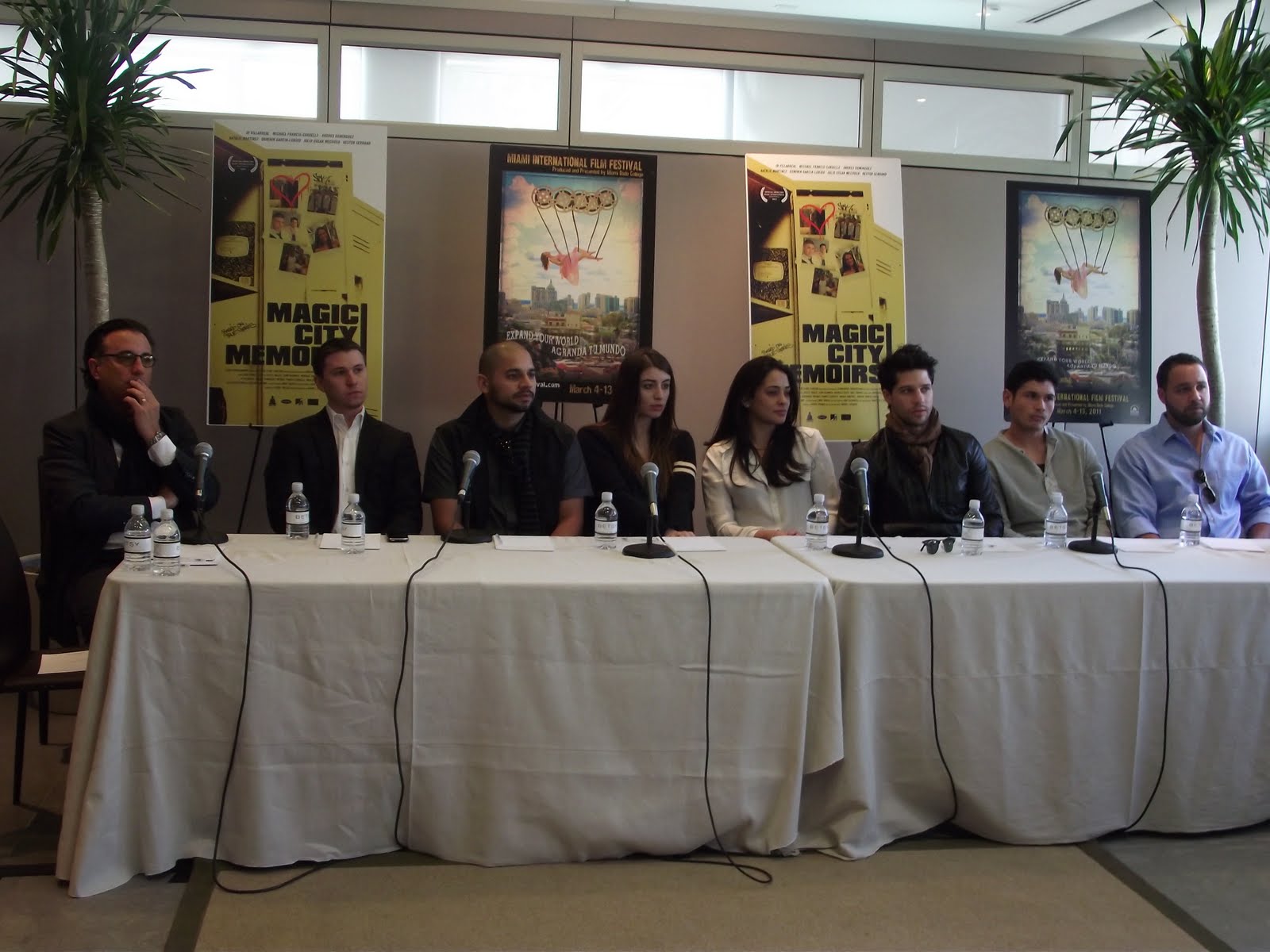
2, 3. & 4. Andy Garcia, with the cast of Magic City Memoirs at a news conference in South Beach at The Betsy Hotel

Story and photos by Dwight Casimere

MIAMI BEACH---Veteran Oscar nominated actor and Miami native Andy Garcia served as executive producer to the film Magic City Memoirs, which received its World Premiere at the Miami International Film Festival.

Aaron Salgado, who was born and raised in Miami, wrote and directed this very personal drama about the intertwining lives of three lifelong friends who battle each other, their families, and the heady, reckless abandon of their life of privilege in America’s most hedonistic of cities.

Cinematographer Gustavo Penna uses his camera like a surgeon's micro-camera, taking us behind the scenes to Miami's secret places, rarely seen by outsiders. The locales become a secondary character that tells the story with the equivalent force of dialogue and plot structure.

The story takes place in Coral Gables, Florida, Miami’s answer to Beverly Hills. Angel Suarez Jr. (Michael Cardelle-Kamen Rider: Dragon Knight TV series-2010, in a riveting performance) is the son of Coral Gables mayor Angel Suarez Sr. (veteran actor Nestor Serrano(Victor Luna in the TV series 90210, Burn Notice TV series 2011, Secretariat-2010, The Day After Tonmorrow-2004, The Insider-1999, among many others).

Suarez Jr. has a strained relationship with his father, due to divorce, which accounts in part for his rebellious behavior. Although he has excellent grades and a promising future following in his father’s venerable footsteps, his reckless behavior threatens to derail his future. He is constantly engaging in antics involving petty crimes, drinking and drugs with good friends Mickey Acosta (J. R. Villarreal-best known for being in the film Akeelah and the Bee-2006), who is a promising baseball prodigee, on the brink of being scouted by the majors, and Stok (Andres Dominguez, a relative unknown, previously in the short Jamaica Motel, who gives a bravura performance, reminiscent of a young Marlon Brando). Stok is the most conflicted of the characters and therefore, the most interesting. His father is a convicted drug lord, who tries to raise his errant son by phone from his prison cell. We later learn that Stok’s father was framed by Suarez Sr. in a scheme to cover up the mayor’s own shady activities. The resentment Stok harbors toward the Suarez’s, both Sr. and Jr. provides some underlying tension between the two friends that propels the plot to its tragic denouement.

The three friends, on the surface, have it all. They all attend private high school, drive fast cars and boats , drink, party, and have their pick of all the pretty girls. There’s even an allusion that one of them may have even caught the eye of a pretty, young substitute teacher. Although that may be more the product of youthful fantasy than reality. In any event , their risky behavior threatens to derail their future plans, just weeks from graduation.

The bottom line is, their lives are at the knifepoint. They can either sink in the quicksand of instant gratification, or grow up, take responsibility for their lives and move on.

In a sage moment, Angel Jr. counsels Acosta to “get the f---k out of this town, before it swallows you up!”

Magic City Memories is director Salgado’s personal diary put on film. The title is derived from the crudely drawn memoir of Stok, whose terse poems and rap lyrics are contained in a worn black and white high school composition notebook. His words provide the central pulse for the movie.

In Magic City, the life of privilege and easy access is both a blessing and a curse. It is the source of the character’s greatest pleasure and their most profound pain.

Director Salgado also shows something rarely seen in U.S. films. He shows the Hispanic American community in a very realistic life. It is a depiction that only one who has lived his entire life in it can achieve.

He shows his community in its entirety, warts and all. Anyone who thinks there's a monolithic Latino community in America needs to see this movie There are just as many race and class divisions among Hispanics as there are in the rest of society. Class difference and social standing, figure prominently in the construct of the plot of Magic City.

At one point in the film, Mikey dresses down Angel Jr. for his treatment Mari (Natalie Martinez-Detroit 1-8-7 TV series), a girl from the 'wrong side of the tracks' by Coral Gables standards.

“As beautiful as she is. As right for you as she is for you," Mikey pleads,"you won't make her your own, because you think you're better than she is."

In a pivotal scene, Stok is found remorseful and suicidal, seated in the crumbling ruins Miami's abandoned Bayside Stadium. It is a particularly telling and poignant moment.

Salgado elaborated on the significance of the scene and its locale in a post-screening interview. "The Bayside Stadium is significant to us and important to the film. Its the place here we hung out as kids and did our grafitti. Its where we later launched our boats and went out and partied on the Bay. its a big part of our lives. Its really not that surprising that that's where we find Stok, because that's his sanctuarry. We actually had a hard time getting approval permits from the city to film there. The city of Miami is very particular about how their landmarks are portrayed. But we pursued it because we felt it was important to the central theme and look of the film. "

As a director, Salgado succeeded in creating a film that rings with authenticity. "We wanted to create something that was organic and authentic and that really showed things from a local perspective and from the point of view of someone who actually lived and grew up in Miami. We see so many things like Miami Vice that show the city in a very unrealistic and superficial light. We felt it was important to be true to our experience of living and growing up in Miami."

Throughout the film, you feel as if the people and the events are real. "The script came out of my personal experience. All of the events that occur in the fllm actually happened. We took different parts of the story from different peoples lives and combined them in the different characters, but all of the events are real. The events actually happened to someone I know.”

The credits include a tribute to friends of the director, who have passed on. “These are the names of people I know who were lost to suicide, or car accidents, war, or some other tragedy. I wanted to honor them and be true to their memory in some way in this film.”

Magic City Memoirs has the ring of truth throughout its two-hour running time. The dialogue literally sings. The film gives you the feeling that you are eavesdropping on some very personal and private conversations. Somehow you feel that youjust dropped into a parking lot outside a nightclub in Coconut Grove and overheard a group of guys drinking, partying and then suddenly erupting in a fighting over a girl. Or that you somehow snuck into the back door of one of those ornate Mediterranean style homes you drive by in Coral Gables and eavesdropped on a private encounter between two young lovers.

No release date has been announced for Magic City Memoirs and no deal has been proffered for cable release. Keep and eye out for that information. The film is well worth viewing.

Friday, March 11, 2011

Miami International Film Festival: Day Seven Young Goethe In Love-A Lyrical Portrait of Love


1. Director Philipp Stolzl and star Alexander Fehling at a post-screening party at the W, South Beach, Florida

2. The real "young Goethe"

3. Fehling and Stolzl respond to audience questions after the Gusman Center East Coast Premiere

4. Alexander Fehling as Young Goethe

YOUNG GOETHE IN LOVE-A LYRICAL PORTRAIT OF LOVE

Story and photos by Dwight Casimere

MIAMI-‘The book that launched a thousand suicides’, is perhaps how Germany’s most celebrated author, Johann Wolfgang von Goethe is remembered in the annals of history. His first book, The Sorrows of Young Werther, made him an international celebrity in a time when such fame was rare. German Director Philipp Stolzl (the mountain film North Face) delivers a sensitively drawn portrait that details the formative, young adult years of this supreme genius of modern German literature in the film Young Goethe In Love, which received its East Coast Premiere at the Miami International Film Festival. Starring Alexander Fehling (Inglorious Basterds) as the burgeoning young poet, the film is a glorious representation of the fine art of cinema.

Each frame of Young Goethe In Love is like a carefully drawn portrait. The exteriors look like the Impressionistic paintings of Renoir. The interiors, set in the German countryside of the mid-18th Century, resemble Rembrandt’s burnished earth tone and pewter images. “We took hundreds of old paintings and put them on the wall in order to establish the ‘look’ of the film,” director Stolzl told me in a later interview. “We wanted to make sure that the film had an authentic feel.” By every standard, he achieved his goal and then some.

Alexander Fehling sets just the right tone for his portrayal of the young Goethe, who early on in the film is conflicted between his duties to his family, particularly his autocratic father, who wants Johann to follow in his footsteps and become a successful lawyer, and his love of poetry. Instead of yearning to write legal briefs, the words that burn in his soul speak, not of legalese, but of the lofty aspirations of the human spirit and the search for eternal love. He is smitten with a beautiful young noblewoman, Lotte (Miriam Stein-180 degrees), but quickly finds himself at odds, and literally dueling, with his superior at the law firm where he is an apprentice. His rival, Albert Kestner (the ubiquitous German character actor Moritz Bleibtreu-The Baader Meinhof Complex) also has eyes for her, and has the cash to provide a handsome dowry that will rescue her family from the brink of bankruptcy.

“We admittedly took some liberties with the story,” actor Fehling said of his portrayal. “But everything I put into my role is true to his character. We had to make some adjustments on his appearance, however. From the portraits we saw, Goethe was a very good-looking guy, but he had dark hair. They tried several dark wigs on me, but they just didn’t work. They weren’t ’me.

“There’s also a love scene early in the film, that just didn’t happen in reality,” director Stolzl chimed in. “There were the moral conventions of the time, that just wouldn’t have allowed it. Plus there was the very real fear of disease. Syphilis was rampant at that time, much as HIV/AIDS in our time. Goethe probably didn’t have sex until he was 35 or so!”

The film depicts Goethe in prison for his indiscretions. “That representation is more figurative than real,”Stolzl continued. It represents the period in his life when he struggled with his own ideas and principles in order to find a new voice that would carry him through his lifetime and his career as a writer.”

Besides his initial ‘hit,’ Young Werther, Goethe would go on to write was is considered to be the greatest long poem of European literature, Faust. Goethe was one of the key figures of German literature, but he was a philosopher as well, and was one of the guiding lights of the movement of Weimar Classicism, which spanned the late 18th and early 19th centuries. Its ideals of Enlightenment and Sentimentality precursored the Romantic era and spawned the ideals that sparked both the French and American revolutions.

One of the most telling lines in the film occurs when Goethe’ inamorata Lotte, appears before a publisher, seeking to have Goethe’s manuscripts put into print. When the publisher asks of the writings of Goethe are based on fact, she says, “It is more than truth. It is poetry.”

Young Goethe In Love is currently showing at Chicago’s Gene Siskel Film Center, and is set for wider release later this spring. Check your local listings for theatres, dates and times.