Sunday, September 20, 2020

Wine(s) of the Week Gary Farrell 2017 Russian River Selection Pinot Noir-$45 Gary Farrell 2016 Hallberg Vineyard Pinot Noir Russian River Valley-$55


Wine(s) of the Week


Gary Farrell 2017 Russian River Selection Pinot Noir-$45

Gary Farrell 2016 Hallberg Vineyard Pinot Noir Russian River Valley-$55


The “terroir” speaks volumes for the wine


Gary Farrell Russian River Valley Pinot Noirs with Roast Mint and Tangerine Duck with

Savory multi-colored carrots and mini-potatoes Below: Theresa Heredia, Gary Farrell Winemaker


The two Pinot Noirs are vastly different in taste, profile


By Dwight Casimere


The French are famous for creating words that do more than simply describe an object, an emotion or a place. They use words that embody a concept. Such a word is one commonly used in the wine industry, terroir. It means more than simply the ground that the wine grapes are grown in or the weather conditions under which they are developed. Rather, terroir refers to the time, the place and, yes, the season, the culture and, perhaps, even the mood of the person making the wine. It is a word that is all encompassing, as is the experience of drinking wine.


It with this idea in mind, that I began my conversation with Gary Farrell Vineyards’ tasting salon manger and estate sommelier Kevin Patterson, regarding the estate’s latest releases, 2017 Russian River Selection Pinot Noir, which retails for $45 and 2017 Hallberg Vineyard Pinot Noir, Russian River Valley, which is $55. While made at the same winery and from the same grape, the two wines are quite distinct from one another and imbued with their own characteristics. They are perfect examples that illustrate the meaning of the term I used earlier…terroir.


“Every bottle of wine is a story of time and place,” said Kevin Patterson. “The story of our 2017 vintage is that it arrived in a very hot year, thus we had a very early harvest. Our winemaker, Theresa Heredia picked all of our grapes over Labor Day Weekend. The temperatures were in excess of 133 degrees, but we were able to get 95% of our fruit at the brix (level of sweetness) that we were looking for.


“What we do for all of our wines is simple. We treat all of our wines as if they were intended to be single vineyard wines, whether or not it is bottled as such. In the winemaking process, we ask ourselves, “Is this wine that we’re tasting from the barrel going to be part of an orchestra, or is it a soloist?”


Pointing specifically to the Gary Farrell 2017 Russian River Valley Pinot Noir ($45), as an example, Patterson elaborated, “This is definitely an orchestra. There’s something in this wine for everyone. It is certainly one of our most popular because of it. If you’re a person who likes wine with more fruit characteristics, there’s an aspect of fruit in this wine for you. If you prefer something that’s savory, with an earthy spice to it, this wine has some of that too. It’s a wine that’s typical of the Russian River Valley. Its something that you can simply sit with, relax and enjoy. One of the things I like to have with this wine is a Mushroom Pizza. It brings out the earthiness of the wine and there’s just enough of that smoky spice to bring out the flavors in both. “


Patterson said that when he’s in the tasting room, he tries to direct his guests toward food pairings that emphasize the wine. “When you’re pairing wine with food, you want to combine it with dishes that enhance the wine, not dominate it. You want the wine to be noticed first.”


In that regard, Gary Farrell wines tend to be lower in alcohol than most reds (11-14.5%), and to have a more restrained acidity. “One of the things that defines Gary Farrell wines is that they have more natural acidity.  The acidity begins to soften as the wines open up in the glass.”


Gary Farrell Russian River Selection Pinot Noir starts out with pronounced fruit notes of red cherries and raspberries, so typical for pinots from the area. “The fruit gives way to more savory characteristics, like tealeaf, and holiday spices like clove and cinnamon. There’s even some star anise and a little black pepper. This wine really takes you an a journey through the meal, because it starts to open up, you get more of those savory notes.” Looking forward to the fall season and the holidays ahead, Patterson offered; “Roast Duck would be delicious with this wine, for sure!”


Gary Farrell 2016 Hallberg Vineyard Pinto Noir ($55) is sui generis (a thing apart or in a class of its own). Although it is made from Russian River Valley Pinot Noir grapes, its characteristics are specific to the vineyard in which they are grown.

“You see that often in wine,” Patterson elaborated. A wine can be made from the same grape, even from neighboring vineyards, and they will be almost completely different.” Such is the case of the Hallberg Pinot Noir. Kirk Lokka, an industry veteran with a reputation for meticulous acumen, manages the vineyard. Named for its previous owners, Hallberg Vineyard is nestled in the Green Valley sub-appellation, known for its refreshing daytime breezes.  A strong marine influence brings the cool early morning fog that allows the fruit greater ‘hang time,’ giving the deep, dark fruit flavors, silky tannins and an earthiness that you can almost feel.


“Kirk is first and foremost an amazing farmer who knows this vineyard well. The vineyard is ‘dry farmed,’ which means there is no irrigation. Kirk hasn’t irrigated those vines since 2007. So the vines have that classic struggle that we in the winemaking business all look for. The vineyard has rich, sandy loam soil, and the roots have to really dig down past 15 feet to the water table to find nourishment. That brings about more complexity and greater flavor concentration.


“Concentration is really the story at Hallberg. More savory qualities and darker fruits; like black cherry, plum, come through.  There’s also a hint of dark tealeaf and dried flowers. On the back end, there’s almost a kind of minty freshness, a menthol quality, if you will, that is very refreshing. All those subtleties come through when the wine spends time in the glass or in the decanter. In fact, this wine rewards you with time.”


Patterson says his experiences with wine have taught him to broaden his perspective of the industry. “ I have had influencers and teachers over the years who have set me on a completely different path, such that I am always a student who has learned to look at wine in a totally jaydifferent way. Wine is not unlike art, or a landscape or a painting. It has depth, dimension and color. Wine is a way of experiencing flavor and life in a totally unique way. No two wines are exactly alike and no two vineyards will give you the exact same kind of wine. That’s why wine is never boring. There’s always something new.”


Gary Farrell Winery has introduced a series of virtual tasting experiences allowing wine lovers to enjoy wine at home with guidance from the winery’s estate sommeliers. Three different online tasting options bring the Gary Farrell Tasting Salon experience to customers who can’t visit in person.

To learn more about Gary Farrell wines and their unique portfolio, visit garyfarrellwinery.com.


Sunday, September 13, 2020

WINE OF THE WEEK: JUAN GIL MONASTRELL HONORO VERA ORGANIC RED 2018-$10


Wine of the Week: Juan Gil Monastrell Honoro Vera Organic Red Wine 2018-$10

 Wine of the Week: Juan Gil Monastrell Honoro Vera Organic Red Wine 2018-$10


By Dwight Casimere


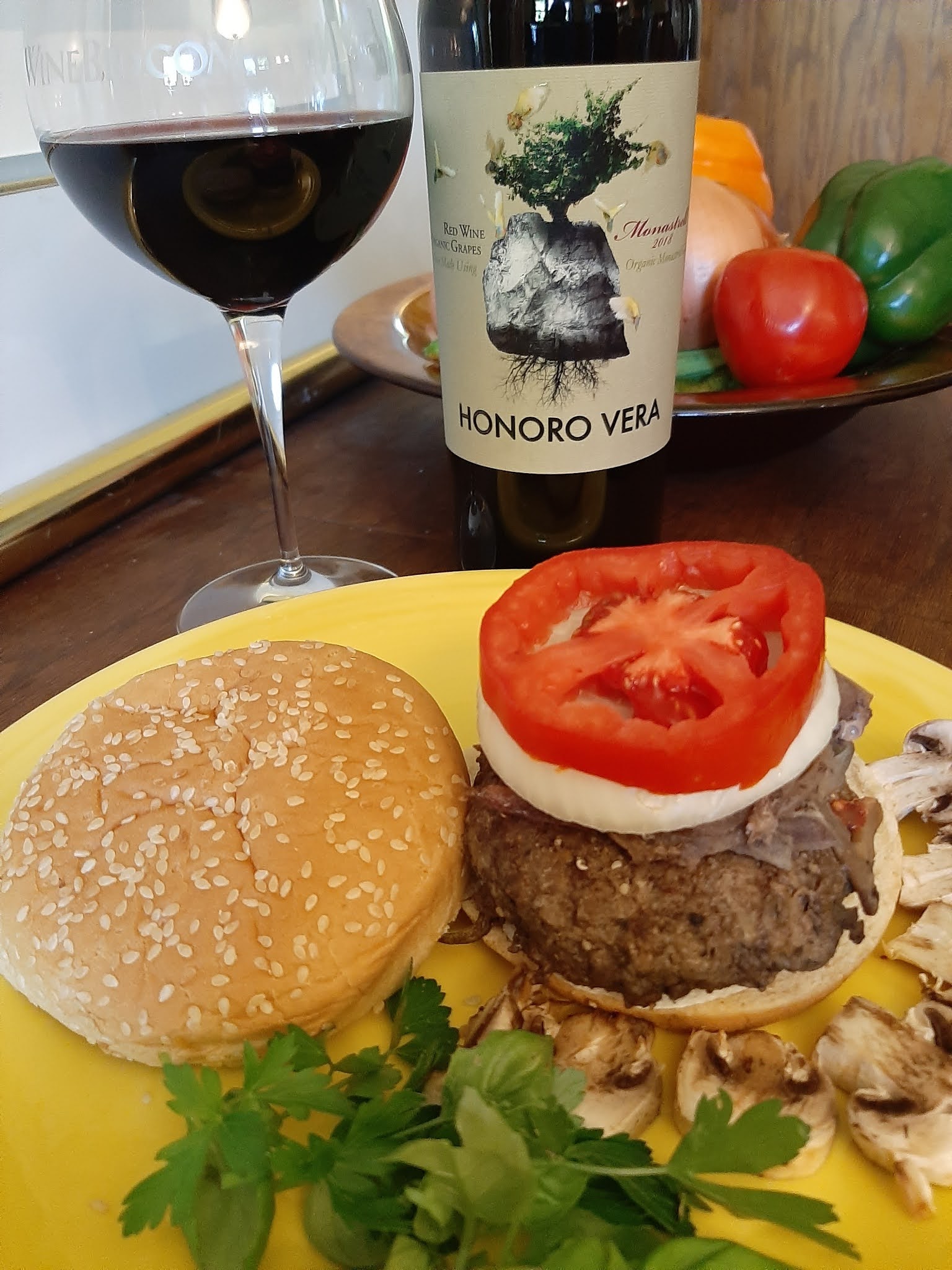
What wine goes best with BBQ, Pizza or a good, juicy hamburger (made with organic grass feed beef, of course). The answer is simple- Juan Gil Monastrell Honoro Vera Organic Red Wine 2018. At just $10 a bottle, it is a surprisingly rich and satisfying wine.


Juan Gil is one of the premiere Spanish producers, and this beauty, made from indigenous Monastrell grapes, otherwise known as Mourvedre, is from the southern region of Jumilla, Spain, where the grape has been grown for centuries.


Grown in the mountains high above the Mediterranean Sea, in sandy, stony limestone soils, the grapes must struggle to find moisture. They receive very little rainfall, in spite of their proximity to marine influence.


Harvested by hand, the grapes are then vinified in stainless steel tanks for two weeks at very low temperature. Then Honoro Vera Organic 2018 is kept refrigerated until bottling. This process gives the wine a very fresh, fruity taste that makes it a great companion with hearty dishes.


This young wine is unoaked. That means that only the vibrant fresh fruit flavors of the Monastrell grape shine through. The Gil family has another winery, Bodega Ateca, which produces some really pleasant wines in the DO Calatayud bearing the same name, Honoro Vera. For more on Juan Gil wines visit bodegasjuangil.com/en/.


Thursday, September 3, 2020

WINES OF THE WEEK-THE WINES OF MOSCATO D'ASTI ON ZOOM

 INTERNATIONAL ZOOM CONFERENCE PRESENTED BY IEEM MONDAY AUG 31


WINE (s) OF THE WEEK- THE WINES OF MOSCATO D’ASTI IN ITALY

-Compo Moncalvina Moscato D’Asti-$18.99

-Michele Chiarlo – $19.99 (half bottle)

-La Caudrina – $10.99

-Marenco Scrapona– $20.99

-I Vignaioli Santo Stefano/Ceretto – $15.99 half bottle


The Moscato d'Asti Zoom conference by IEEM
Some of the Wines of Moscato d'Asti that were presented


 By Dwight Casimere


Moscato is most likely the first wine that many people experience in life either at a wedding reception or other family gathering, as a gift, or on a first date. As one wine writer surmised, “it’s the gateway drug of the wine industry and, fortunately, one that we just can’t stop drinking.”


That fact was brought out with uncompromising clarity in a recent Zoom conference with five producers from the Moscato D’ Asti DOCG coordinated by IEEM (International Event and Exhibition Management), the agency specializing in marketing, organizing and managing events, exhibitions and public relations for the wine industry.


Featured in the panel were Jeffrey Porter, Founder of Sip Trip Italy, who served as Moderator along with the producers of five wines from the region. Present via Zoom were Giacomo Pondini – Director of Consorzio d’Asti. Participating wine producers included Luigi Coppo - Coppo 1892, Marco Dogliotti – La Caudrina, Gianpiero Scavino – I Vignaioli di Santo Stefano/Ceretto,  Andrea Costa –Marenco and Stefano Chiarlo – Michele Chiarlo.


All of the wines were from the Moscato d’Asti, a wine region in northwest Italy, produced primarily in the province of Asti. The wine is also produced in the smaller nearby provinces of Alessandria and Cuneo.


Located in the Montferrat of Piedmont, it is an area dotted with Medieval castles and steep hillside vineyards, most of which can only be navigated on foot. The ancient Tower of Montferrat looms over the region like an ancient sentinel guarding its storied treasures and dark secrets.


Winemaking goes back to the time of the ancient Romans, who called the area Apiana.


“The word for bees in Italian is Ah-pay (ape),” proffered Luigi Coppo of Coppo 1892.  “The grape that is now called Muscato Bianco was first planted in the 12th Century. In Latin language, it was called Muscatellum. The region was called Ape (bees) because the bees would hover on top of the grape clusters because of their unique aroma.”


Moscato bianco is the grape from which Moscato d’ Asti is made. It is one of the oldest grapes grown in the area. The sweet, low alcohol wine (usually around 5% alcohol) was originally reserved for the workers to refresh themselves during their midday meals or for just after the workday was done. The low alcohol wine could be had at any time of day without slowing the pace of the workers. Moscato d’Asti was also the wine of choice for the traditionally long, multicourse evening meals. The wine both cleansed the palate and stimulated the appetite for dessert.


The tasting session was a revelation. Although the wines were made from one grape, those from each of the five producers were distinct. The tasting proved the versatility of Moscato d’Asti and its ability to be paired with a diverse array of cuisines, from soft cheeses, to seafood, pastas and spicy dishes. The choice is as widely varied as your imagination will allow.


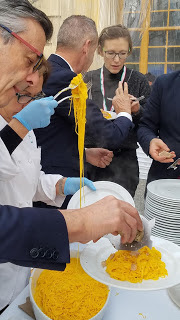
One of the journalists who participated in the conference was wine and travel writer Julia Coney of JuliaConey.com. She recalled our media trip to the Langhe in December, 2018. We were hosted by Eduardo Vilarino Gancia-owner of the Gancia Castle at Canelli. There, we had a marvelous luncheon overlooking the valley. It consisted of Gancia Moscato d’Asti Secco and housemade 23 egg-yolk pasta covered in shaved white Truffles, which were offered at the height of Truffle Season. It remains to this day, the most exquisite meal I’ve ever had. Simple. But oh, so elegant! More on Gancia and its place in the Moscato firmament later.


“Moscato d’ Asti is the most widely consumed sweet wine in the world,” Coppo emphasized. “The DOCG is also one of the largest and most diverse in the world. Moscato d’Asti is not only consumed as a dessert wine, it is also an everyday wine.”


As moderator Jeffrey Porter exclaimed, “The 20th century marked the triumph of Moscato d’Asti.”


Moscato’s popularity began to soar in the 1990s and continued to do so into the Millenium. From 2011 to 2014, Moscato d’Asti sales in the U.S. increased 73%. Consumers under the age of 45 have been the motivating force behind the sales increase that has hovered around a 10-15% increase each year.


The reason is simple. The wines are both approachable and affordable. Inexplicably, the wine has also become the darling of hip-hop culture, with Trey Songz and Drake referring to Moscato in their 2009 hit “I Invented Sex.” Granted, Moscato d’Asti has been credited with sparking many a romance, but I’m not quite sure that its producers had that in mind when they started out!


Coppo Moncalvina 2019 ($18.99) is the winery’s flagship wine. “Moncalvina is the name of our countryside home in St.  Antonio. It is an important place in (the subzone)  Canelli. Only 22 of the 52 townships can carry the denomination Moscato DOCG and we are located in one of them.”


The history of Coppo and Moncalvina extends well into antiquity.  “The estate was founded by my great-grandfather in 1892. We have remained true to his search for a wine with balance and freshness and just the right acidity. Mint and herbal notes are characteristic of that side of Canelli. That makes it a more serious wine, intended for food.”


“It’s a much more visceral, emotional experience,” moderator Porter chimed in. “It’s not just cookies and dessert!”


La Cadrina from Romano Dogliotti ($10.99) was next. “My father was one of the first of the small growers to bottle his own wine,” said Marco Dogliotti. “Our wine is really in demand, especially during the Holidays. The secret is to stop the fermentation at just the right time and maintain very cool temperatures to maintain the freshness. The wine develops a floral profile, with flavors of ripe peach.”


Gaining the coveted DOCG denomination is no mean feat. “The wine goes before a panel of experts before it can receive DOCG.”


Stefano Chiarlo of Michele Chiarlo suggested we savor in concert his marvelous sweet wine Nivole. At $19.99 the half bottle, it was the priciest of all of the day’s offerings. It certainly outweighed its price point in flavor and value. “I consider this the ‘sorbet’ of wines,” Stefano beamed. “It is difficult to produce a wine like this that has just the right balance of flavor and texture.


The great and legendary Michael Broadbent, Director of Christie’s in London and Master of Wine’s President, declared Michele Chiarlo “the Best dessert wine in the world. Nivole is constantly the best.”


After the grapes are harvested by hand, the grapes are softly whole-pressed and fermented at controlled temperature to achieve an alcohol content of 5%. A part of the natural carbon dioxide that is developed is ‘entrapped,’ giving the wine a delicate effervescence. A process of micro-filtration gives the wine clarity and purity, evident in its brilliant straw yellow color and delicate floral aromas. Creamy and fragrant with a refreshing finish, this is one to savor after a satisfying meal.


Giacomo Pondini-Director of Consorzio d’Asti described the next participant, Marenco Scrapona ($20.99) as ”the cherry on the cake,” both for the quality of the wine and its location in a World Heritage Site. Winemaker Andrea Costa spoke of “the beauty of the hills” and the commitment of the winery to “protect the connection between the territory and man in
Piemonte.”


Marenco Scrapona is blended from Moscato grapes that are selected through a traditional technique that has been used for decades. It is an aromatic wine, with the perfume of the Moscato grape and a mouth nurturing blend of ripe fruit flavors including white peaches, a touch of tangerine and Asian pear with notes of brioche toast and a hint of mint.


Marenco Scrapona is equally at home with a Spicy Tuna Roll, a zippy seafood gumbo or a frothy, creamy Zabaglione. A rarity among white wines, it is capable of aging for up to two years revealing even more of its kaleidoscopic complexity.


Julia Coney of JuliaConey.com and Melissa Richter-Look East/Lifestyle Asia-Thailand
23 Egg Pasta woth Shaved White Truffle
Dwight Casimere (r) with Eduardo Vilarino Gancia-Owner, Gancia Wines
The Gancia Castle at Canelli


Moscato a UNESCO treasure


“The Moscato grape plays an important role in the UNESCO story,” Andrea Costa explained.  “There’s so much history in wine and Marenco Scrapona wine is a big part of it.”


Costa also had a surprise for the gathering. “You are the first to see our new label. The wine inside is still the same, but the label has changed.”


In charting the preeminence of the Moscato grape, Costa referenced the work of legendary winemaker Carlo Gancia in Turin, considered the father of Italian sparkling wine. “Carlo Gancia turned the wine world on its head in 1865, when he took all of that study he did in Champagne and after 15 years of trials and error, he began the production of the first commercial sparkling wine on a large scale.” Premium Asti DOCG is still produced using the same method today.


Gianpiero Scavino of I Vignaioli di Santo Stefano/Ceretto- Piemonte ($15.99 half bottle) concluded the conference. Thanks to winemakers and vineyard owners Bruno and Marcello Ceretto, along with Giancarlo Scavino, who founded I Vignaioli di Santo Stefano (The Winemakers of Saint Stephens or Santo Stefano in Italian). 


The Ceretto brothers founded the winery in 1976 in the actual birthplace of their father, Riccardo. With the passing of Giancarlo Scavino in 1995, his sons Gianpiero and Andrea took the reigns.


Careful and painstaking pruning, bunch thinning and sorting, all done by hand, during the harvest, are the cornerstones of the work in the vineyard. Further decanting, fining and filtration are done at the minimum to enhance the aromatic quality of the wine.


The image of the wine, with the designer label and bottle by one of Italy’s most celebrated designers, Giacomo Bersanetti, created in 1987, further sets this wine in a class by itself.


“One grape. Five wines. Five producers. Yet, each wine is singular and poignant,” moderator Jeffrey Porter concluded. It was a fittingly evocative statement that perfectly defined the sentiment of the afternoon. For more information on Moscato d’Asti, visit astidocg.it.


Tuesday, August 25, 2020

WINE OF THE WEEK-COPPO MONCALVINA MOSCATO D' ASTI 2019-$15.99

 WINE OF THE WEEK: COPPO MONCALVINA MOSCATO D’ ASTI 2019-$15.99

BY DWIGHT CASIMERE


The hilltop town of Asti in Montferrat, Piedmont in northwest Italy, is among the most rustic and beautiful regions in all of Europe. Its wine history goes back to the time of the ancient Romans, when it was called ‘Apiana.’ The Medieval Ages is when the region came into full flower.


The Muscat grape, as it is called in France, Moscato in Italian, has its origins in the Mediterranean. It was the Romans who brought it north and introduced it to all of Europe.


 Ancient papers dating to the 14th Century refer to a frothy wine beverage called Moscato, so called for its musky, earthy aroma. It was the in the 16th century that the lightly fizzy (frizzante), low alcohol (usually 5%) wine we know as Muscato d’ Asti came into being. Giovan Battista Croce, a wealthy jewelry maker, who served the noble class of Savoy, created it. Croce owned a vineyard in the hills above Turin, where he experiment with methods of making a sweet wine that would serve as the local answer to Champagne. He wanted to create something that was light that local workers could drink to refresh themselves at the end of a long day. Thus came a local style that was unlike the method traditionnelle of the French. It did not involve bottle fermentation, but instead was fermented in large vessels that gave it a slight sparkle. In more modern times, the technique became known as the ‘Asti Method,’ in which the Muscat grapes were harvested quickly, destemmed and lightly pressed so as to preserve the delicate floral aromas, then filtered, chilled and fermented to yield a low alcohol was that is sweet, lightly sparkling and perfumed. Thus, Moscato d’Asti was born.


Of the 52 townships carrying the denomination Moscato DOCG, only 22 are included in the prestigious subzone of Cenelli. That is the birthplace of Moncalvina Moscato D’Asti from the winemaker Coppo. At $15.99, it is a moderately priced example of the ‘gold-in-the-glass tasty and generous wine of the region. Full and creamy, it delivers the nice sensation of fullness.  Sensations start with a mouthful of sweet citrus and notes of white peaches and Asian pears with overtones of honey and the smell of white flowers. The wine is couched in a foamy effervescence that gives it an irresistible finish.


The wine is terrific with spicy Asian, Indian or Caribbean dishes. It goes great with a Spicy Tuna Roll. Of course, it is the perfect match for the ‘Dolce’ (sweet), dessert course of endless cakes, cookies and soft goat cheese ( Robiola di Roccaverano) that is typical of the Piedmont.


There’s a terrific book writing by a friend of mine, Dr. Paul Balk, called the Piemonte Wine and Travel Atlas. It contains some beautiful photographs of the region and tells the beautiful story behind the wines of the Montferrato. It’s available on Amazon.com. You can also learn more about the great wines of Coppo at coppo.it. Ciao Bella!


Monday, August 17, 2020

Wine of the Week-Clos Du Val 2016 Estate Cabernet Sauvignon, only $52 and so complex

 WINE OF THE WEEK-CLOS DU VAL 2016 ESTATE CABERNET SAUVIGNON-$52


By Dwight Casimere


Clos Du Val 2016 Estate Cabernet Sauvignon ($52) is a virtual showcase for Cabernet from Napa Valley’s famed Stag’s Leap District. At well under a hundred dollars a bottle, it is a steal by Napa Cabernet standards.


Located on the Napa’s storied Silverado Trail, the winery is nestled in one of the district’s most picturesque sites. Its Hirondelle House, named for the winery’s historic estate vineyard is much more than the focal point, it is what the owners consider its ‘home.’ It is designed to intentionally connect visitors to the estate vineyards in a very immediate way. As they sip the winery’s legendary wines, they also imbibe its history through the lush scenery.


Founded in 1972, by owner Olav Goelet, Clos Du Val is overseen by its President Jon-Mark Chappellet (another famous Napa Valley name), and its outstanding wines are shepherded by winemaker Ted Henry. All of the wines come from Clos Du Val’s own vineyards, Hirondelle-Stags Leap District AVA, State Lane Vineyard, and Riverbend Vineyard, both in Napa Valley’s Yountville AVA.


Clos Du Val and its legendary Cabernet burst onto the international stage in grand fashion at the famed Judgment of Paris in 1976. The rest, as they say, is history.


But, enough of the history lesson, let’s get into the wine. Clos Du Val 2016 Estate Cabernet Sauvignon is a BIG wine that delivers far beyond its modest (by Napa Valley Cab standards) price tag. Only a wine expert can differentiate it from a wine costing three times its price.


Inviting aromas of nutmeg from aging in small French oak casks and succulent vanilla bean and clove accents give way to a mouth-filling array of ripe black berries, black cherries, plums and blueberries. There’s just a hint of caramelly Affy Taffle that sends your taste buds into a tailspin. Nicely rounded off with a touch of mocha, there’s a velvety finish as its glides down your throat with a final afterglow of smoky cedar ash.


Great with game meats, like pheasant, venison or herb-infused quail, its also terrific with a prime aged steak. I grilled a grass-fed New York Strip marinated overnight in a blend of Rainbow peppercorns, smoked Hungarian Paprika and, SURPRISE, rich Jamaican coffee. That’s right, coffee. You’d be amazed how the nutty, rustic flavors of a good coffee brings out the mineral qualities in a steak and adds greatly to the enjoyment of an earthy, complex wine like this luscious Cab.


Fresh quail, which I found at the local Korean market, also benefits greatly from an intimate association with this wine. Stuffed with fresh Sage, Lemon Sage and Oregano from the garden, then dusted with Sea Salt, a hint of Cajun pepper spice (I use either Gumbo Shop Five-Pepper blend (see their website for direct shipping), or any of Emeril’s spice blends. Sprinkle some olive oil over the skin for a crispy finish and gently pour a half-cup of the wine in the baking dish and tent it with aluminum foil. Bake for about 45 minutes at 425 and, voila, dinner is served.  I like to add a side of steamed baby potatoes topped with sea salt and soft Danish or Irish butter to complete the culinary picture. Some sliced heirloom or multi-colored cherry tomatoes add a sweet/salty flavor contrast.


Try it with your own favorite red wine and food pairings. Clos Du Val 2016 Cabernet Sauvignon is sure to delight in almost any food setting. Be sure to save a glass for savoring after the meal by the backyard fire pit as you watch the sunset on these beautiful late summer evenings. For more information, visit closduval.com.


Wine of the Week-Quinta De Santiago Alvarinho Reserva 2018-$17.59

 WINE OF THE WEEK-SANTIAGO ALVARINHO RESERVA 2018-$17.59


By Dwight Casimere


Fresh flowers. Hints of jasmine and orange blossoms, with flavors of fresh Asian pears and a faint touch of mint, Quinta De Santiago Alvarinho Reserva 2018 ($17.59), is the elegant, rich, and full-bodied white wine you’ve been waiting for.  From Portugal’s Vinhos Verde region, and specifically, the Sub-region of Moncao and Melgaco, its the wine you want to have with your favorite dish of Pad Thai, Shrimp Kung Pao, Korean “Candy” Chicken, or Mongolian Ramen.


Made from 100% Alvarinho grapes, this is the go-to wine for the waning days of summer. With its rich fruit flavor and bright minerality, it goes with a variety of summertime dishes, even lending itself to heartier fare, like a whole salmon roasted on the grill and stuffed with hot and sweet peppers and an abundance of oregano and sage. Because of its close affinity to spicy Asian dishes, I decided to take a cultural leap and try one of the New Orleans favorites that I grew up with, Seafood Gumbo. When you think about it, what goes into an Asian stir-fry and a gumbo isn’t all that different. With the exception of building the ‘Roux’, or rich spicy gravy made with the pan drippings, making a Gumbo isn’t that different from building a stir-fry. The blend of sweet and spicy peppers, fresh garden oregano, sage and garlic and onion and a heady seafood broth derived from fresh Gulf Shrimp and Blue Crab from Galveston and, of course, a splash of Alvarinho, made for a dance party in the mouth. Instead of the usual fluffy white rice, I used wild rice, which gave the dish an added nutty flavor that melded just perfectly with the Alvarinho.


This is a finely crafted wine, using both old world and modern techniques to create a truly unique expression of Alvarinho. The wine is harvested by hand and the grapes are pressed gently to extract the concentrated juice. A short pre-fermentation maceration and the juice is off to temperature controlled cold fermentation before being aged in French oak barrels (70%), and stainless steel tanks (30%). The wine is allowed to remain on the lees until bottling. The distinctively shaped green bottle caresses the golden colored wine with flecks of spring green, a hint of the elegance therein.


For a white wine, Santiago Alvarinho Reserva has a lot of backbone. It’s imbued with 14% alcohol, which gives it substantial legs and a hefty mouth feel that is unique for a white wine. The freshness and mineral character and pronounced aromatics derives from its unique micro-terroir along the Minho River. Protected from marine influences of the Atlantic, the wine stands out from others in the region, giving it a distinct expression of the Alvarinho grape. Versatile with all kinds of seafood, chicken, veal, or just a plate of cheese and some nice sausages and cured meats, this is a wine for every mood. If you’re still on self-imposed lockdown with the pandemic, you couldn’t ask for a more pliable companion. Quinta De Santiago, Alvarinho Reserva 2018-$17.59. From Portugal with Love! Visit quintadesantiago.pt for more details.


Thursday, July 4, 2019

Vesuvius Wines a Gift from Campania Italy near Naples

Volcanic Wines are complex and food friendly due to rich mineral soils from Mount Vesuvius


by Dwight Casimere

Among the many new wines appearing on shelves in fine wine shops and on wine lists in savvy restaurants around the country are the wines of the Campania region of Italy which is situated along the south western coast of Italy near the capital city of Naples. It's one of the oldest wine growing regions of Italy dating back to the Greeks who first cultivated grapes there in the 8th century B.C. It became part of the Roman Empire when the Etruscans incorporated it and began cultivating wine in the 4th century B.C. After that, the land became subject to an alphabet soup of overlords, including the Visigoths (yes, there were such people outside of the old Prince Valiant comic strips), Lombards, Byzantines, Normans, Spanish, Austrians and French. The region finally became part of the Italian unification of the late 19th century, a definite turning point.

In early June, officials and winemakers from the Consortia Tutelar Vini Vesuvius held a Tasting Dinner  in the Atrium Dining Room of New York's Il Gattopardo Restaurant located in the historic Rockefeller Townhouses in midtown Manhattan.  In attendance were 

The story of Campania wines reads like the libretto of an Italian opera. Born of tragedy, the grapes are nurtured in the mineral rich volcanic soils left behind by the cataclysmic eruption of  the volcano Mount Vesuvio, which destroyed Pompeii and Herculaneum in 79 AD. The wines remain unchanged to this day, made primarily from the indigenous grapes of the trime, which were rendered free of the Phylloxera virus which destroyed the majority of the indigenous grapes in all of Europe because the  virus can't survive in ash. Thus, these local varietals, with names that sing out like a Neapolitan opera, Lacryma Christi del Vesuvio (the tears of Christ of Vesuvio), Campi Flegrei, Ischia and Capri DOCs., along with Falanghia and Galluccio, another primary DOC, have survived to be nurtured today. Add in the names of Greco di Tufo and Fiano, Biancolella, Forastera, Olivella and Coda di Volpe, named for their shapes, the olive and fox's tail respectively, and you have a thumbnail sketch of the rich and varied wines that account for these food-friendly wines. Aspirino is the foundation of the regions local sparkling wine, Asprinio di Aversa. Its a refreshing, lighthearted aperitif that literally dances on the tongue, much like the feel of pronouncing its name. 

The wines of Vesuvio DOC are all made with organic and sustainable practices, another plus.

A handful of the wines have been introduced to the United States and will be avilable in coming weeks on restaurant wine lists and at fine wine retailers near you. The wines are best with foods readily associated with the city of Naples and the Campania region. Try anything made with fresh tomatoes or basil, such as a spicy tomato sauce with fresh basil, grated Parmesan cheese or a lasagna-type layered casserole made with Baccala (salted cod fish) olives, and, of courses, fresh tomato sauce. A dessert favorite is Rum Babba with a nice coffee or chocolate flavored Biscotti as a crunchy aside with a glass of two of Aspirino. Buon Appetito!

These are just a few of the wines of Vesuvio DOP that you may encounter. :

-Lacryma Christi del Vesuvio bianco from DeFalco Vini-$18
The wine is made from the region's flagship Lacryma Christi grape which is grown at a very high altitude in rich, volcanic soils. The grapes are picked by hand and pressed very softly and fermented at consistently cold temperatures to preserve the intense fruit character of the grapes. The result is an intensely flavorful wine bursting from tropical fruit and citrus flavors with hints of pineapples, banana and peach nectar. The volcanic soils give the wines an added boost of mineral flavor and structure, making it perfect with a hearty meal of fatty white fish, shellfish and rich tomato sauces and flavorful cheeses. This is a wine to serve with pride at any meal.

-Cantine Matrone Territorio de' Matroni DOC 2016-$25
This is a wine created from old vines indigenouse Piedirosso and Aglianico grapes from ther estates own Monaco and Camoanariello vineyards. The soil is a volcanic mix of sand, lava and basalt, giving it a rich mineral base. Cold Fermented in stainless steel tanks with natural yeasts for two weeks on the skins to give it richness and color, it is then pumped over where it undergoes spontaneous malolactic fermentation for a total of three weeks fermentation. The wine is then allowed to age in large wooden tanks for 14 months before resting again for 10 months in stainless steel. The result is an unmistakably local wine bursting with rich, dark berry flavors and overtones that hint of the tastes of olives and local capers, a bit of white, black and green peppercorn blend, a touch of licorice and a surprising afternote of balsam, perhaps from the underlying richness of the volcanic soil. If you're a fan of game meats, like venison, pheasant of duck, this is the wine for you. But its equally at home with spicy Asian or Indian dishes or even your favorite down-home Chile recipe!

-Cantina del Vesuvio Lacryma Chirsti Rosato DOC 2018-$22.99
The wine gets is captivating color from gently pressing the grapes in order to also preserve the kaleidoscopic range of aromas and fruit flavors from its 100% Aglianico grapes which is aged entirely in stanless steel tanks. Aromas of a bouquet of fresh cut flowers are followed with the flavors of white peaches, honey, strawberries and raspberries with just a hint of honey colored raisins. This is a surprisingly complex wine that goes beautifully with grilled fish, a platter of mixed cheeses, salamis and hams and a whole range of light meats and vegetables taken right off the grill. This is truly the wine of summer. 

-Russo Family Black Label Line  Vesuvio Lacryma Christi Rosso DOP Riserva 2014-$24
Ruby red, like the lava of Vesuvius, this is an unbelievable value considering the complexity of this beautifully made wine. Made from indigenous grapes grown in rich, volcanic soils that basked in warm afternoon sun and cooled nights and mornings by Mediterranean breezes, it was then fermented in stainless steel and allowed to age in small oak barrels 6 months before resting another 6 months in the bottle. This is a wine that truly represents the tradition of fine winemaking in the Vesuvio. Enjoy it with aged cheeses and rich meat sauces, or for a variatrion,  a vegetable lasagna made with fresh  eggplant, basil and rich tomato sauce and a hearty mix of soft cheeses. Sprinkle in a layer of crushed olives to give it an added zing. That will bring out the rich, complex flavors of the wine.

-Casa Vinicola Setaro "Munazei" 2018-$12
This is a real value wine worth twice the price in terms of its quality and flavor. Made from the ancient black-skinned Piedrosso grape, which is found throughout Campania. Known for its rich black fruit flavors and rich mineral backbone, the wine is a natural with just about any Italian dish, particularly those made with tomatoes. Rich, earthy flavored tomatoes are everywhere in the region, along with olives and just about every dish from the region features one or both. Baccala or Bacalao, salted cod, is another food that is common in the region and shows up in various incarnations. Surprisingly, this is a red wine that goes with all of the above and more. Served lightly chilled, it goes with many fish and vegetarian dishes. This was my favorite of all.

-Az. Agr. Sorrentino "Vigna Lapillo DOP 2015-$18
Another favorite. This blend of 80% Caprettone and 20% Falanghina is hand-picked then fermented in stainless steel at cold temperatures and matured in oak barrels for ten months. This is a fresh tasting wine with well integrated tannins. The wine is eminently drinkable with refreshing notes of ripe red berries and hints of balsamic vinegar and a back note of ripe olives. The wine truly speaks to the region and the soil from which it came. Each sip reveals a bit more of its distinctive character, made even more luscious with a bite of locally inspired food. Great mouthfeel with a nice long finish, its easy to go through two bottles of this at lunch or dinner without noticing. And at this price, buy an extra bottle for later!