Morellino di Scansano Madrechiesa Riserva 2010, a wine jewel from Tuscany
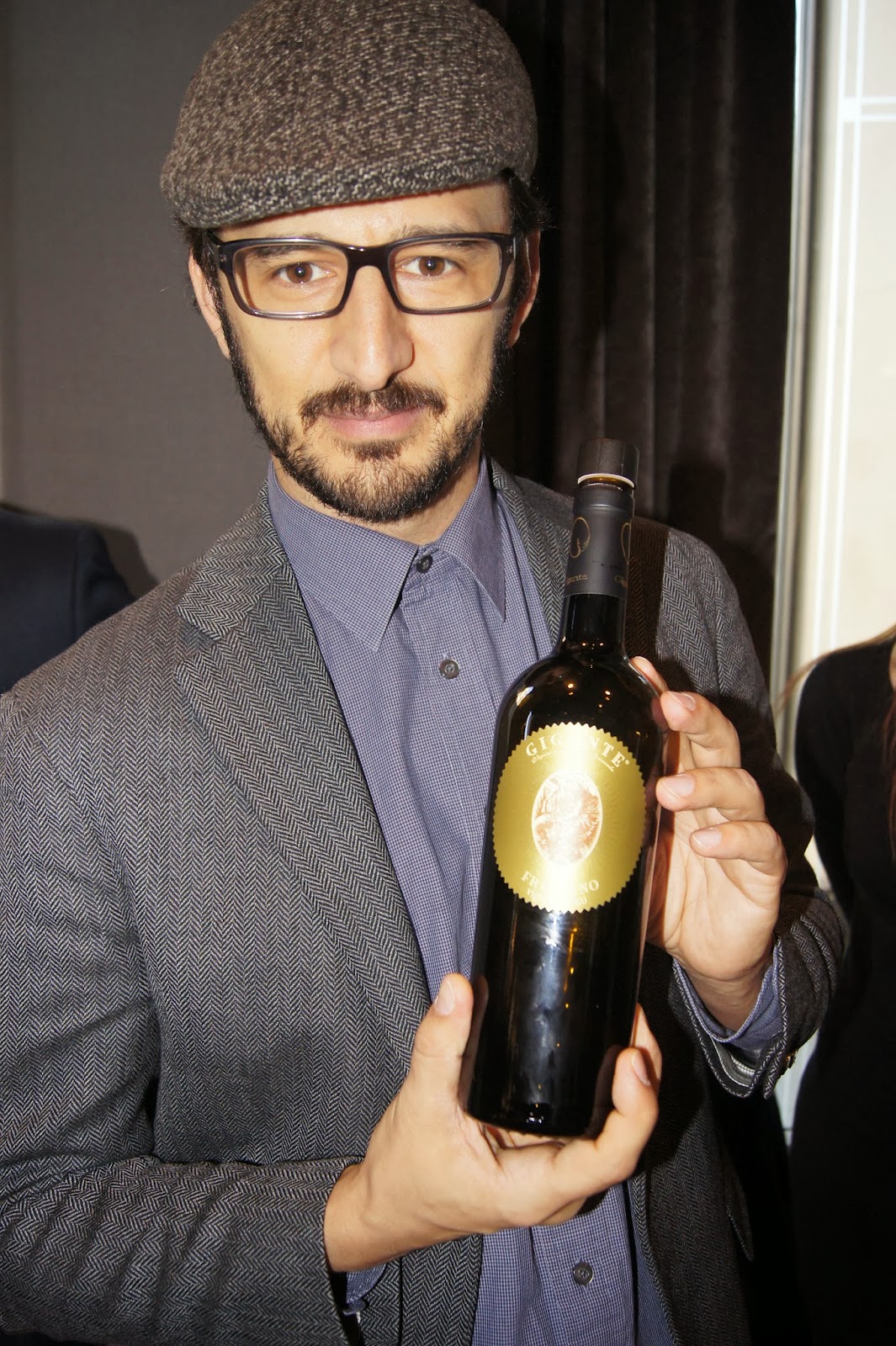
NEW YORK--Federico Terenzi was in a joyous mood as he entered the Michelin-starred dining room of A Voce restaurant, Columbus Circle in midtown Manhattan. The previous day, he had been recognized for his skill at winemaking with the Tre Bicchieri award from Gambero Rosso, the famed culinary institute in Rome, for his Morellino di Scansano Madrechiesa Riserva 2010 wine from Tuscany at the Grand Tasting at New York's Metropolitan Pavilion. In recognition of the honored guest, the Maitre d' seated him at the best seat in the house, facing the sweeping panorama of Columbus Circle and Central Park and the awe-inspiring Midtown skyline.
Federico Terenzi at the Tre Bicchieri Grand Tasting with his 2010 Morellino di Scansano Madrechiesa
The winemaker with A Voce Executive Chef Filippo Gozolli
Taleggio-filled Ravioli from the restaurant's Fashion Week menu
Federico Terenzi enjoying the wine and food pairing at A Voce
Below: A Voce Columbus Circle Dining Room, gleaming stainless steel see-through kitchen and the restaurant's dramatic view of Columbus Circle and Central Park
Relaxing over a luncheon plate of Taleggio-filled Ravioli with toasted leeks from the special Fashion Week menu.Terenzi reflected on the meaning of the Gambero Rosso recognition for the wine from his beloved district, Morellino di Scansano.
"My family has one of the best known wineries in the region of Scansano, which is in the south of Tuscany, so this is a very great honor, not just for us, but also for the entire region. It is especially so for us here in the United States, where it is not so well known as a region. Most people know the wines of Chianti, for example, but little is known about the Morellino di Scansano. So this is a great opportunity for us to become more well known in the United States and for both of us to grow up together.
The DOCG (official government wine quality designation), is new, so this is our chance to make Morellino di Scansano more well known to American consumers."
Although official recognition for Morellino di Scansano is quite new, Terenzi says the winery itself is quite traditional. "We're a very small winery by American standards, only about 150 acres. The nice thing about being small is that we are very open to anyone who wants to come visit us and to see our operation. Every year, we have about 5,000 people who pass through the winery. We have a small guest house to accommodate overnight guests who want to experience the winery in a very personal way. They get to stay with us and see how we work and the care that we use in every process to reach absolute quality in our wine."
Wine tourism, he says, has become a growing part of his business. "It's one of the best ways that people have been getting to know us in the United States. When they come to visit and taste our wines, the first thing they ask is where can they get them at home. Now, with this recognition from Tre Bicchieri, we will become even more well known and develop many more friends in the United States. It helps us to win more followers, not just for my wine, but for the wines of the entire region of Morellino di Scansano."
Tiramisu with espresso mascarpone was the next and final course, bringing our interview to a conclusion. As a celebratory finale, A Voce Sommelier Marco Fusato brought over a complimentary glass of one of the finest wines from the restaurant's vast cellar, 2006 Cicala Barolo, poured from the bottle with the new Coravin 1000 System, which allows restaurants to pour wine by the glass directly from the bottle without pulling the cork. This allows restaurants to expand their by-the-glass offerings by providing their guests with unique vertical and horizontal wine tastings and pairings. "No air gets into the wine," Fusato explained, "so we can keep this bottle in our cellar for months, even years, just as we do all of our wines, and there's not one change in its quality or taste. This gives our guests unlimited access to our cellar. We can elevate their dining experience by offering them tastes and single glasses of countless wines from our vast cellar without compromising the wine quality or taste. We can offer tastes of rare wines, such as this Barolo, that they would otherwise never expect to see sold by the glass ." It was a fitting end to a stellar afternoon.
A Voce Sommelier Marco Fusato serves a congratulatory glass of 2006 Cicala Barolo using the new Coravin 1000 System, which allows single pours from an unopened bottle, thus preserving the wine
Monday, February 10, 2014
Monday, February 3, 2014
Caffe Vergnano 1882 brings perfect espresso experience to everyday life
Caffe Vergnano 1882 Expresso capsules bring pleasure of "the perfect expresso" to the home
by Dwight Casimere
NEW YORK--Connoisseurs of good coffee give it the same respect and attention as lovers of fine wine. With so many international varieties available,coffee, in many ways, is marketed, packaged and sold to consumers in much the same way as quality wine. Aficionados assign to it the same verbal superlatives as sommeliers do when they savor a good wine; discussing the flavor, aroma and body in many of the same descriptive terms. Just as there are wine bars devoted to the imbibing of the noble grape, so have coffee shops and barista bars become commonplace in the urban landscape. We've certainly come a long way since the days when Folger's and a few other household names reigned supreme on grocery store shelves, and what passed for coffee at the local diners and restaurant was little more than overcooked dishwater and swill served from rusting metal dispensers.
With coffee coming virtually from every corner of the world, the selection currently available is dizzying and confusing. Now comes a relative newcomer to the commercial US market in the person of Caffe Vergnano 1882. The venerable Italian coffee company, with 130 years of experience in roasting and blending the highest quality coffee, and available in 10,000 cafes, restaurants and hotels worldwide, has opened flagship espresso cafes at Eataly, the massive Italian food emporium, in New York's midtown Flatiron District and in Chicago's Gold Coast off the Magnificent Mile.
Presiding over the opening of Caffe Vergnano espresso bar, held last month at Eataly, Manhattan, were Carolina Vergnano, Export Manager and Lead Spokesperson on the Espresso Vergnano 1882 US Campaign, and Damian Burgess, Head of the Caffe Vergnano Coffee Academy and Senior International Training Manager.
Caffee Vergnano at Eataly in New York and Chicago offer a state-of-the-art espresso bar experience with a standing espresso bar and a curated menu of espressi, macchiati and Eataly's housemade pastries. In addition to making available for sale the complete line of Caffe Vergnano coffee products, new to the US, is the introduction of Caffe Vergnana 1882 Espresso capsules which brings the perfect espresso experience home for the first time. Compatible with Nespresso, Maestria, Essenza, Lattissima, Citiz, U, Pixie, and, of course, Espresso 1882 machines, the passion and pleasure of real espresso is now just a push button away.
Slow roasted, high quality Arabica coffee from Central and South America is the fundamental ingredient to Caffe Vergnano's exceptional espresso. The company's unique production methods and high standards create an espresso of sublimely delicate flavor and smooth aroma which can only be achieved by slow roasting under meticulously controlled conditions.
The flavor notes of Caffe Vergnano 1882 Espresso Lungo Intenso are roasted hazel nuts, with hints of chocolate. There's a tantalizing back note of sandalwood that makes this a perfect companion to wind down the evening,
Tasting Caffe Vergnano 1882 Espresso Cremoso is sure to seal the brand's place in the pantheon of great coffee drinking experiences. The chestnut brown color and appealing aroma provide a hint of the flavor pleasures that await. Black walnuts, a subtle hint of cardamum and a backnote of fine Maduro combine with the lingering taste of dark chocolate to make this the perfect ending to a sumptuous meal.
Besides the intense flavor pleasures of Caffee Vergnano 1882, there's the added benefit that it is surprisingly low in caffeine compared to other types of espresso, making it a perfect way to end the day!
Just a note about the long and illustrious history of Caffe Vergnano. It was founded in a village grocer's shop in Chieri, a tiny town at the foot of the Turin hills in northwestern Italy in 1882. Caffe Vergnano has since grown to become the "pride of the Piemonte" with a 145,000 square foot plant in Turin, Italy and more than 80 products available around the globe. Caffe Vergnano is a true Italian success story that has defied recent downward economic trends.
Tasting Caffe Vergnano Espresso Cremoso and Lungo Intenso in the new capsules proves why their coffees are such a phenomenal success. Caffe Vergnano Espresso capsules reinterpret coffee tradition in a uniquely contemporary way. They offer coffee lovers everywhere the opportunity to have the true Italian espresso experience in an uncompromising way, at home.

Carolina Vergnano (above) and Damian Burgess (below) at the helm at the New York Eataly Caffe Vergnano opening

Winners of the Best Barista competition in 2013
by Dwight Casimere
NEW YORK--Connoisseurs of good coffee give it the same respect and attention as lovers of fine wine. With so many international varieties available,coffee, in many ways, is marketed, packaged and sold to consumers in much the same way as quality wine. Aficionados assign to it the same verbal superlatives as sommeliers do when they savor a good wine; discussing the flavor, aroma and body in many of the same descriptive terms. Just as there are wine bars devoted to the imbibing of the noble grape, so have coffee shops and barista bars become commonplace in the urban landscape. We've certainly come a long way since the days when Folger's and a few other household names reigned supreme on grocery store shelves, and what passed for coffee at the local diners and restaurant was little more than overcooked dishwater and swill served from rusting metal dispensers.
With coffee coming virtually from every corner of the world, the selection currently available is dizzying and confusing. Now comes a relative newcomer to the commercial US market in the person of Caffe Vergnano 1882. The venerable Italian coffee company, with 130 years of experience in roasting and blending the highest quality coffee, and available in 10,000 cafes, restaurants and hotels worldwide, has opened flagship espresso cafes at Eataly, the massive Italian food emporium, in New York's midtown Flatiron District and in Chicago's Gold Coast off the Magnificent Mile.
Presiding over the opening of Caffe Vergnano espresso bar, held last month at Eataly, Manhattan, were Carolina Vergnano, Export Manager and Lead Spokesperson on the Espresso Vergnano 1882 US Campaign, and Damian Burgess, Head of the Caffe Vergnano Coffee Academy and Senior International Training Manager.
Caffee Vergnano at Eataly in New York and Chicago offer a state-of-the-art espresso bar experience with a standing espresso bar and a curated menu of espressi, macchiati and Eataly's housemade pastries. In addition to making available for sale the complete line of Caffe Vergnano coffee products, new to the US, is the introduction of Caffe Vergnana 1882 Espresso capsules which brings the perfect espresso experience home for the first time. Compatible with Nespresso, Maestria, Essenza, Lattissima, Citiz, U, Pixie, and, of course, Espresso 1882 machines, the passion and pleasure of real espresso is now just a push button away.
Slow roasted, high quality Arabica coffee from Central and South America is the fundamental ingredient to Caffe Vergnano's exceptional espresso. The company's unique production methods and high standards create an espresso of sublimely delicate flavor and smooth aroma which can only be achieved by slow roasting under meticulously controlled conditions.
The flavor notes of Caffe Vergnano 1882 Espresso Lungo Intenso are roasted hazel nuts, with hints of chocolate. There's a tantalizing back note of sandalwood that makes this a perfect companion to wind down the evening,
Tasting Caffe Vergnano 1882 Espresso Cremoso is sure to seal the brand's place in the pantheon of great coffee drinking experiences. The chestnut brown color and appealing aroma provide a hint of the flavor pleasures that await. Black walnuts, a subtle hint of cardamum and a backnote of fine Maduro combine with the lingering taste of dark chocolate to make this the perfect ending to a sumptuous meal.
Besides the intense flavor pleasures of Caffee Vergnano 1882, there's the added benefit that it is surprisingly low in caffeine compared to other types of espresso, making it a perfect way to end the day!
Just a note about the long and illustrious history of Caffe Vergnano. It was founded in a village grocer's shop in Chieri, a tiny town at the foot of the Turin hills in northwestern Italy in 1882. Caffe Vergnano has since grown to become the "pride of the Piemonte" with a 145,000 square foot plant in Turin, Italy and more than 80 products available around the globe. Caffe Vergnano is a true Italian success story that has defied recent downward economic trends.
Tasting Caffe Vergnano Espresso Cremoso and Lungo Intenso in the new capsules proves why their coffees are such a phenomenal success. Caffe Vergnano Espresso capsules reinterpret coffee tradition in a uniquely contemporary way. They offer coffee lovers everywhere the opportunity to have the true Italian espresso experience in an uncompromising way, at home.

Carolina Vergnano (above) and Damian Burgess (below) at the helm at the New York Eataly Caffe Vergnano opening
Below: Damian Burgess and Carolina Vergnano at the Caffe Vergnano Chicago opening

Above: Damian Burgess leads a class at the International Training Center
Below: Dimitri Dervisis competes in the Best Barista 2013 competition sponsored by Caffe Vargnano
Winners of the Best Barista competition in 2013
Saturday, February 1, 2014
Vinitaly, Slow Wine Join Forces for Final Stop of Slow Wine 2014 Tour in New York
New York's Metropolitan Pavilion, 125 W. 18th Street in Manhattan, is the prestigious venue that will host the final stop of the Slow Wine US Tour , Monday, February 3. In addition to presenting more than 70 selected Italian wine producers who represent Slow Wine values, the all-day event will begin with a series of seminars designed to assist members of the wine and hospitality trade in their efforts to raise the profile of Italian wine among their consumers. Previous stops on the Slow Wine US Tour included San Francisco at the Terra Gallery in SoMa and Chicago at Spiaggia, One Magnificent Mile.
Prominent NYC restaurateur Gianfranco Sorrentino and TV personality and restaurateur Vic Rallo, Jr. will take part in a trade seminar entitled Tips on Marketing Your Wines to Restaurants. They will be joined by Guiseppe Rosati, sommelier at Lidia Bastianich's Felidia restaurant, to discuss best practices by producers and members of the US wine trade for getting their wines on top restaurant lists. Lana Bortolot, New York editor for the Tasting Panel and Sommelier Journal, will moderate the seminar.
Following the day's seminar sessions, Vinitaly will hold an Opening Ceremony and host a walk-around tasting, which is free for members of the press and trade.Registration for the trade only portions of the day is at www.eventbrite.com/e/vinitaly-us-slow-wine-tickets-9297247317.
The third edition of the Slow Wine Guide will also be availble for purchase at $25 a copy.
The public is also invited for an evening of wine and discovery, at the Slow Wine US Tour: 3rd Edition from 6-8pm. Using their own Slow Wine guide, a value of $25- included in the price of each ticket, they can taste your way through the regions of Italy, learning more about the quality, terroir and value of each wine. They will discover new wines and meet the people behind 70+ selected Italian producers who represent the Slow Wine values. Use the following link to obtain tickets:
https://www.eventbrite.com/e/slow-wine-us-tour-nyc-3rd-edition-tickets-9800616909
PBS TV personality and restaurateur Vic Rallo Jr.
Below: scenes from the Slow Wine US Tour 2014
Melanie Kapoor of the Wine Flow Group
Lodovica Lusenti (r) of Lusenti vineyards in Emilia Romagna
The third edition of the wine guide in English, Slow Wine, adopts a new approach to wine criticism and looks at a variety of factors to evaluate wineries in their entirety, taking into consideration the wine quality, typicity and adherence to terroir, value for money, environmental sensitivity and ecologically sustainable viticultural practices. The guide uses three symbols to evaluate each
winery:
winery:
| THE SNAIL, the Slow Food symbol, signals a cellar that has distinguished itself through its interpretation of sensorial, territorial, environmental and personal values in harmony with the Slow Food philosophy | |
| THE BOTTLE, allocated to cellars that show a consistently high quality throughout their range of wines | |
| THE COIN, an indicator of great value |

Thursday, January 30, 2014
Italy's Best-Kept Secrets; Marche and the wines of Il Pollenza
WINES OF THE WEEK:
IL POLLENZA, ELEGANT WINES STEEPED IN RICH, ITALIAN HISTORY
By Dwight Casimere
TOLENTINO,
Italy—Rising amidst the gorgeous landscape of the Macerata hills, is the
gorgeous 16th century building that is the centerpiece of the estate
of Il Pollenza winery, producers of exquisite and elegant wines in Italy’s
Marche region.
The history of the
estate goes back to the time of Napoleon and beyond. Spread over splendidly
picturesque hills in the Marche, the centerpiece is a beautifully restored 16th
century building designed by Sangallo.
The site of the
winery was the battlefield for the famous Battle of Tolentino, fought in May,
1815 with the Neapolitan army, led by His Royal Highness King Joachim Murat
pitted against Austrian troops led by Baron Federico Bianchi. The clash
resulted in the demise of the Napoleonic era and the repression of the struggle
to establish the great Italian Risorgimento. The land was lost and re-conquered
many times over the course of history.
What remains in Tolentino
are the gloriously restored buildings of the Il Pollenza estate and its state
of the art winery. Il Pollenza
exudes a sincere passion for the land and a commitment to the best cultivation
techniques, resulting in wines that reflect the highest in quality and flavor.
The real beauty of these wines is that they are not only rich and delicious,
but, for most, they also have an average price of $17!
Il Pollenza estate
was purchased by Count Brachetti-Peretti more than twenty years ago from the
house of Antici Mattei and its principality. The exceptional wines offered for sampling covered the
spectrum, among them a white wine, Brianello Bianco 2012 , Marche IGT. It is a blend of the
native Trebbiano grape combined with the international varietals Sauvignon
Blanc and Chardonnay. It is a crisp, clean wine, aged in stainless steel to
preserve its full fruit flavor. This was my choice with pheasant, roasted with
fresh truffles and a hint of fresh sage. Fennel salad with a lemon vinaigrette
dressing was the first course. The
meal was followed by Mango sorbet with fresh strawberries. It was truly a
delightful lunch that brought out the best in this well structured, evenly
balanced wine.
Balance is the name
of the game with the 90 points plus rated Il Pollenza-Cosmino Marche Rosso IGT
2008 $30. The wine is silky smooth with black cherries and blackberries
literally dripping from the corners of your mouth. There’s a distinctive back
note of licorice and dark Belgian chocolate with undercurrents of the rich, black
mineral soil from whence the grapes came. This is still a young wine, with
plenty of room for aging. However, gluttony ruled the day, and I wound up
consuming this one in a single sitting with a pound and a half Prime Aged
Cowboy Steak with Morel mushrooms and a dark brown sauce made with a splash of
the wine.
Il Pollenza DiDi
Marche IGT, also $17, proved to be one of the most interesting wines of the
sampling collection. A blend of red grapes normally associated with the
Burgundy and Rhone regions of France, Pinot Noir and Syrah respectively, it has
a delightfully bright pink color and a tantalizing, seductive flavor to match.
You wouldn’t expect such a vibrant color from the decidedly heavy, tannic and
spicy grapes involved, but, according to the winery, the practice of blending
the two grapes has been around for some time. Prior to the 1920s, when France began to codify its
byzantine rules on wine labeling, it was commonplace for producers in Burgundy
to strengthen their Pinot wines with a touch of wine from the Rhone Valley. The
Syrah was used to deepen the color of the resulting wine and bolster its
alcohol content, thus camouflaging a weak vintage. This is a terrific all purpose wine, great with salads,
fruit, cheese and particularly with shellfish. Lobster was my choice, drenched
in a white wine sauce infused with a reduction of some of the cooking liquid
from the poached lobster and a bit of the wine. Served with a side of linguine
topped with chopped sage, a few grinds of Sicilian sea salt and a dollop of
olive oil or melted clarified butter, the results were terrific!
Porpora-Marche Rosso
IGT 2012 $17 is another full-bodied red with silky tannins. It has a
distinctive flavor of dried rose petals, blueberries and a backbone of dark
minerals. There’s a hint of Godiva chocolate that gives it a seductive finish.
Veal piccata or sautéed Skate with capers, or Dover Sole in lemon and brown
butter sauce are my flavor matches with this lovely, violet-colored wine.
A brief note on the Marche. This is one
of the great undiscovered (to those of us here in the US) wine producing
regions of Italy. Located on the eastern side of central Italy, it isadjacent
to its better- known neighbors Emilia-Romagna and Abruzzo and separated from
Umbria by only the Apennines mountains. It is ideally situated between the
mountains on the west and the Adriatic Sea to the east, which accounts for its
exceptional growing conditions for all types of grapes, from the indigenous
(and ubiquitous) Trebbiano and Verdicchio grapes to many international
varietals. Besides producing spectacular, fruit forward still wines, the region
is also becoming known for its delightful sparkling DOCG sparkling wine,
Vernaccia di Serrapetrona.
Chief among the reds
are the Sangiovese-Montepulciano blends. Other widely planted white grapes
include Pinot Bianco, Malvasia Toscana, Pecorino and Bianchello. There’s no end
to the blending possibilities and to the exceptional wines from the Marche, one
of Italy’s best-kept secrets.
Friday, January 17, 2014
Slow Wine 2014 USA Tour Hits 3 Major Cities with New Slow Wine Guide, Even Newer Bi-monthly Newsletter
SLOW WINE 2014 HITS
SAN FRANCISCO, CHICAGO, NEW YORK
WITH NEW BI-MONTHLY
NEWSLETTER
Story and photo gallery by Dwight Casimere
SLOW WINE embarks on
the third edition of its USA tour with a new twist. Not only will it premiere a
new and updated 2014 edition of its Slow Wine Guide, it will also introduce
their new bi-monthly newsletter, which will be available for a free trial
download in the month of February.
Slow Wine is the
guide to Italian wineries which are approved as good, clean and fair by Slow
Food. Slow Wine has had a major impact on the wine industry through its focus
on environmental sensitivity and ecologically sustainable viticultural
practices. The newsletter seeks to be a valuable instrument for wine lovers and
professionals searching for a new perspective on wine valuation and criticism.
The newsletter is also a gateway for the upcoming stars of the Italian wine
scene to reach a larger base of wine lovers.
Slow Wine 2014
unfolds in three U.S. cities, each with its own unique focus. In San Francisco,
the 2014 Slow Wine tour will take place Monday, January 27 at the renowned
Terra Gallery at 511 Harrison Street, on Rincon Hill in that city’s chic SOMA
district (South of Market Street) in the heart of San Francisco’s arts and
culture area. Terra Gallery is the city’s most unique, elegant and
versatile multi-level event space, located just minutes away from that city’s
top hotels, restaurants and picturesque sights and attractions. More than 50 Italian winemakers from 15
regions will be in San Francisco to personally pour their wine creations
accompanied by a delectable selection of light Italian-inspired bites in
Terra’s dynamic atmosphere.
The tour continues
in Chicago on Wednesday, January 29 at the famed Spiaggia restaurant at 980 N.
Michigan in the heart of Chicago’s Magnificent Mile. Chef Tony Mantuano, one of the Champions from Season Two of
Bravo Tv’s “Top Master Chefs” and a 2005 James Beard Foundation Award winner is
Chef/Partner at Spiaggia,
Chicago’s only four-star Italian restaurant. A favorite of Presidents
and foreign dignitaries, Spiaggia has become the mecca for modern
interpretations of the regional cuisines of Italy. Spiaggia’s private dining
rooms, overlooking Chicago’s vibrant Michigan Avenue, with its elegant
boutiques and designer showrooms near the historic Water Tower, provides the
showcase for wines from 60 producers representing 15 regions of Italy.
Slow Wine 2014
concludes in New York’s lively Chelsea area, Monday Feb. 3 on the eve of New
York Mercedes-Benz Fashion Week.
This vibrant area is home, along with neighboring Tribeca, of the world-famous
Tribeca Film Festival, co-founded by actor Robert De Niro, and the site of some
of the most glamorous designer shows held during New York’s upcoming Fashion
Week (Feb. 6-13). Wines from over
70 selected producers from 15 Italian regions will be presented at The
Metropolitan Pavilion, 125 W. 18th Street. A news conference prior
to the event on February 3 will describe the 2014 US tour’s collaboration with
Vinitaly International and the introduction of their bimonthly newsletter,
which will also be available for a free trial download in the month of
February.
In a pre-tour
interview, Giancarlo Gariglio, Editor, Slow Wine Guide, discussed the new
guide, the newsletter and their impact on wine appreciation, production and
consumption.
“Our guide is still
very young and therefore, I do not pretend that Slow Wine has profoundly changed
the way America is drinking wine. I hope that a wine guide like ours can help
consumers ask the right questions and that consumers start drinking more
consciously.”
Regarding the
uniqueness of the Slow Wine Guide as compared to other, more traditional
publications, Gariglio posited that “the Slow Wine Guide is the only guide
that, besides tasting all the wines reviewed, has decided to visit all the
producers personally. We think that telling the stories of producers, who talk
about their work and about the terroir and where their wines come from is the
most important thing. Slow Wine also provides a lot of very useful information
that other guides don’t, such as the type of fertilizers, yeasts, or whether
herbicides and/or pesticides are used. Unlike other publications, we do not
give numerical scores, but nonetheless provide precise suggestions on what
consumers should buy.”
Another positive
attribute of the Slow Wine Guide, Gariglio offered, is its emphasis on the
importance of the relationship between quality and the price of the wines. “The
consumer should not expect to spend too much money to drink good, clean and fair wine. Italy has the fortune to be able to offer lots of great
value wines, even among those made with sustainable agriculture.”
He noted that Slow
Wine has already had a profound impact on the industry, even if some of the
larger producers are only paying homage to it with lip service. “It is true
that sustainability is also turning into a fad and a marketing tool. I believe
that consumers need to pay close attention to this. Slow Wine visits all the
wineries personally and then discovers when sustainability is practiced for solely marketing purposes and when it instead originates from ethical values.
When you go and see the vineyards, producers can no longer tell you lies as
they can when you just ask for samples. I believe, however, that environmental sustainability is an important and fundamental value that more and more will
define the quality of a wine.”
As they say in the
industry, the proof is in the bottle. Visit the Slow Wine 2014 USA tour when it
comes to a city near you. As they say in Italy, “la verita’ del vino e’ nel
bicchiere.” The truth of the
wine is in the glass.
For ticket information, visit one of the following links:
Photos by Dwight Casimere
#1-3 Dwight The Wine Doctor with participants at the Slow Wine Guide 2013 preview at The Metropolitan Pavilion, New York City
Thursday, January 16, 2014
Prosecco: the perfect sparkling wine for Valentine's Day
A crisp, fruity
alternative to Champagne from Italy’s Conegliano Valdobbiadene DOCG
By Dwight Casimere
VENICE,
ITALY—Prosecco has outpaced Champagne as the most popular sparkling wine in the
world. This year, as Valentine’s Day approaches, it’s expected that more toasts
will be raised, and love’s ephemeral contract sealed with glasses of this
bright, distinctive Italian bubbly.
Prosecco was
conceived in the lush green hills of the Veneto region, between the towns of
Conegliano and Valdobbiadene, just a short distance from Venice. The cascading hillside vineyards are in the shadow of the majestic, snow-capped Dolomite mountains. I've flown over the mountains and vineyards many times on the way to either Venice or Verona. It is a breath-taking sight indeed.
Prosecco is a marvelous
alternative to Champagne. It is decidedly different in flavor and character, in
that it is often lighter and a touch sweeter, two characteristics that make it
more acceptable to a growing number of fans around the globe. Typically made
with 100% of the Glera grape, a native varietal, formerly called the Prosecco
grape, it renowned for its beautiful light straw color and bright taste. In addition
to its delightful taste, which is characteristically light and fruity, with
just a touch of sweetness, it is very easy on the pocketbook.
All of the Proseccos
I tasted were in the very comfortable $15-$20 range and delivered a lot of
flavor bang for the buck. Here are a few of my favorites:
Nino Franco Prosecco
di Valdobbiadene Rustico $15.99
This is a lively,
food-friendly prosecco that literally “jumps in your mouth” with firm bubbles
and crisp acidity. The first thing that hits you is the smell of fresh bananas
and the taste of fresh pears. This is a great wine to have with crab salad or
shrimp tossed with watercress, avocado and a light lemon vinaigrette. This will
quickly become your favorite brunch beverage. Rustico is perfect for making the
Bellini Cocktail, made famous by the author Ernest Hemingway at Harry’s Bar in
Venice. Pour an ounce and a half of Rustico in a tulip glass and add an equal
amount of pear juice or pear nectar. I add a touch of triple sec just to
brighten the taste, but you can omit it. It’s terrific with Eggs Benedict or
Eggs Florentine. Substitute a small filet of salmon or a slice of Nova Scotia
for the Canadian Bacon and you’ve got a match made in heaven.
Villa Sandi Prosecco
Superiore di Conegliano-Valdobbiadene DOCG $15 - I had the opportunity to taste
this lovely rendition of Prosecco Superiore with the owner of the Villa,
Giancarlo Moretti Polegato, at last spring’s Vinitaly in Verona. The wine comes
from the family’s 1622 Palladian-style Villa on their luxurious estate tucked
away in the hills in the heart of the Veneto near the town of Valdobbiadene,
about 40 miles north of Venice. This is a very intense wine with a beautiful
pale straw color and fine, persistent bubbles. The first sensation is the smell
of delicate, white acacia flowers with the crisp taste or ripe golden apples.
There’s a yummy taste of slightly sweet mandarin oranges on the back of the
tongue, all leading to an harmonious finish. This is a great wine to have with
cheese and fruit, a Cobb Salad or a plate of Fettuccini Alfredo with a light
cream or vodka/tomato sauce.
Canella Prosecco
Superiore di Conegliano Valdobbiadene $16.
A youthful freshness
characterizes this relatively low alcohol version of Prosecco. It has a crisp
vitality that makes it ideal to sip and chat on a lazy afternoon. Grown on
family-owned hillside vineyards around Conegliano, the estate owners, the
Canellas, recommend that you enjoy this wine by pouring it in a “bollicine”
glass, a unique Riedel crystal glass, designed especially for their portfolio
of wines, in order to fully appreciate the wine’s delicate fragrance and
aromas. Meyer lemon, Key Lime and Clementine orange give it a zingy acidity and
a touch of sweetness. The rich, silky-smooth texture makes it a perfect match
with Dover Sole, a caviar tower with capers, thinly sliced red onion, thin
lemon wedges and chopped boiled egg trimmings or fresh cooked peel ‘n eat
prawns, even a bit of smoked sturgeon.
The winemaker,
Roberto Pivetta suggests that, even though the wine contains only 11% alcohol,
it can be aged in the cellar and enjoyed for several years to come.
Those are my picks
for Prosecco Superiore from Conegliano Valdobbiadene. You can take the money
you saved by not buying Champagne and purchase a really nice bouquet of
American Beauty Roses or a fancy exotic flower arrangement complete with rare
Bird of Paradise flowers for your Loved One. Happy Valentine’s Day!
Gioancarlo Moretti Polegato-owner of Villa Sandi
Below: Villa Sandi Estate
Subscribe to:
Posts (Atom)